
🚀 宇宙の記憶・カレンダー検索
🚀 象徴的な写真:
APOD第1回
🚀 創造の柱
🚀 スピリット火星着陸
🚀 ハッブル超深宇宙
🚀 地球へようこそ|ブルー・マーブル
🚀 エンケラドス
🚀 ベテルギウス
🚀 火星着陸
🚀 青い夕焼け
🚀 冥王星のハート
🚀 皆既日食
🚀 アースライズ再構築
🚀 ブラックホール
🚀 ウェッブ初画像
🚀 アポロ11着陸
APOD30周年(2025年6月16日)
彗星220Pが突発的な活動を開始
Comet 220P in Outburst
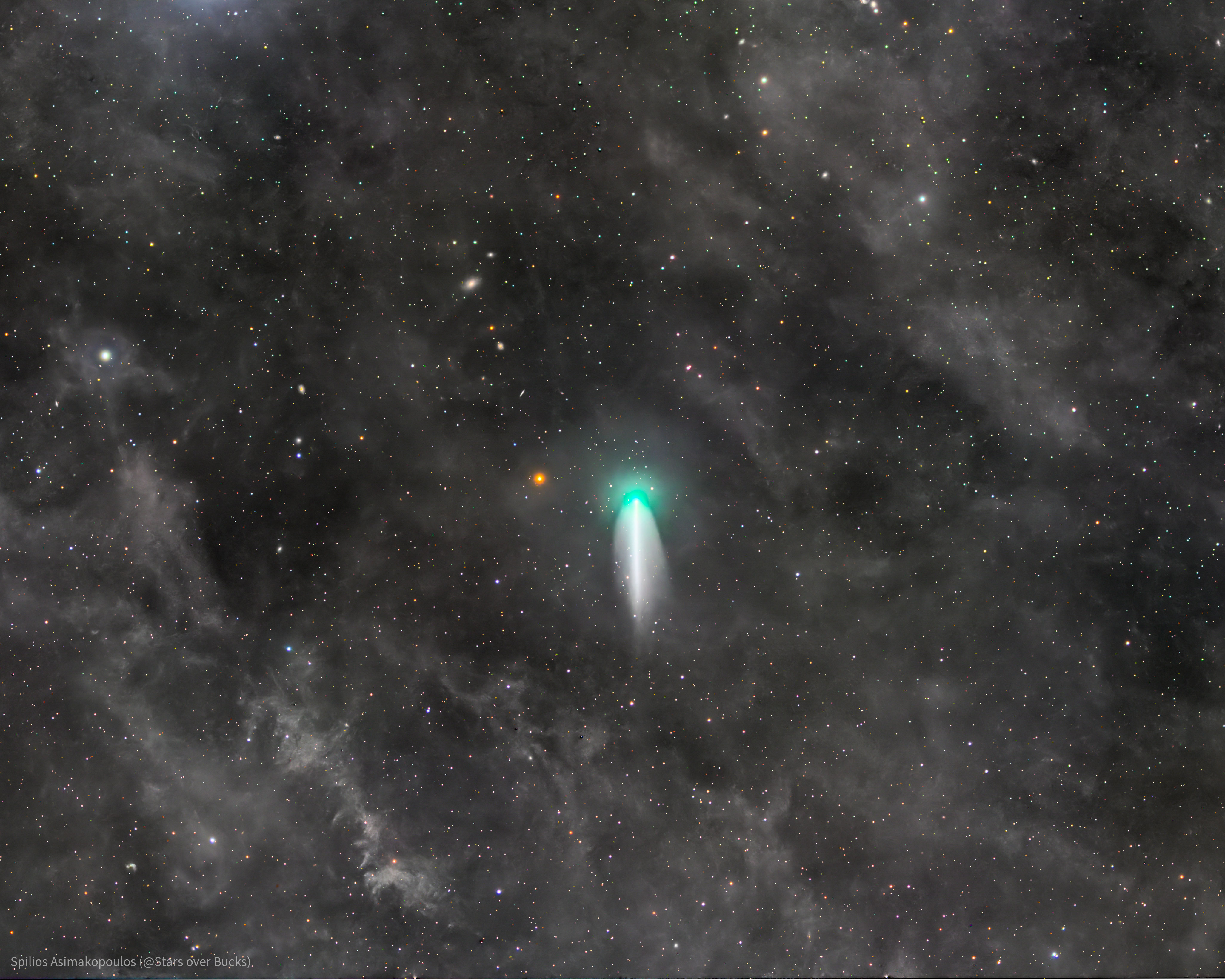
彗星220Pは予想外に明るく輝いています。通常、周期彗星220P/マクノートは非常に暗く、見るには望遠鏡が必要です。しかし、今年は2回の驚くべき増光により、通常の約2万倍の明るさになり、双眼鏡や長時間露光カメラで見ることができるようになりました。予想通り、彗星220Pは火星と木星の間を5年以上の周期で太陽の周りを公転し続けています。10日前に南アフリカで撮影されたこの長時間露光写真には、彗星の明るい緑色の頭部と短い塵の尾が写っています。彗星220Pの印象的な増光の原因は不明ですが、地下に蓄積されたガスの放出や彗星の地震が原因である可能性があります。彗星220Pは10月に地球から太陽までの距離の約1倍の距離を通過し、その後、軌道の遠い部分に戻り始めるため、急速に暗くなると予想されています。 APODのNASAメインサイトが移転します:apod.nasa.govからscience.nasa.gov/apodへ
原文(English)
Comet 220P is unexpectedly bright. Normally, periodic Comet 220P/McNaught is so dim that to see it requires a telescope. Two surprising outbursts this year, however, have made it about 20,000 times brighter than usual, so that it is now visible with binoculars and long-duration camera exposures. As expected, Comet 220P continues to orbit the Sun between Mars and Jupiter with a period of over 5 years. The featured long duration exposure, taken 10 days ago from South Africa, shows the comet's bright green head and short dust tail. Reasons for Comet 220P's impressive outbursts are unknown but could be caused by the release of built-up subsurface gas or comet quakes. Comet 220P will pass about one Earth-Sun distance from the Earth in October, after which it is expected to fade quickly as it begins its return to the far part of its orbit. APOD's main NASA site is moving : From apod.nasa.gov to science.nasa.gov/apod
\ この感動を宇宙仲間にシェア /
宇宙をXでシェア
© Spilios Asimakopoulos / APOD