
🚀 宇宙の記憶・カレンダー検索
🚀 象徴的な写真:
APOD第1回
🚀 創造の柱
🚀 スピリット火星着陸
🚀 ハッブル超深宇宙
🚀 地球へようこそ|ブルー・マーブル
🚀 エンケラドス
🚀 ベテルギウス
🚀 火星着陸
🚀 青い夕焼け
🚀 冥王星のハート
🚀 皆既日食
🚀 アースライズ再構築
🚀 ブラックホール
🚀 ウェッブ初画像
🚀 アポロ11着陸
APOD30周年(2025年6月16日)
翻訳エラー: Exception: 1 日にサービス translate を実行した回数が多すぎます。
The Pleiades: Seven Dusty Sisters
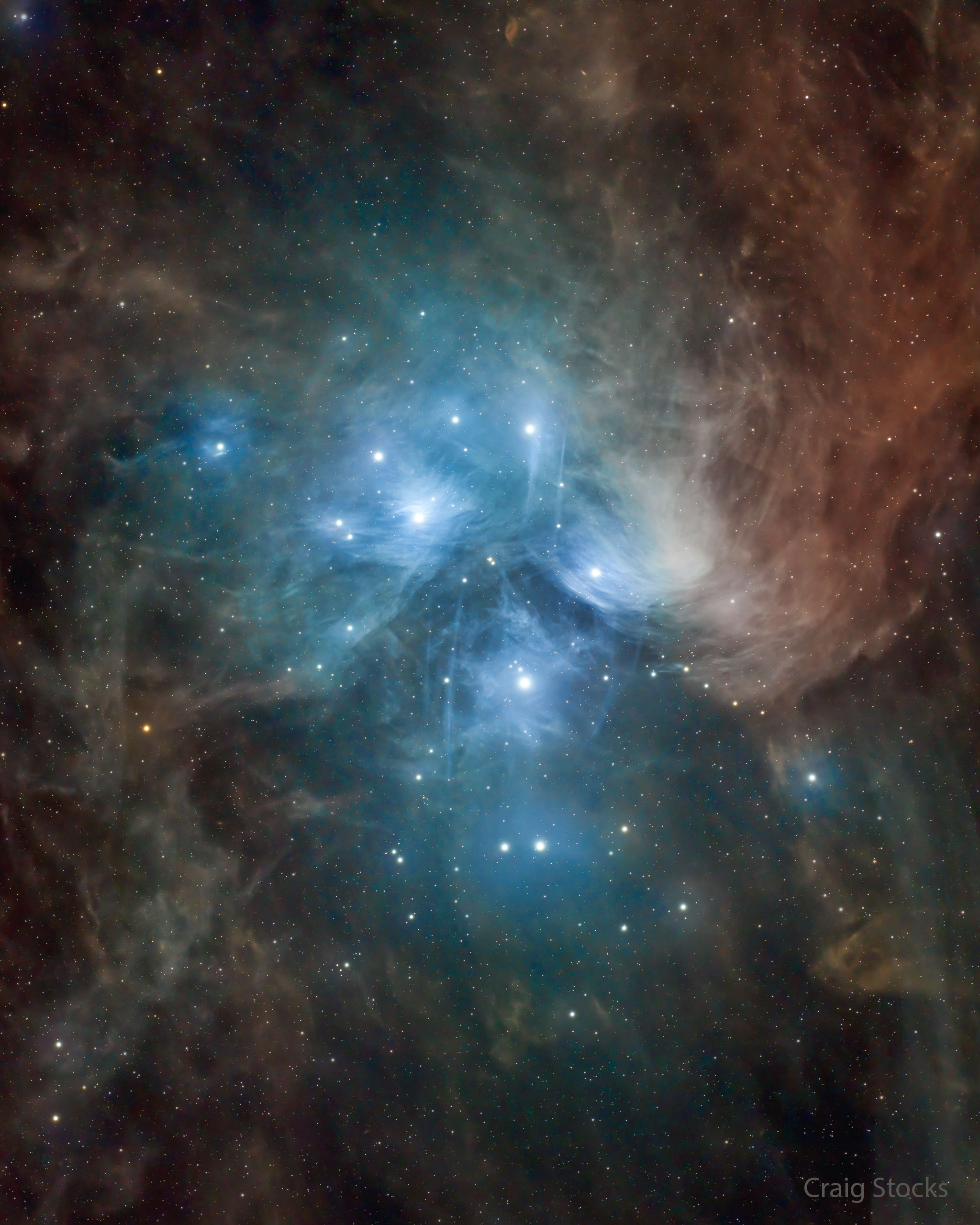
翻訳エラー: Exception: 1 日にサービス translate を実行した回数が多すぎます。
原文(English)
The well-known Pleiades star cluster is slowly destroying part of a passing cloud of gas and dust. The Pleiades is the brightest open cluster of stars on Earth's sky and can be seen from almost any northerly location with the unaided eye. Over the past 100,000 years, a field of gas and dust is moving by chance right through the Pleiades star cluster and is causing a strong reaction between the stars and dust. The passing cloud might be part of the Radcliffe wave, a newly discovered structure of gas and dust connecting several regions of star formation in the nearby part of our Milky Way galaxy. Pressure from the stars' light significantly repels the dust in the surrounding blue reflection nebula, with smaller dust particles being repelled more strongly. A short-term result is that parts of the dust cloud have become filamentary and stratified. The featured deep image incorporates nearly 9 hours of exposure and was captured from Utah Desert Remote Observatory in Utah, USA, last year.
\ この感動を宇宙仲間にシェア /
宇宙をXでシェア
©
Craig Stocks
/ APOD