
🚀 宇宙の記憶・カレンダー検索
🚀 象徴的な写真:
APOD第1回
🚀 創造の柱
🚀 スピリット火星着陸
🚀 ハッブル超深宇宙
🚀 地球へようこそ|ブルー・マーブル
🚀 エンケラドス
🚀 ベテルギウス
🚀 火星着陸
🚀 青い夕焼け
🚀 冥王星のハート
🚀 皆既日食
🚀 アースライズ再構築
🚀 ブラックホール
🚀 ウェッブ初画像
🚀 アポロ11着陸
APOD30周年(2025年6月16日)
ガンマ線ガニ、ジェミンガ
Gamma Ray Crab, Geminga
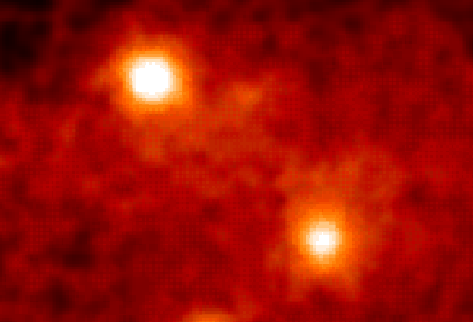
ガンマ線で見るかに星雲とジェミンガ 写真提供:NASA、コンプトンガンマ線観測所 解説:ガンマ線で「見る」ことができたらどうでしょう?もしそれができたら、この2つの回転する中性子星、つまりパルサーは、空で最も明るい天体の一つになるでしょう。このコンピューター処理された画像は、ガンマ線の「光」で見たかに星雲パルサー(中央右下)とジェミンガパルサー(中央左上)を示しています。ガンマ線光子は可視光光子の1万倍以上のエネルギーを持ち、地球の大気によって地表に届きません。この画像は、NASAのコンプトン観測衛星に搭載された高エネルギーガンマ線望遠鏡「EGRET」によって作成されました。詳細については、コンプトン科学支援センターのリリースをご覧ください。過去の「今日の天体写真」のアーカイブを保存しています。空には息を呑むような美しい写真が数多く存在し、その多くはインターネット上で閲覧可能です。当サイトでは毎日、魅力的な宇宙の一部を捉えた異なる写真と、プロの天文学者による簡潔な解説を掲載しています。「今日の天体写真」は、ロバート・ネミロフとジェリー・ボネルがお届けします。このページに掲載されているオリジナルコンテンツの著作権は、ロバート・J・ネミロフとジェリー・T・ボネルに帰属します。
原文(English)
The Crab Nebula and Geminga in Gamma Rays Picture Credit: NASA, Compton Gamma Ray Observatory Explanation: What if you could "see" in gamma-rays? If you could, these two spinning neutron stars or pulsars would be among the brightest objects in the sky. This computer processed image shows the Crab Nebula pulsar (below and right of center) and the Geminga pulsar (above and left of center) in the "light" of gamma-rays. Gamma-ray photons are more than 10,000 times more energetic than visible light photons and are blocked from the Earths's surface by the atmosphere. This image was produced by the high energy gamma-ray telescope "EGRET" on board NASA's orbiting Compton Observatory satellite. For more information see Compton Science Support Center release. We keep an archive of previous Astronomy Pictures of the Day. The sky is filled with breathtaking pictures, many of which are available on the World Wide Web. Each day we feature a different picture of some part of our fascinating universe, along with a brief explanation written by a professional astronomer. Astronomy Picture of the Day is brought to you by Robert Nemiroff and Jerry Bonnell . Original material on this page is copyrighted to Robert J. Nemiroff and Jerry T. Bonnell.
\ この感動を宇宙仲間にシェア /
宇宙をXでシェア
© NASA / APOD