
🚀 宇宙の記憶・カレンダー検索
🚀 象徴的な写真:
APOD第1回
🚀 創造の柱
🚀 スピリット火星着陸
🚀 ハッブル超深宇宙
🚀 地球へようこそ|ブルー・マーブル
🚀 エンケラドス
🚀 ベテルギウス
🚀 火星着陸
🚀 青い夕焼け
🚀 冥王星のハート
🚀 皆既日食
🚀 アースライズ再構築
🚀 ブラックホール
🚀 ウェッブ初画像
🚀 アポロ11着陸
APOD30周年(2025年6月16日)
ハッブル超深宇宙フィールド
The Hubble Ultra Deep Field
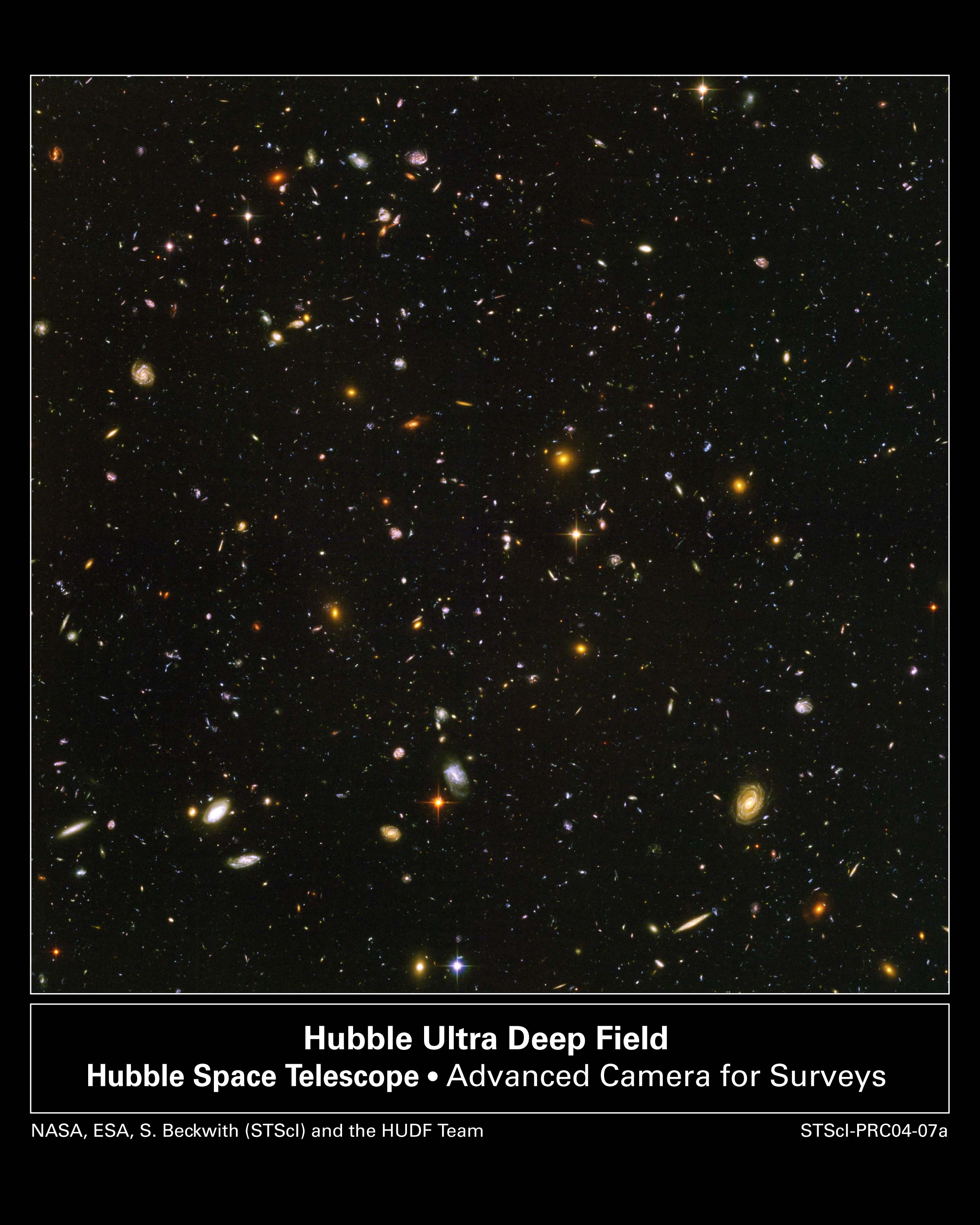
最初の銀河はどのような姿をしていたのでしょうか?この疑問に答えるため、ハッブル宇宙望遠鏡は、可視光で撮影された宇宙史上最も深い画像であるハッブル超深宇宙視野(HUDF)の撮影を終えました。上の画像は、宇宙が現在の年齢のわずか5%だった130億年前、暗黒時代直後に形成された、これまで観測された中で最も古い銀河のサンプルを示しています。ハッブル宇宙望遠鏡のNICMOSと新しいACSカメラがこの画像を撮影しました。同じ場所を約3か月間観測したHUDFは、一部の色において、元のハッブル深宇宙視野(HDF)よりも4倍感度が高くなっています。世界中の天文学者は、初期宇宙における星や銀河の形成過程をより深く理解するために、今後何年にもわたってHUDFを研究していくでしょう。
原文(English)
What did the first galaxies look like? To help answer this question, the Hubble Space Telescope has just finished taking the Hubble Ultra Deep Field (HUDF), the deepest image of the universe ever taken in visible light. Pictured above, the HUDF shows a sampling of the oldest galaxies ever seen, galaxies that formed just after the dark ages, 13 billion years ago, when the universe was only 5 percent of its present age. The Hubble Space Telescope's NICMOS and new ACS cameras took the image. Staring nearly 3 months at the same spot, the HUDF is four times more sensitive, in some colors, than the original Hubble Deep Field (HDF). Astronomers the world over will likely study the HUDF for years to come to better understand how stars and galaxies formed in the early universe.
\ この感動を宇宙仲間にシェア /
宇宙をXでシェア
© NASA / APOD