
🚀 宇宙の記憶・カレンダー検索
🚀 象徴的な写真:
APOD第1回
🚀 創造の柱
🚀 スピリット火星着陸
🚀 ハッブル超深宇宙
🚀 地球へようこそ|ブルー・マーブル
🚀 エンケラドス
🚀 ベテルギウス
🚀 火星着陸
🚀 青い夕焼け
🚀 冥王星のハート
🚀 皆既日食
🚀 アースライズ再構築
🚀 ブラックホール
🚀 ウェッブ初画像
🚀 アポロ11着陸
APOD30周年(2025年6月16日)
M16:星々が柱の上に
M16: Stars Upon Pillars
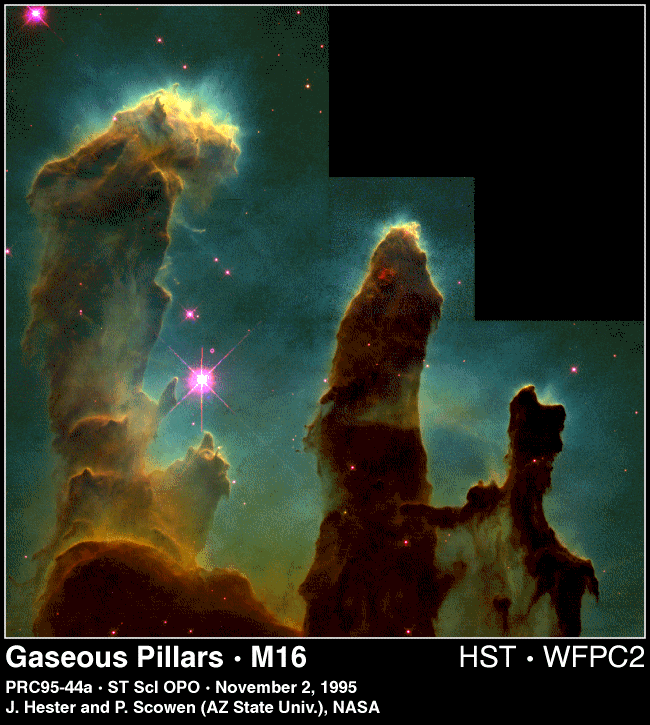
星はどのように形成されるのでしょうか?ハッブル宇宙望遠鏡が最近撮影したこの素晴らしい画像は、その過程を垣間見せてくれます。ここでは、わし星雲(M16)の分子水素と塵の柱から噴出する、蒸発するガス状の球状体(EGG)が捉えられています。これらの柱は「象の鼻」と呼ばれ、長さは数光年にも及び、非常に高密度であるため、内部のガスが重力によって収縮し、星を形成します。それぞれの柱の端では、明るい若い星からの強烈な放射線によって低密度のガスが蒸発し、高密度のEGGからなる星形成領域が露出します。
原文(English)
How do stars form? This stunning picture taken recently by the Hubble Space Telescope gives us a first hand glimpse. Here evaporating gaseous globules (EGGs) are captured emerging from pillars of molecular hydrogen and dust in the Eagle Nebula (M16). These pillars, dubbed "elephant trunks," are light years in length and are so dense that interior gas gravitationally contracts to form stars. At each pillars' end, the intense radiation of bright young stars causes low density gas to boil away, leaving stellar nurseries of dense EGGs exposed.
\ この感動を宇宙仲間にシェア /
宇宙をXでシェア
© NASA / APOD