
🚀 宇宙の記憶・カレンダー検索
🚀 象徴的な写真:
APOD第1回
🚀 創造の柱
🚀 スピリット火星着陸
🚀 ハッブル超深宇宙
🚀 地球へようこそ|ブルー・マーブル
🚀 エンケラドス
🚀 ベテルギウス
🚀 火星着陸
🚀 青い夕焼け
🚀 冥王星のハート
🚀 皆既日食
🚀 アースライズ再構築
🚀 ブラックホール
🚀 ウェッブ初画像
🚀 アポロ11着陸
APOD30周年(2025年6月16日)
アポロ13号の流星からの眺め
A Meteoric View of Apollo 13
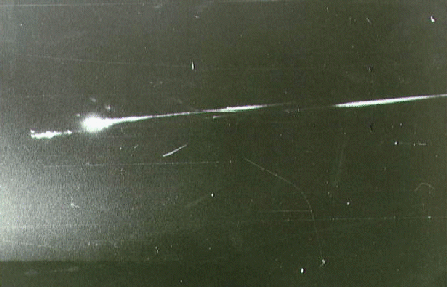
1995年7月9日 アポロ13号の流星像 写真提供: 不明 説明: 流星、または流れ星とも呼ばれるものは、通常、彗星の尾から出た塵の破片、あるいは小惑星から剥がれ落ちた小さな破片から始まります。地球に向かって落下するこれらの粒子は、非常に高速で大気圏に突入します。空気との摩擦によって加熱され、明るく輝きます。空を高速で移動するため、写真には明るい筋として写ります。しかし、この写真では、流星の軌跡のように見える明るい筋は、アポロ13号宇宙船の2つの大きな破片、機械船と月着陸船が大気圏に再突入しているものと考えられています。写真の詳細については、NASAの写真キャプションを参照してください。私たちは「今日の天体写真」のアーカイブを保持しています。「今日の天体写真」は、Robert NemiroffとJerry Bonnellによって提供されています。このページのオリジナル資料は、Robert J. NemiroffとJerry T. Bonnellに著作権があります。
原文(English)
July 9, 1995 A Meteoric View of Apollo 13 Picture Credit: Unknown Explanation: Meteors, also called shooting stars, normally begin as bits of dust from the tails of comets or even small pieces chipped off asteroids. Falling toward Earth, these particles enter the atmosphere at extremely high speeds. Friction with the air heats them up and makes them glow brightly. Their rapid motion across the sky causes them to show up as bright streaks in photographs. In this picture, however, the bright streaks which appear to be meteor trails are believed to be two large pieces of the Apollo 13 spacecraft, the service and lunar modules, reentering the atmosphere. For more information about the picture see the NASA photo caption. We keep an archive of Astronomy Pictures of the Day. Astronomy Picture of the Day is brought to you by Robert Nemiroff and Jerry Bonnell . Original material on this page is copyrighted to Robert J. Nemiroff and Jerry T. Bonnell.
\ この感動を宇宙仲間にシェア /
宇宙をXでシェア
© NASA / APOD