
🚀 宇宙の記憶・カレンダー検索
🚀 象徴的な写真:
APOD第1回
🚀 創造の柱
🚀 スピリット火星着陸
🚀 ハッブル超深宇宙
🚀 地球へようこそ|ブルー・マーブル
🚀 エンケラドス
🚀 ベテルギウス
🚀 火星着陸
🚀 青い夕焼け
🚀 冥王星のハート
🚀 皆既日食
🚀 アースライズ再構築
🚀 ブラックホール
🚀 ウェッブ初画像
🚀 アポロ11着陸
APOD30周年(2025年6月16日)
トリトンの噴水
Geysers on Triton
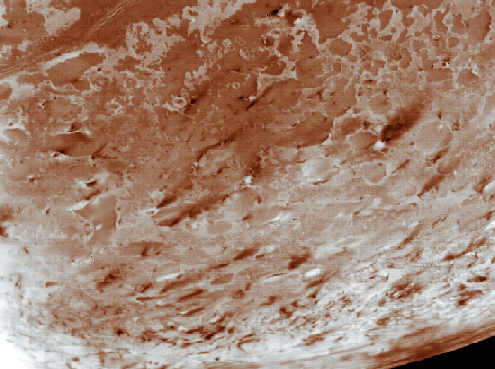
1995年8月5日 トリトンの噴水 提供:NASA、ボイジャー計画、著作権:カルビン・J・ハミルトン 解説:1989年8月、NASAのボイジャー2号探査機は、太陽系の巨大ガス惑星の中で最も遠い海王星を通過しました。海王星との遭遇は、海王星最大の衛星トリトンへの最接近で最高潮に達しました。約24,000マイルの距離から、このロボット探査機は、平均気温が華氏マイナス400度近くになるトリトンの表面を調査し、複雑で活発な世界の驚くべき証拠を発見しました。たとえば、この画像に見られる目立つ暗い筋は、小さな火山から発生しているようで、間欠泉のような噴火の際に噴出された有機化合物と窒素の霜が混ざったものと考えられます。トリトンの詳細については、カルビン・J・ハミルトンのトリトンのページをご覧ください。
原文(English)
August 5, 1995 Geysers on Triton Credit: NASA, Voyager Project, Copyright Calvin J. Hamilton Explanation: In August of 1989 NASA's Voyager 2 spacecraft passed by Neptune, the most distant of the solar system's gas giant planets. Its encounter with Neptune climaxed with its closest approach to Neptune's largest moon Triton. From a distance of about 24,000 miles the robot space probe surveyed Triton's surface, whose temperature averages nearly -400 degrees Fahrenheit, and discovered surprising evidence of a complex and active world. For example, the prominent dark streaks in this image seem to come from small volcanoes and may consist of nitrogen frost mixed with organic compounds ejected during geyser-like eruptions. For more information about Triton, see Calvin J. Hamilton's Triton page .
\ この感動を宇宙仲間にシェア /
宇宙をXでシェア
© NASA / APOD