
🚀 宇宙の記憶・カレンダー検索
🚀 象徴的な写真:
APOD第1回
🚀 創造の柱
🚀 スピリット火星着陸
🚀 ハッブル超深宇宙
🚀 地球へようこそ|ブルー・マーブル
🚀 エンケラドス
🚀 ベテルギウス
🚀 火星着陸
🚀 青い夕焼け
🚀 冥王星のハート
🚀 皆既日食
🚀 アースライズ再構築
🚀 ブラックホール
🚀 ウェッブ初画像
🚀 アポロ11着陸
APOD30周年(2025年6月16日)
エンデバー号の夜間進水
Night Launch of Endeavour
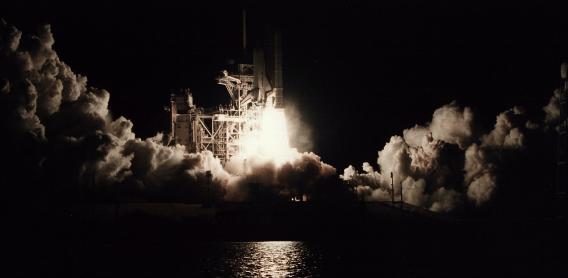
1995年8月7日 エンデバーの夜間打ち上げ 提供:NASA、ケネディ宇宙センター 説明:スペースシャトル・エンデバーは、珍しい夜間打ち上げで轟音を立てて軌道へと飛び立ちました。1995年3月のこのミッションは、アストロ2と呼ばれる一連の天体望遠鏡を運用したことで最も有名です。アストロ2の望遠鏡は、紫外線で宇宙を観測しました。紫外線は非常に青いため、人間は肉眼では見ることができません。アストロ2は、いくつかの興味深い恒星、銀河、惑星、クエーサーから放出される紫外線の量を測定しました。このNASAミッションのデータ分析により、宇宙の始まりに生成されたヘリウムが初めて明確に検出されました。NASAのスペースシャトルミッションの詳細については、NASAスペースシャトル打ち上げのページをご覧ください。
原文(English)
August 7, 1995 Night Launch of Endeavour Credit: NASA, Kennedy Space Center Explanation: Space Shuttle Endeavour thunders off into orbit in a rare night launch. This March 1995 mission is most famous for operating the set of astronomical telescopes known as Astro-2. Astro-2's telescopes observed the universe in ultraviolet light - light so blue humans by themselves can't see it. Astro-2 measured the amount of ultraviolet light emitted by several interesting stars, galaxies, planets, and QSOs. Analysis of data from this NASA mission has yielded the first clear detection of helium created during the beginning of the universe. For more information about NASA's Space Shuttle missions, see the NASA Space Shuttle Launches page.
\ この感動を宇宙仲間にシェア /
宇宙をXでシェア
© NASA / APOD