
🚀 宇宙の記憶・カレンダー検索
🚀 象徴的な写真:
APOD第1回
🚀 創造の柱
🚀 スピリット火星着陸
🚀 ハッブル超深宇宙
🚀 地球へようこそ|ブルー・マーブル
🚀 エンケラドス
🚀 ベテルギウス
🚀 火星着陸
🚀 青い夕焼け
🚀 冥王星のハート
🚀 皆既日食
🚀 アースライズ再構築
🚀 ブラックホール
🚀 ウェッブ初画像
🚀 アポロ11着陸
APOD30周年(2025年6月16日)
銀河の重力レンズ
A Galaxy Gravitational Lens
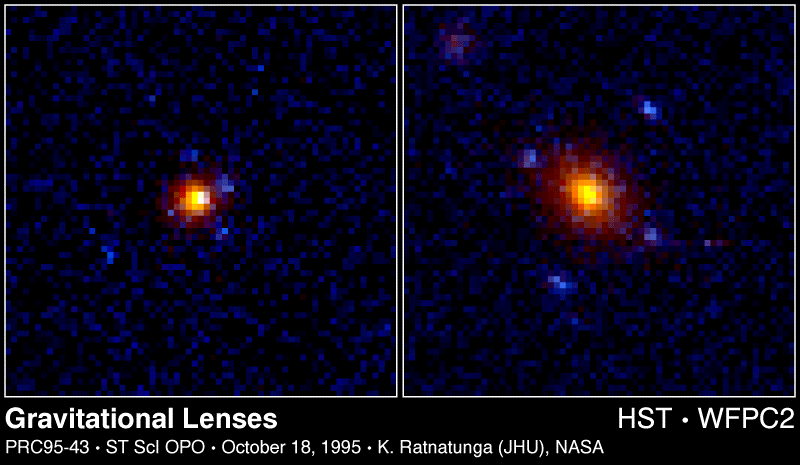
時には、優れた蜃気楼を見るには鋭い目が必要となる。上の写真の赤い銀河像の中心付近には、4つの青い「ぼやけた像」が見られる。それぞれのぼやけた像は、実は同じ背景のクエーサーの異なる像である。中心の銀河は、たまたまクエーサーの光路の真上に位置し、その結果、銀河の巨大な質量がクエーサーの像を周囲に引き寄せるという重力レンズ効果が生じる。こうして、重力蜃気楼が見えるのだ。天文学者たちは、これらのクエーサー像の光の差を利用して、中心銀河の質量を「測定」するだけでなく、宇宙の膨張率や組成に関する手がかりも得られることを期待している。
原文(English)
Sometimes it takes a keen eye to see a good mirage. Around the center of the red galaxy image in the above photograph lie four blue "smudges." Each smudge is actually a different image of the same background quasar. The central galaxy happens to fall directly in the light path of the quasar. Consequently, the huge mass of the galaxy is able to pull separate images of the quasar around it - an effect called gravitational lensing. Hence we see a gravitational mirage! Astronomers have hopes of using light differences between these quasar images to not only "weigh" the central galaxy but even provide clues about the expansion rate and composition of the universe.
\ この感動を宇宙仲間にシェア /
宇宙をXでシェア
© NASA / APOD