
🚀 宇宙の記憶・カレンダー検索
🚀 象徴的な写真:
APOD第1回
🚀 創造の柱
🚀 スピリット火星着陸
🚀 ハッブル超深宇宙
🚀 地球へようこそ|ブルー・マーブル
🚀 エンケラドス
🚀 ベテルギウス
🚀 火星着陸
🚀 青い夕焼け
🚀 冥王星のハート
🚀 皆既日食
🚀 アースライズ再構築
🚀 ブラックホール
🚀 ウェッブ初画像
🚀 アポロ11着陸
APOD30周年(2025年6月16日)
X線タイミングエクスプローラー
The X-ray Timing Explorer
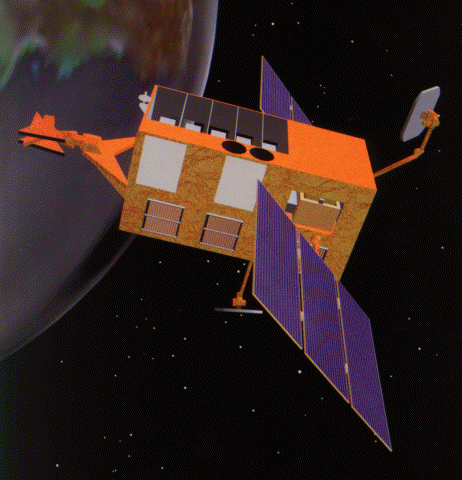
土曜日にデルタロケットで打ち上げられたX線タイミング探査機(XTE)は、X線の急激な変化を観測するために空を観測します。XTEには3つの独立したX線望遠鏡が搭載されています。比例計数管アレイ(PCA)と高エネルギーX線タイミング実験装置(HEXTE)は、これまでで最も広いX線エネルギー範囲で最高のタイミング情報を提供します。これらの望遠鏡は、ブラックホール、中性子星、白色矮星を含む恒星系を観測するとともに、活動銀河の中心部のX線特性を研究します。XTEの全天モニター(ASM)は、90分ごとに空をスキャンして新しいX線過渡現象を発見し、古い過渡現象の変動を追跡します。XTEの運用期間は2年間を予定しています。
原文(English)
Launched Saturday on a Delta rocket, the X-ray Timing Explorer (XTE) will watch the sky for rapid changes in X-rays. XTE carries three separate X-ray telescopes. The Proportional Counter Array (PCA) and the High Energy X-ray Timing Experiment (HEXTE) will provide the best timing information in the widest X-ray energy range yet available. They will observe stellar systems that contain black holes, neutron stars, and white dwarfs as well as study the X-ray properties of the centers of active galaxies. XTE's All Sky Monitor (ASM) will scan the sky every 90 minutes to find new X-ray transients and track the variability of old ones. XTE has a planned life time of two years.
\ この感動を宇宙仲間にシェア /
宇宙をXでシェア
© NASA / APOD