
🚀 宇宙の記憶・カレンダー検索
🚀 象徴的な写真:
APOD第1回
🚀 創造の柱
🚀 スピリット火星着陸
🚀 ハッブル超深宇宙
🚀 地球へようこそ|ブルー・マーブル
🚀 エンケラドス
🚀 ベテルギウス
🚀 火星着陸
🚀 青い夕焼け
🚀 冥王星のハート
🚀 皆既日食
🚀 アースライズ再構築
🚀 ブラックホール
🚀 ウェッブ初画像
🚀 アポロ11着陸
APOD30周年(2025年6月16日)
M100のケフェイド変光星
The Cepheids of M100
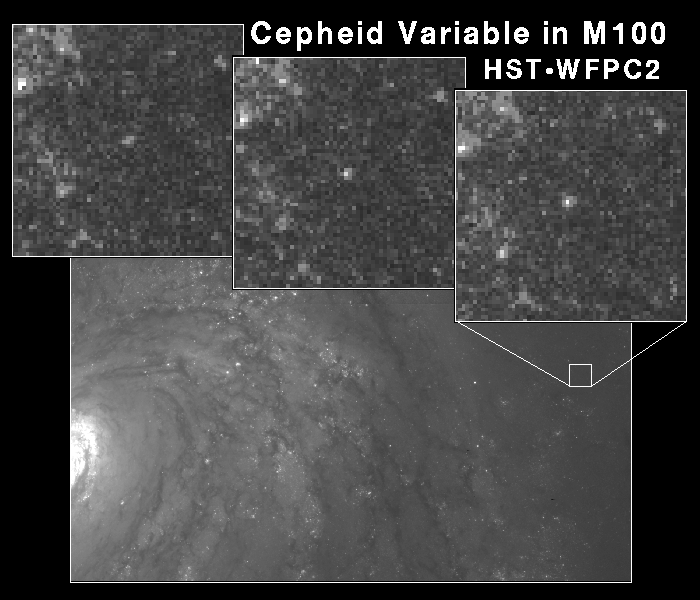
この点滅する星は、宇宙の膨張速度を教えてくれるのでしょうか?多くの天文学者は、宇宙の年齢も教えてくれるかもしれないと考えています。M100にあるこの写真に写っている「ケフェイド変光星」は、大気の膨張と収縮に伴い、数日かけて明るさが変わります。点滅周期が長いほど、本来の明るさが増します。そのため、ケフェイド変光星は距離の指標として利用されます。点滅周期の長さと星の明るさを正確に測定することで、星までの距離、ひいてはその星の母銀河までの距離を知ることができます。この距離を用いて、容易に測定できる後退速度(「赤方偏移」)と距離を照合することができます。M100についてこの「ハッブル関係」が決定されれば、すべての銀河で同じになるはずであり、それによって宇宙の膨張速度がわかるはずです。この較正値の正確な大きさについては議論があり、そのため、ハッブル定数の値に関する「宇宙のスケール」と題した本格的な討論会が、1996年4月にワシントンD.C.で開催される予定である。
原文(English)
Can this blinking star tell us how fast the universe is expanding? Many astronomers also believe it may also tell us the age of the universe! The photographed "Cepheid variable" star in M100 brightens and dims over the course of days as its atmosphere expands and contracts. A longer blinking cycle means an intrinsically brighter star. Cepheids variable stars are therefore used as distance indicators. By noting exactly how long the blinking period is and exactly how bright the star appears to be, one can tell the distance to the star and hence the star's parent galaxy. This distance can then be used to match-up easily measured recessional velocity ("redshift") with distance. Once this "Hubble relation" is determined for M100, it should be the same for all galaxies - and hence tell us how fast the universe is expanding. The exact magnitude of this calibration is under dispute and so a real live debate involving the value of Hubble's constant titled "The Scale of the Universe" will occur in April 1996 in Washington, DC.
\ この感動を宇宙仲間にシェア /
宇宙をXでシェア
© NASA / APOD