
🚀 宇宙の記憶・カレンダー検索
🚀 象徴的な写真:
APOD第1回
🚀 創造の柱
🚀 スピリット火星着陸
🚀 ハッブル超深宇宙
🚀 地球へようこそ|ブルー・マーブル
🚀 エンケラドス
🚀 ベテルギウス
🚀 火星着陸
🚀 青い夕焼け
🚀 冥王星のハート
🚀 皆既日食
🚀 アースライズ再構築
🚀 ブラックホール
🚀 ウェッブ初画像
🚀 アポロ11着陸
APOD30周年(2025年6月16日)
初期宇宙
The Early Universe
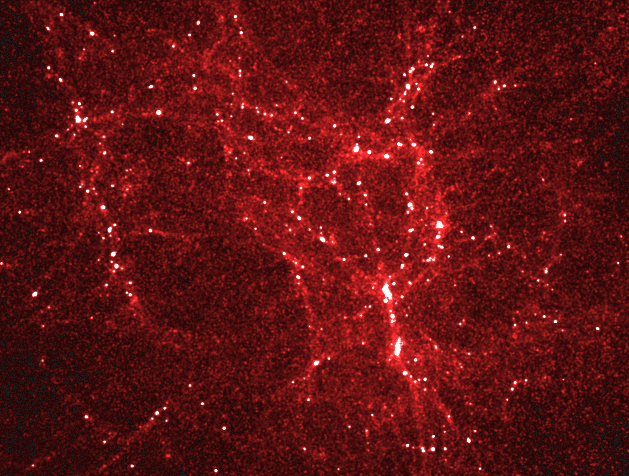
宇宙が誕生したばかりの頃は、どのような姿だったのでしょうか?この問いに答えるため、宇宙論研究者たちは、何百万もの粒子の位置を追跡する高度なコンピュータープログラムを実行しています。上のアニメーション画像は、そうした計算結果の一つであり、宇宙が現在の年齢のほんの一部だった頃の様子を示しています。宇宙は最初は非常に滑らかで、物質と光はほぼ均一に分布していました。しかし、時間が経つにつれて、重力によってわずかな質量の集まりが蓄積され、より大きな塊が形成されていきました。銀河や長いフィラメントが形成され、上の画像では明るい斑点や筋として現れています。こうした画像を数百枚使用したIMAX映画が現在制作中で、今年の夏に公開される予定です。
原文(English)
What did our universe look like when it was young? To answer this, cosmologists run sophisticated computer programs tracking the locations of millions of particles. The above animated frame is the result of such a calculation and shows how our universe might have looked when it was just a fracton of its current age. The universe started out very smooth - matter and light are spread almost uniformly. As time progressed, gravity caused slight gatherings of mass to accrete so that ever greater conglomerations formed. Galaxies and long filaments formed - which are shown by the bright patches and streaks in the above frame. An IMAX movie including hundreds of these frames is currently under production and should be released this summer.
\ この感動を宇宙仲間にシェア /
宇宙をXでシェア
© NASA / APOD