
🚀 宇宙の記憶・カレンダー検索
🚀 象徴的な写真:
APOD第1回
🚀 創造の柱
🚀 スピリット火星着陸
🚀 ハッブル超深宇宙
🚀 地球へようこそ|ブルー・マーブル
🚀 エンケラドス
🚀 ベテルギウス
🚀 火星着陸
🚀 青い夕焼け
🚀 冥王星のハート
🚀 皆既日食
🚀 アースライズ再構築
🚀 ブラックホール
🚀 ウェッブ初画像
🚀 アポロ11着陸
APOD30周年(2025年6月16日)
ハッブル宇宙望遠鏡が冥王星を地図に描く
Hubble Telescope Maps Pluto
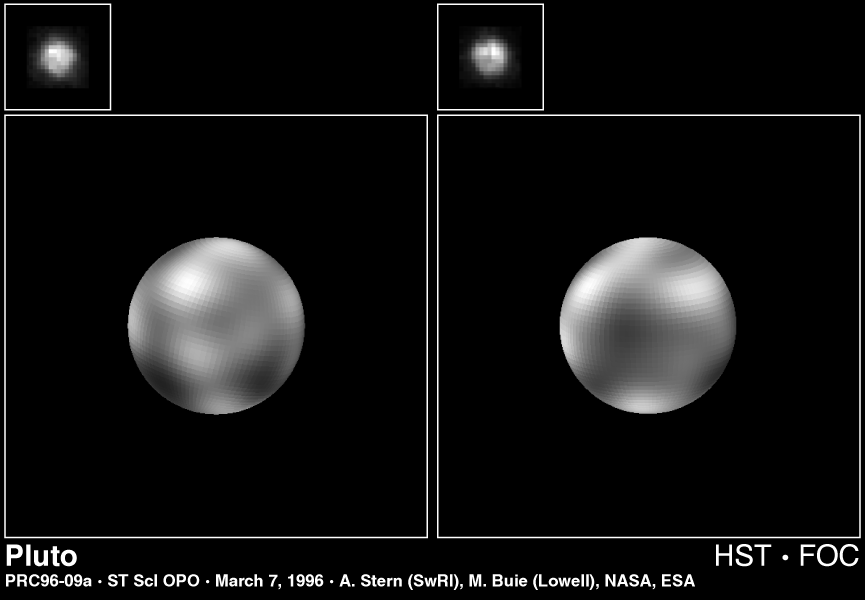
地球からの探査機はまだ冥王星を探査していませんが、天文学者たちはその表面をマッピングする方法を発見しました。ハッブル宇宙望遠鏡のプレスリリースで先週後半に、直接画像に基づいて作成されたこの遠く離れた小さな惑星の驚くべき地図が発表されました。上図は、コンピューターで作成された冥王星表面の地図の、反対側の半球から見た2つのビューです(北が上)。グリッドパターンは、各グリッド要素が100マイル以上あるコンピューター技術によるものです。この地図は、冥王星がわずか30億マイルしか離れていなかったときに撮影されたハッブルの画像に基づいています。この地図は、地上からの観測を裏付け、大幅に改善する強い明るさの変化を示しています。明るさの変化は、クレーターや盆地などの表面の特徴によるものかもしれませんが、窒素とメタンの霜の領域によって引き起こされている可能性の方が高いです。霜の領域は「季節的」な変化を示すはずで、将来のハッブルの観測で追跡できます。そうです、冥王星は地球の月のわずか3分の2の大きさですが、惑星です!情報:1996年4月の宇宙のスケールに関する議論
原文(English)
No spacecraft from Earth has yet explored Pluto but astronomers have found ways of mapping its surface. A stunning map of this distant, diminutive planet, the first based on direct images, was revealed late last week in a Hubble Space Telescope press release. Above are two opposite hemisphere views of the computer constructed map of Pluto's surface (north is up). The grid pattern is due to the computer technique used where each grid element is over 100 miles across. The map is based on Hubble images made when Pluto was a mere 3 billion miles distant. It shows strong brightness variations - confirming and substantially improving upon ground based observations. While the brightness variations may be due to surface features like craters and basins they are more likely caused by regions of nitrogen and methane frost. The frost regions should show "seasonal" changes which can be tracked in future Hubble observations. Yes, Pluto is a planet even though it is only 2/3 the size of Earth's Moon! Information: The Scale of the Universe Debate in April 1996
\ この感動を宇宙仲間にシェア /
宇宙をXでシェア
© NASA / APOD