
🚀 宇宙の記憶・カレンダー検索
🚀 象徴的な写真:
APOD第1回
🚀 創造の柱
🚀 スピリット火星着陸
🚀 ハッブル超深宇宙
🚀 地球へようこそ|ブルー・マーブル
🚀 エンケラドス
🚀 ベテルギウス
🚀 火星着陸
🚀 青い夕焼け
🚀 冥王星のハート
🚀 皆既日食
🚀 アースライズ再構築
🚀 ブラックホール
🚀 ウェッブ初画像
🚀 アポロ11着陸
APOD30周年(2025年6月16日)
百武彗星のイオン尾
The Ion Tail of Comet Hyakutake
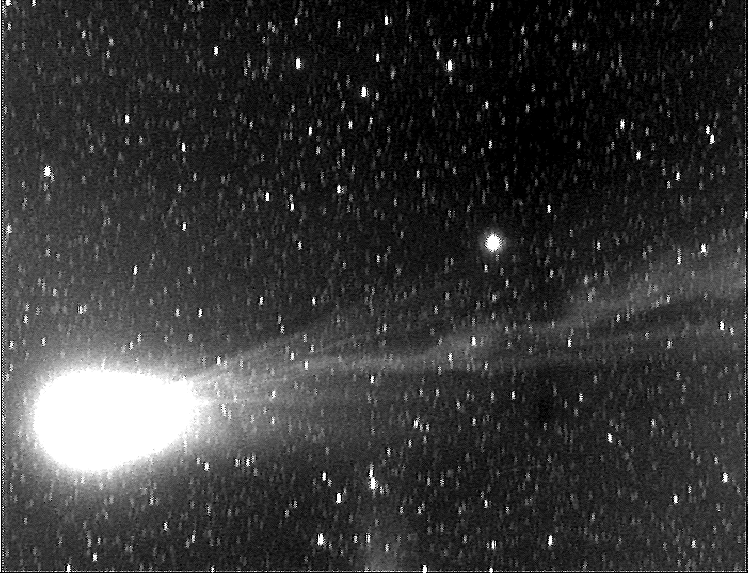
この百武彗星の写真は1996年3月14日に撮影されました。百武彗星のイオン尾の構造がはっきりと見えます。イオン尾は彗星が太陽に近づくと形成されます。太陽光によって彗星の固体核からガスと塵が蒸発します。イオンと呼ばれる荷電ガスは、太陽コロナから放出される高速粒子である太陽風によって太陽から遠ざけられます。イオン尾は青く見え、蛍光を発して輝きます。百武彗星が今後1か月で太陽に近づくにつれて、塵尾も見えるようになると予想されます。塵尾は太陽光を反射して輝きます。彗星尾は、彗星が太陽から遠ざかっても、太陽とは反対の方向を向いています。北半球の観測者にとって、百武彗星は今夜、おとめ座の東の方に見え、等級は約2.5となるでしょう。彗星は最も暗い夜空で最も壮観に見えるでしょう。都市部ではぼんやりとした塊としてしか見えないかもしれません! 参考資料:1996年4月の宇宙規模論争
原文(English)
This picture of Comet Hyakutake was taken on March 14, 1996. Structure in the ion tale of Comet Hyakutake is now clearly visible. An ion tale forms as a comet nears the Sun. Sunlight causes gas and dust to boil off the comet's solid nucleus. Charged gas - called ions - are then accelerated away from the Sun by the solar wind - fast moving particles streaming out from the Sun's corona. The ion tale will appear blue and glows by fluorescence. As Comet Hyakutake gets closer to the Sun during the next month, a dust tail is expected to be visible as well. Dust tails shine by light reflected from the Sun. Comet tails point away from the Sun, even as a comet moves away from the Sun. For observers in the Northern Hemisphere, Comet Hyakutake should appear tonight in the eastern part of the constellation of Virgo and should be about magnitude 2.5. The comet will look the most impressive in the darkest skies - in a city you are likely to see only a fuzzy blob! Information: The Scale of the Universe Debate in April 1996
\ この感動を宇宙仲間にシェア /
宇宙をXでシェア
© NASA / APOD