
🚀 宇宙の記憶・カレンダー検索
🚀 象徴的な写真:
APOD第1回
🚀 創造の柱
🚀 スピリット火星着陸
🚀 ハッブル超深宇宙
🚀 地球へようこそ|ブルー・マーブル
🚀 エンケラドス
🚀 ベテルギウス
🚀 火星着陸
🚀 青い夕焼け
🚀 冥王星のハート
🚀 皆既日食
🚀 アースライズ再構築
🚀 ブラックホール
🚀 ウェッブ初画像
🚀 アポロ11着陸
APOD30周年(2025年6月16日)
天王星の衛星オベロン:インパクトワールド
Uranus's Moon Oberon: Impact World
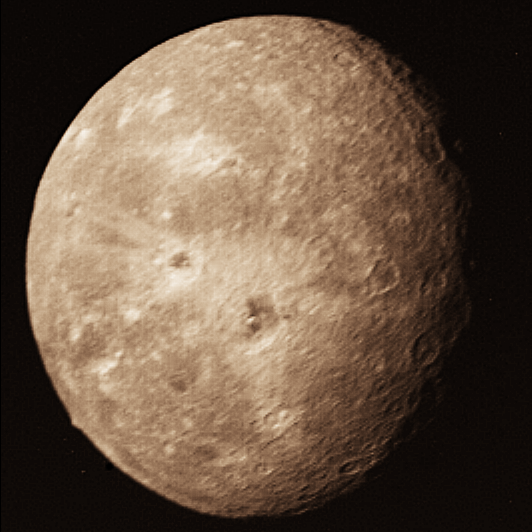
オベロンは天王星の最も遠く、2番目に大きい衛星です。1787年にウィリアム・ハーシェルによって発見されましたが、その特性は1986年1月にボイジャー2号が天王星をフライバイした際に通過するまで、比較的知られていませんでした。天王星の衛星アリエル、ティタニア、ミランダと比較すると、オベロンはクレーターが多く、この点ではウンブリエルに似ています。天王星の大きな衛星すべてと同様に、オベロンはほぼ半分が氷、半分が岩石で構成されています。オベロンには、左下の縁に見られるように、表面から6kmの高さまでそびえる大きな山が少なくとも1つあることに注意してください。最新の百武彗星の画像: APOD百武アーカイブ、JPL、フェイエットビル・オブザーバー・タイムズ、NASAのナイト・オブ・ザ・コメット、ICSTARS、ジェリー・ロドリガス、サイエンスウェブ、Crni Vrh Obs.、Cent. Mich. U.
原文(English)
Oberon is the most distant and second largest moon of Uranus. Discovered by William Herschel in 1787, the properties of the world remained relatively unknown until the robot spacecraft Voyager 2 passed it during its flyby of Uranus in January 1986. Compared to Uranus' moons Ariel, Titania, and Miranda, Oberon is heavily cratered, and in this way resembles Umbriel. Like all of Uranus' large moons, Oberon is composed of roughly half ice and half rock. Note that Oberon has at least one large mountain, visible on the limb at the lower left, that rises 6 km off the surface. Latest Comet Hyakutake images: APOD Hyakutake Archive, JPL, Fayetteville Observer-Times, NASA's Night of the Comet, ICSTARS, Jerry Lodriguss, ScienceWeb, Crni Vrh Obs., Cent. Mich. U.
\ この感動を宇宙仲間にシェア /
宇宙をXでシェア
© NASA / APOD