
🚀 宇宙の記憶・カレンダー検索
🚀 象徴的な写真:
APOD第1回
🚀 創造の柱
🚀 スピリット火星着陸
🚀 ハッブル超深宇宙
🚀 地球へようこそ|ブルー・マーブル
🚀 エンケラドス
🚀 ベテルギウス
🚀 火星着陸
🚀 青い夕焼け
🚀 冥王星のハート
🚀 皆既日食
🚀 アースライズ再構築
🚀 ブラックホール
🚀 ウェッブ初画像
🚀 アポロ11着陸
APOD30周年(2025年6月16日)
らせん星雲の彗星の結び目
Cometary Knots in the Helix Nebula
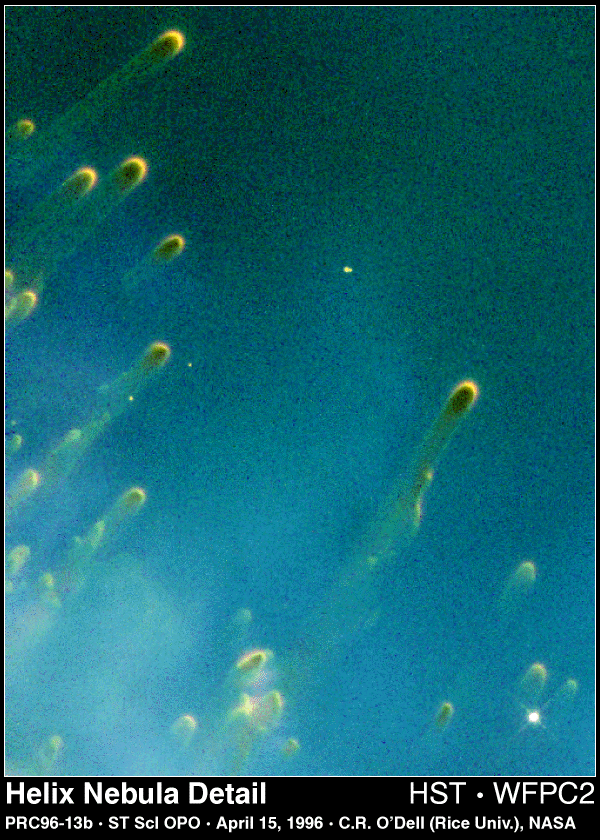
地球から450光年離れた場所で、死にゆく太陽のような恒星からの恒星風によって、ヘリックスとして知られる惑星状星雲が形成されました。ハッブル宇宙望遠鏡(HST)でヘリックスのガス層を観測していた天文学者たちは、上に示したような数千個もの印象的な「彗星の結び目」の痕跡を発見しました。彗星に似ていることからそう呼ばれていますが、実際にははるかに大きく、頭部は数十億マイル(太陽系自体のおよそ2倍の大きさ)に及び、中心星から放射状に伸びる尾は1000億マイル以上にも及びます。地上からの観測で以前から知られていた彗星の結び目の数は、この単一の星雲で発見された驚異的な数です。これらの結び目はどのようにして形成されたのでしょうか?高温で高速で移動する星雲ガスの殻が、以前の膨張時に恒星から放出された低温で密度が高く、低速で移動する殻に流れ込むことで、2つの殻が混ざり合い、断片化する際に、これらの水滴状の凝縮物が生成される可能性があります。興味深い可能性として、これらの天体は時間とともに消滅するのではなく、崩壊して冥王星のような天体を形成する可能性がある。もしそうであれば、恒星の寿命の終わりに形成されるこれらの氷の世界は、私たちの銀河系に数多く存在することになるだろう。出典:1996年4月の宇宙規模論争
原文(English)
Four hundred fifty light-years from Earth, the wind from a dying, sun-like star produced a planetary nebula popularly known as the Helix. While exploring the Helix's gaseous envelope with the Hubble Space Telescope (HST), astronomers discovered indications of 1,000s of striking "cometary knots" like those shown above. So called because of their resemblence to comets, they are actually much larger - their heads are several billion miles across (roughly twice the size of the our solar system itself) while their tails, pointing radially away from the central star, stretch over 100 billion miles. Previously known from ground based observations, the sheer number of cometary knots found in this single nebula is astonishing. What caused them to form? Hot, fast moving shells of nebular gas overrunning cooler, denser, slower shells ejected by the star during an earlier expansion may produce these droplet-like condensations as the two shells intermix and fragment. An intriguing possibility is that instead of dissipating over time, these objects, could collapse and form pluto-like bodies. If so, these icy worlds created near the end of a star's life, would be numerous in our galaxy. Information: The Scale of the Universe Debate in April 1996
\ この感動を宇宙仲間にシェア /
宇宙をXでシェア
© NASA / APOD