
🚀 宇宙の記憶・カレンダー検索
🚀 象徴的な写真:
APOD第1回
🚀 創造の柱
🚀 スピリット火星着陸
🚀 ハッブル超深宇宙
🚀 地球へようこそ|ブルー・マーブル
🚀 エンケラドス
🚀 ベテルギウス
🚀 火星着陸
🚀 青い夕焼け
🚀 冥王星のハート
🚀 皆既日食
🚀 アースライズ再構築
🚀 ブラックホール
🚀 ウェッブ初画像
🚀 アポロ11着陸
APOD30周年(2025年6月16日)
翻訳エラー: Exception: 1 日にサービス translate を実行した回数が多すぎます。
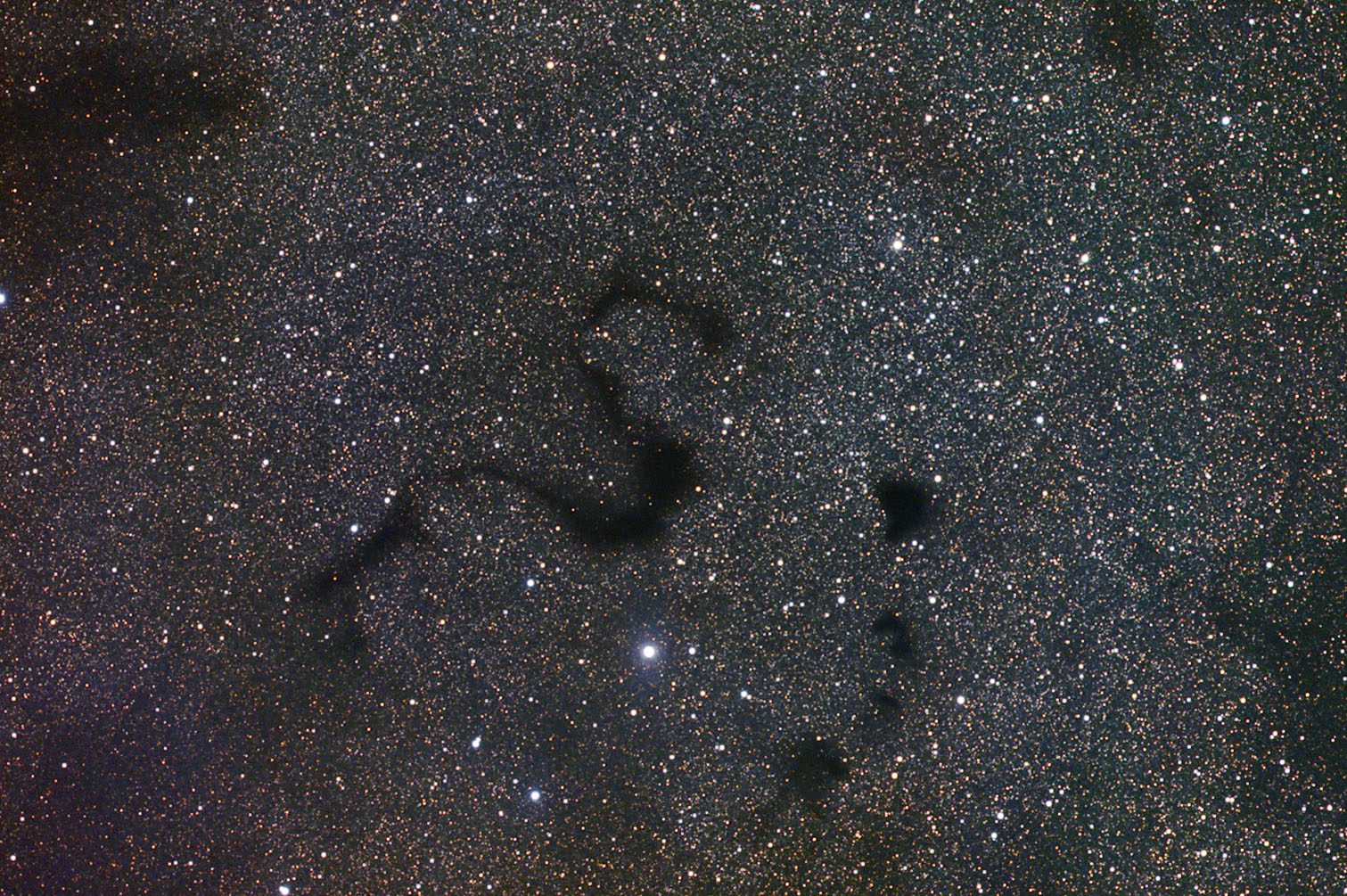
Snake in the Dark
翻訳エラー: Exception: 1 日にサービス translate を実行した回数が多すぎます。
原文(English)
Dark nebulae snake across a gorgeous expanse of stars in this wide-field view toward the pronounceable constellation Ophiucus and the center of our Milky Way Galaxy. In fact, the central S-shape seen here is well known as the Snake Nebula. It is also listed as Barnard 72 (B72), one of 182 dark markings of the sky cataloged in the early 20th century by astronomer E. E. Barnard. Unlike bright emission nebulae and star clusters, Barnard's nebulae are interstellar dark clouds of obscuring gas and dust. Their shapes are visible in cosmic silhouette only because they lie in the foreground along the line of sight to rich star fields and glowing stellar nurseries near the plane of our Galaxy. Many of Barnard's dark nebulae are themselves likely sites of future star formation. Barnard 72 is a few light years across and about 650 light years away.
\ この感動を宇宙仲間にシェア /
宇宙をXでシェア
©
Gary Stevens
/ APOD