
🚀 宇宙の記憶・カレンダー検索
🚀 象徴的な写真:
APOD第1回
🚀 創造の柱
🚀 スピリット火星着陸
🚀 ハッブル超深宇宙
🚀 地球へようこそ|ブルー・マーブル
🚀 エンケラドス
🚀 ベテルギウス
🚀 火星着陸
🚀 青い夕焼け
🚀 冥王星のハート
🚀 皆既日食
🚀 アースライズ再構築
🚀 ブラックホール
🚀 ウェッブ初画像
🚀 アポロ11着陸
APOD30周年(2025年6月16日)
翻訳エラー: Exception: 1 日にサービス translate を実行した回数が多すぎます。
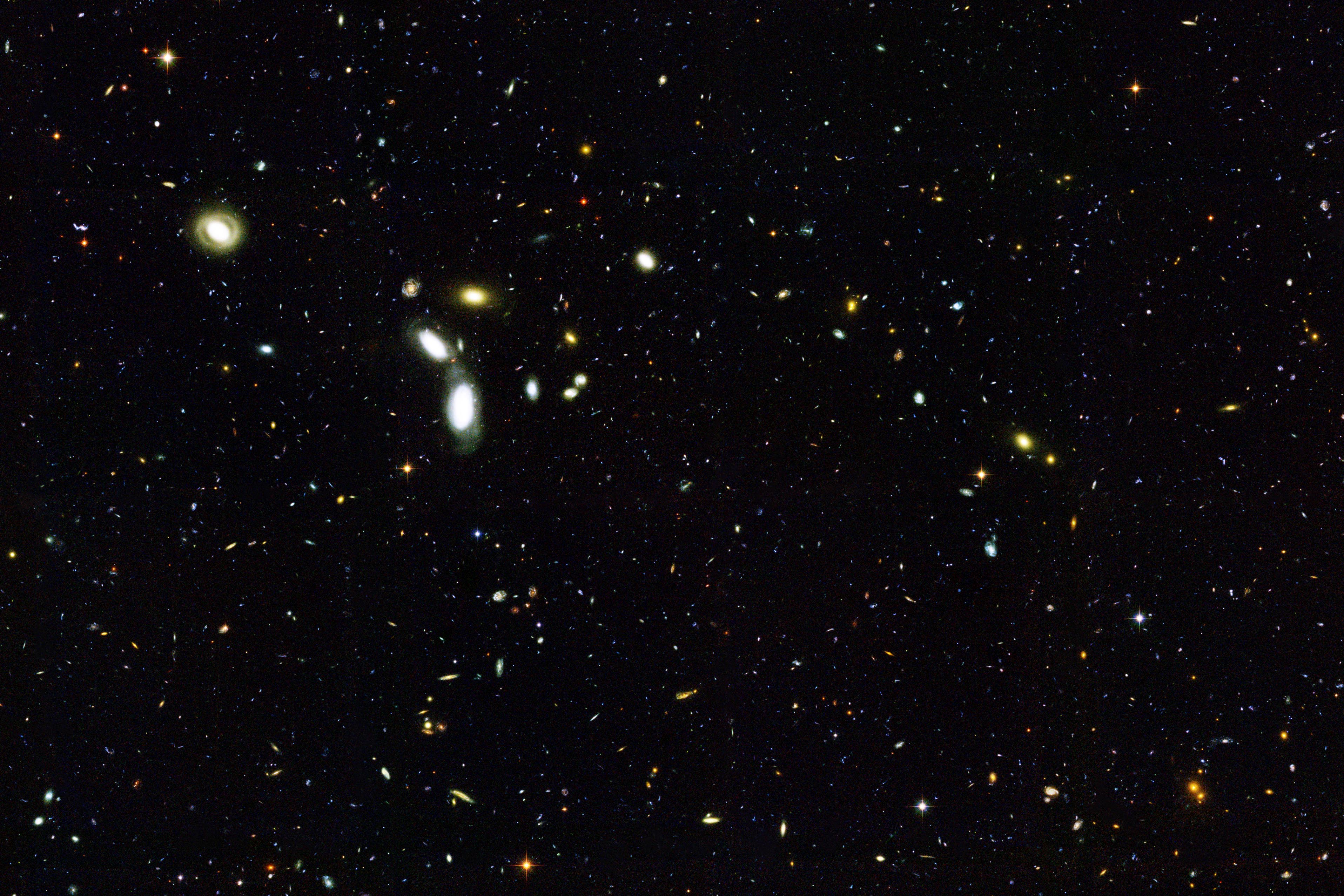
Galaxies in the GOODS
翻訳エラー: Exception: 1 日にサービス translate を実行した回数が多すぎます。
原文(English)
This tantalizing view of galaxies scattered near and far is part of the Hubble Space Telescope's contribution to the GOODS - the Great Observatories Origins Deep Survey project. The GOODS' goal is to study galaxy formation and evolution over an unprecedent wide range of cosmic distances, therefore spanning time from the present to the early Universe. Joined by the Chandra X-ray Observatory and soon by the anticipated Space Infrared Telescope Facility along with major ground-based observatories, the project expands greatly on the past Hubble Deep Fields of regions in the northern constellation of Ursa Major and southern constellation Tucana. Across the electromagnetic spectrum, a sample of large nearby galaxies, like the interacting pair at the lower left above, will be compared with distant younger galaxies in a search for clues to the origins of these lighthouses of the cosmos. Preliminary results of the project confirm that the birth rate of stars was higher in the past and that galaxies have indeed been constructed from the "bottom up", growing from mergers and accretion of small infant galaxies to their present day forms.
\ この感動を宇宙仲間にシェア /
宇宙をXでシェア
© NASA / APOD