
🚀 宇宙の記憶・カレンダー検索
🚀 象徴的な写真:
APOD第1回
🚀 創造の柱
🚀 スピリット火星着陸
🚀 ハッブル超深宇宙
🚀 地球へようこそ|ブルー・マーブル
🚀 エンケラドス
🚀 ベテルギウス
🚀 火星着陸
🚀 青い夕焼け
🚀 冥王星のハート
🚀 皆既日食
🚀 アースライズ再構築
🚀 ブラックホール
🚀 ウェッブ初画像
🚀 アポロ11着陸
APOD30周年(2025年6月16日)
翻訳エラー: Exception: 1 日にサービス translate を実行した回数が多すぎます。
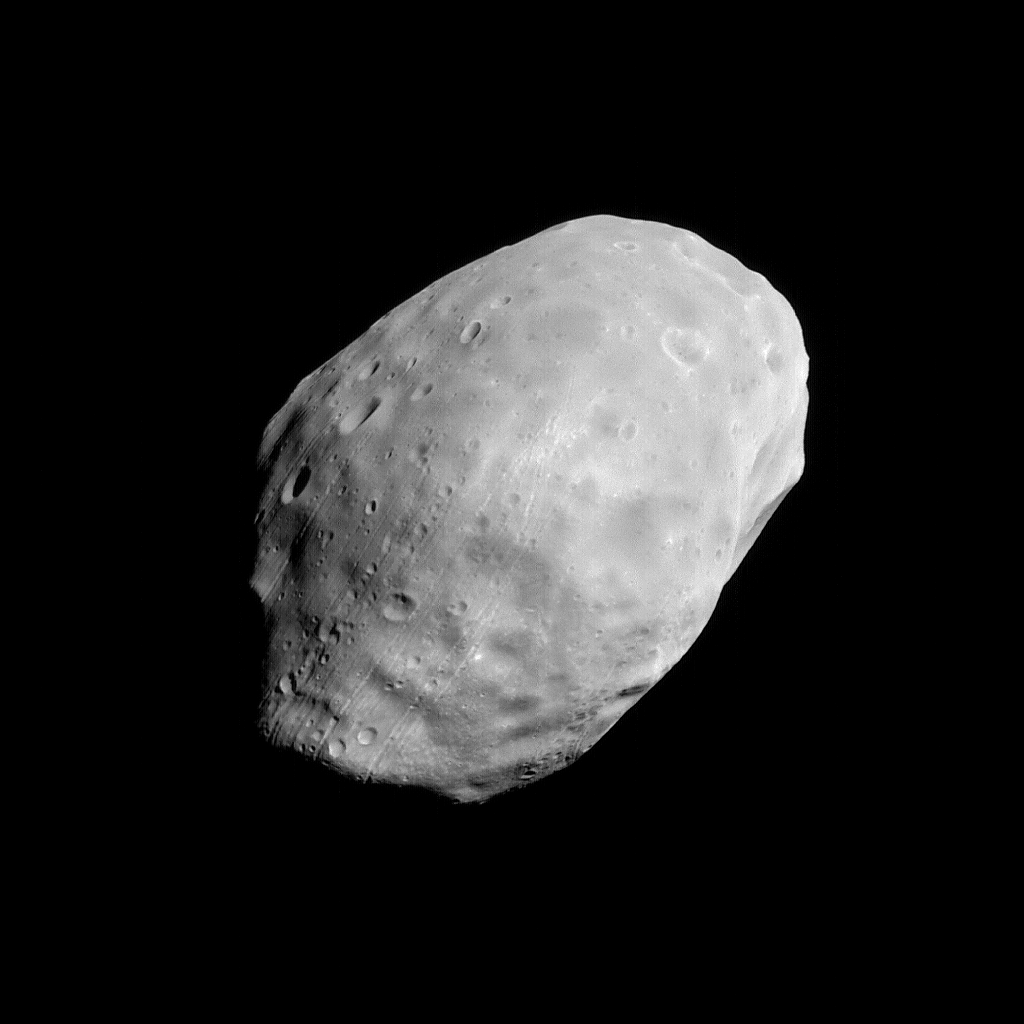
Martian Moon Phobos from MGS
翻訳エラー: Exception: 1 日にサービス translate を実行した回数が多すぎます。
原文(English)
Why is Phobos so dark? Phobos, the largest and innermost of two Martian moons, is the darkest moon in the entire Solar System. Its unusual orbit and color indicate that it may be a captured asteroid composed of a mixture of ice and dark rock. The above picture was captured recently by the robot spacecraft Mars Global Surveyor (MGS) orbiting Mars. Phobos is a heavily cratered and barren moon, with its largest crater located on the far side. From MGS images like this, Phobos has been determined to be covered by perhaps a meter of loose dust. Phobos orbits so close to Mars that from some places it would appear to rise and set twice a day, but from other places it would not be visible at all. Phobos' orbit around Mars is continually decaying -- it will likely break up with pieces crashing to the Martian surface in about 50 million years.
\ この感動を宇宙仲間にシェア /
宇宙をXでシェア
© NASA / APOD