
🚀 宇宙の記憶・カレンダー検索
🚀 象徴的な写真:
APOD第1回
🚀 創造の柱
🚀 スピリット火星着陸
🚀 ハッブル超深宇宙
🚀 地球へようこそ|ブルー・マーブル
🚀 エンケラドス
🚀 ベテルギウス
🚀 火星着陸
🚀 青い夕焼け
🚀 冥王星のハート
🚀 皆既日食
🚀 アースライズ再構築
🚀 ブラックホール
🚀 ウェッブ初画像
🚀 アポロ11着陸
APOD30周年(2025年6月16日)
翻訳エラー: Exception: 1 日にサービス translate を実行した回数が多すぎます。
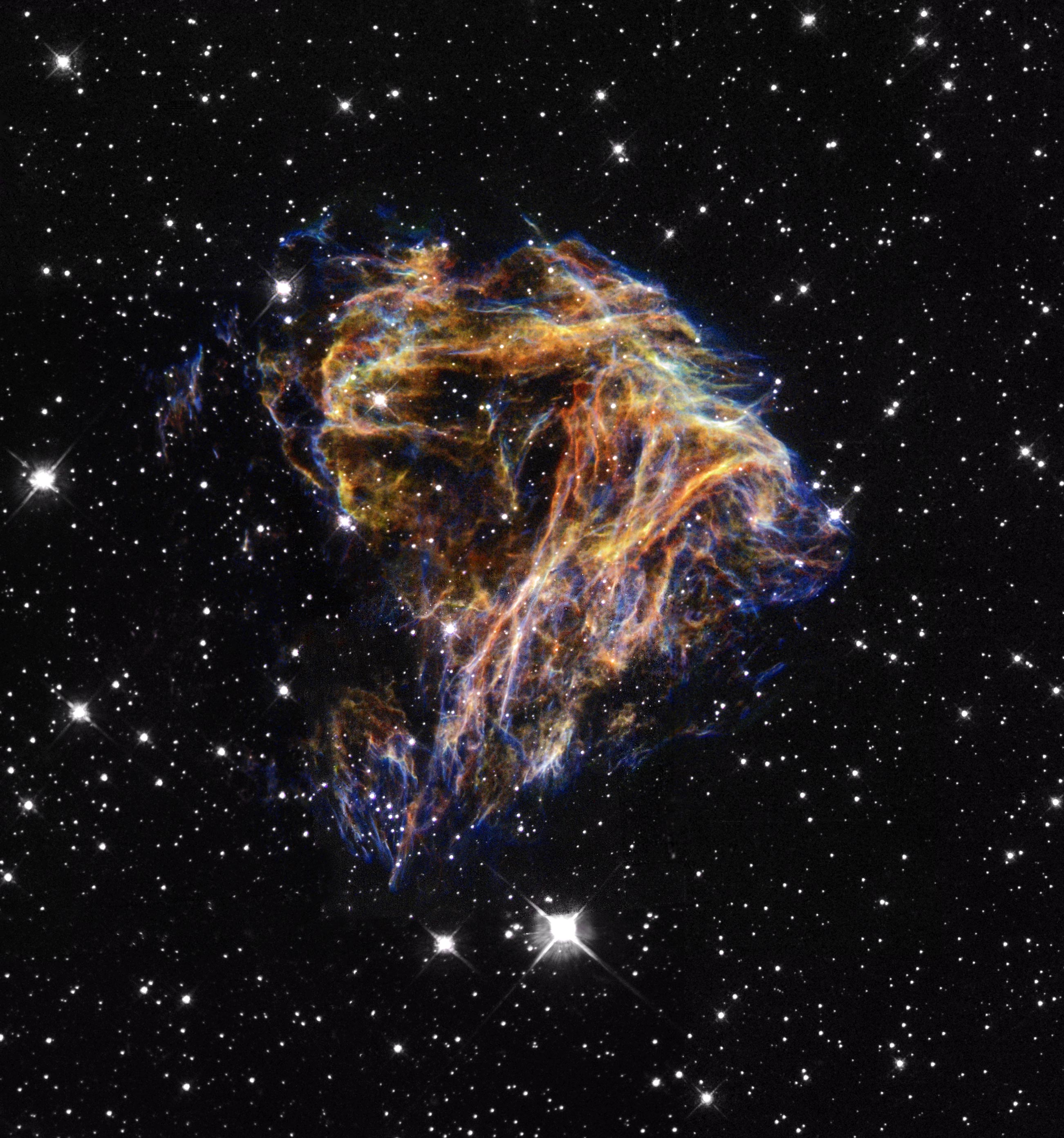
N49's Cosmic Blast
翻訳エラー: Exception: 1 日にサービス translate を実行した回数が多すぎます。
原文(English)
Scattered debris from a cosmic supernova explosion lights up the sky in this gorgeous composited image based on data from the Hubble Space Telescope. Cataloged as N49, these glowing filaments of shocked gas span about 30 light-years in our neighboring galaxy, the Large Magellanic Cloud. Light from the original exploding star reached Earth thousands of years ago, but N49 also marks the location of another energetic outburst -- an extremely intense blast of gamma-rays detected by satellites on March 5, 1979. That date was the beginning of an exciting journey in astrophysics which led researchers to the understanding of an exotic new class of stars. The source of the "March 5th Event" is now attributed to a magnetar - a highly magnetized, spinning neutron star also born in the ancient stellar explosion which created supernova remnant N49. The magnetar hurtles through the supernova debris cloud at over 1,200 kilometers per second.
\ この感動を宇宙仲間にシェア /
宇宙をXでシェア
© NASA / APOD