
🚀 宇宙の記憶・カレンダー検索
🚀 象徴的な写真:
APOD第1回
🚀 創造の柱
🚀 スピリット火星着陸
🚀 ハッブル超深宇宙
🚀 地球へようこそ|ブルー・マーブル
🚀 エンケラドス
🚀 ベテルギウス
🚀 火星着陸
🚀 青い夕焼け
🚀 冥王星のハート
🚀 皆既日食
🚀 アースライズ再構築
🚀 ブラックホール
🚀 ウェッブ初画像
🚀 アポロ11着陸
APOD30周年(2025年6月16日)
翻訳エラー: Exception: 1 日にサービス translate を実行した回数が多すぎます。
The Satellites that Surround Earth
翻訳エラー: Exception: 1 日にサービス translate を実行した回数が多すぎます。
原文(English)
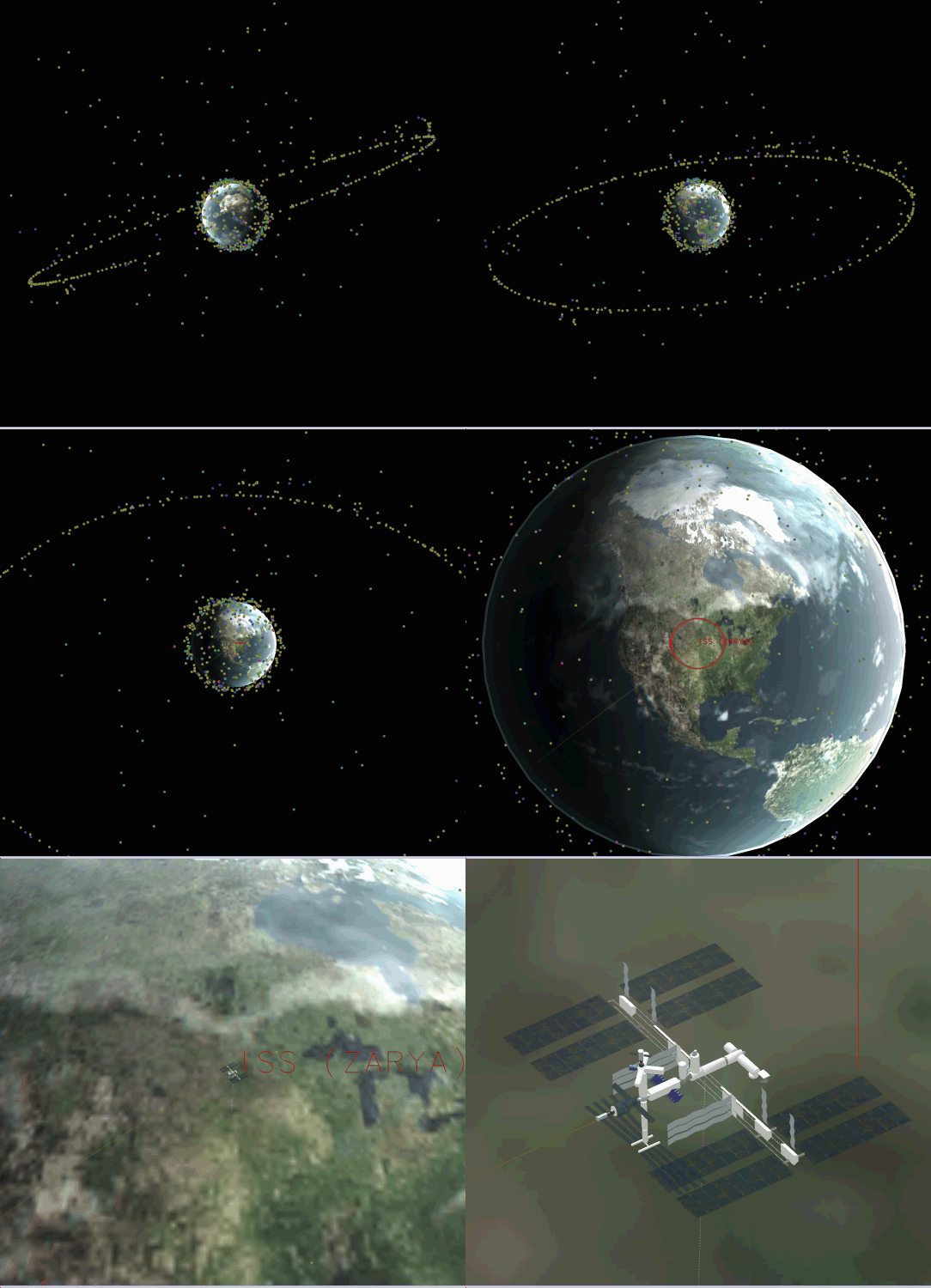
Thousands of satellites orbit the Earth. Costing billions of dollars, this swarm of high altitude robots is now vital to communication, orientation, and imaging both Earth and space. One common type of orbit is geostationary where a satellite will appear to hover above one point on Earth's equator. Geostationary orbits are very high up -- over five times the radius of the Earth -- and possible only because the satellite orbital period is exactly one day. It is usually cheaper to place a satellite in low Earth orbit, around 500 kilometers, just high enough to avoid the effect of Earth's atmosphere. The above animated sequence starts by showing the halo of Earth's satellites, including the ring at geostationary, and finishes by zooming in on the only one currently hosting humans: the International Space Station.
\ この感動を宇宙仲間にシェア /
宇宙をXでシェア
© NASA / APOD