
🚀 宇宙の記憶・カレンダー検索
🚀 象徴的な写真:
APOD第1回
🚀 創造の柱
🚀 スピリット火星着陸
🚀 ハッブル超深宇宙
🚀 地球へようこそ|ブルー・マーブル
🚀 エンケラドス
🚀 ベテルギウス
🚀 火星着陸
🚀 青い夕焼け
🚀 冥王星のハート
🚀 皆既日食
🚀 アースライズ再構築
🚀 ブラックホール
🚀 ウェッブ初画像
🚀 アポロ11着陸
APOD30周年(2025年6月16日)
翻訳エラー: Exception: 1 日にサービス translate を実行した回数が多すぎます。
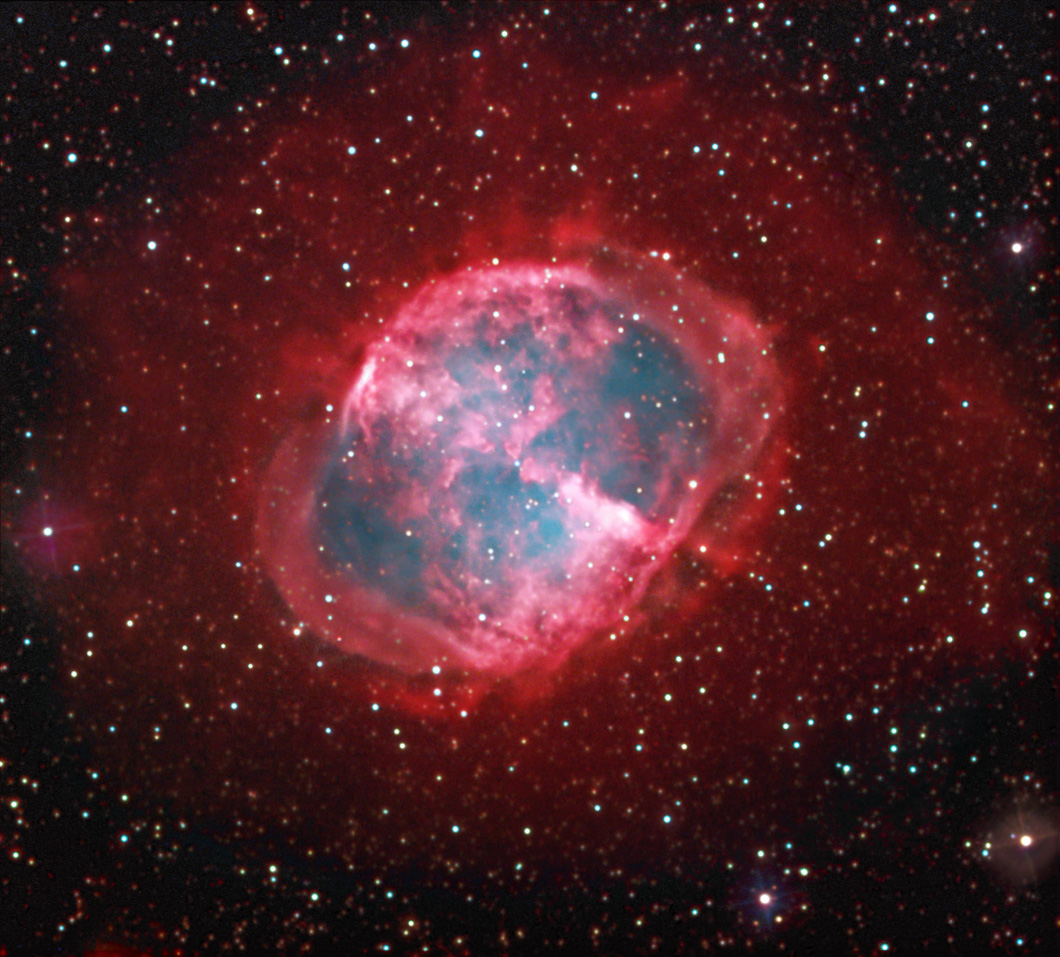
Dumbbell Nebula Halo
翻訳エラー: Exception: 1 日にサービス translate を実行した回数が多すぎます。
原文(English)
In 1764, French astronomer Charles Messier sighted this gorgeous cosmic cloud which he described as an oval nebula without stars. Cataloged as M27, it is now popularly known as the Dumbbell Nebula, not for its substandard academic performance but for the elongated shape, like a bar with weights on each end, which first caught Messier's eye. This deep image of the bright planetary nebula does reveal the Dumbell's central star though, and an array of foreground and background stars toward the sly constellation Vulpecula. The picture is a composite that includes 8 hours of exposure through a filter designed to record only the light of hydrogen atoms, tracing the intricate details of the nebula's faint outer halo which spans light-years. Thought to be an example of the fate awaiting our own Sun 5 billion years hence, the Dumbbell Nebula is about 1,200 light-years away.
\ この感動を宇宙仲間にシェア /
宇宙をXでシェア
©
Robert Gendler
/ APOD