
🚀 宇宙の記憶・カレンダー検索
🚀 象徴的な写真:
APOD第1回
🚀 創造の柱
🚀 スピリット火星着陸
🚀 ハッブル超深宇宙
🚀 地球へようこそ|ブルー・マーブル
🚀 エンケラドス
🚀 ベテルギウス
🚀 火星着陸
🚀 青い夕焼け
🚀 冥王星のハート
🚀 皆既日食
🚀 アースライズ再構築
🚀 ブラックホール
🚀 ウェッブ初画像
🚀 アポロ11着陸
APOD30周年(2025年6月16日)
翻訳エラー: Exception: 1 日にサービス translate を実行した回数が多すぎます。
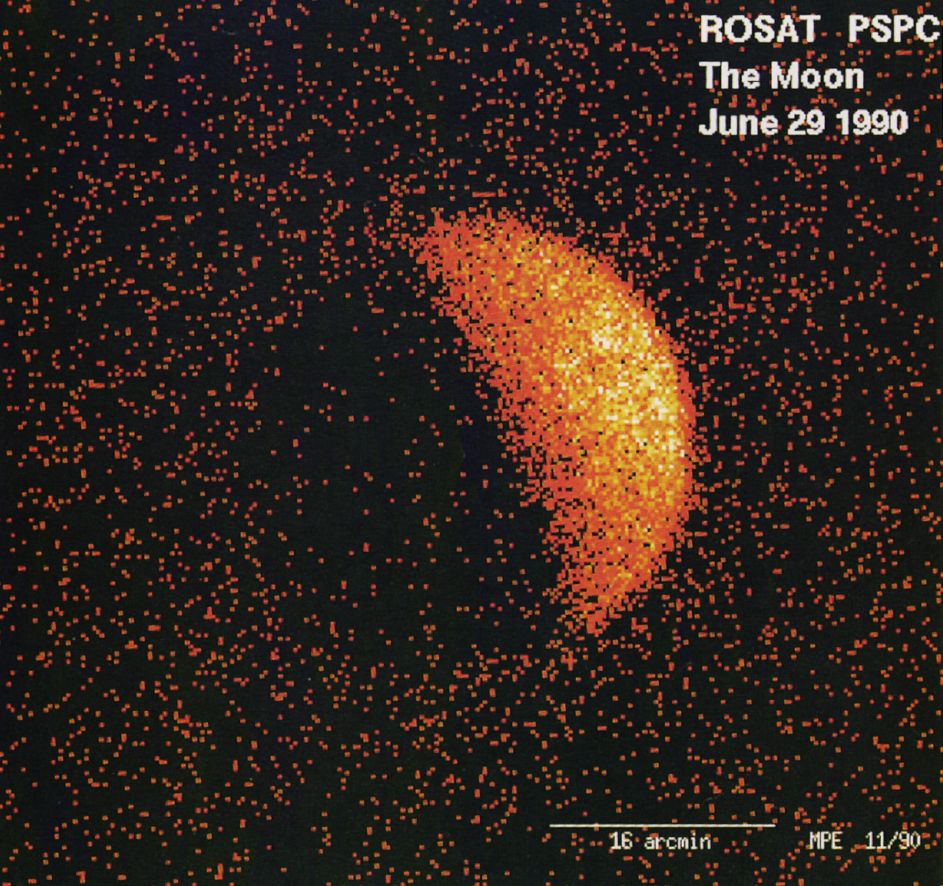
X-Ray Moon
翻訳エラー: Exception: 1 日にサービス translate を実行した回数が多すぎます。
原文(English)
This x-ray image of the Moon was made by the orbiting ROSAT (Röntgensatellit) Observatory in 1990. In this digital picture, pixel brightness corresponds to x-ray intensity. Consider the image in three parts: the bright hemisphere of the x-ray moon, the darker half of the moon, and the x-ray sky background. The bright lunar hemisphere shines in x-rays because it scatters x-rays emitted by the sun. The background sky has an x-ray glow in part due to the myriad of distant, powerful active galaxies, unresolved in the ROSAT picture but recently detected in Chandra Observatory x-ray images. But why isn't the dark half of the moon completely dark? New Chandra results also suggest that a few x-rays only seem to come from the shadowed lunar hemisphere. Instead, they originate in Earth's geocorona or extended atmosphere which surrounds the orbiting x-ray observatories.
\ この感動を宇宙仲間にシェア /
宇宙をXでシェア
© NASA / APOD