
🚀 宇宙の記憶・カレンダー検索
🚀 象徴的な写真:
APOD第1回
🚀 創造の柱
🚀 スピリット火星着陸
🚀 ハッブル超深宇宙
🚀 地球へようこそ|ブルー・マーブル
🚀 エンケラドス
🚀 ベテルギウス
🚀 火星着陸
🚀 青い夕焼け
🚀 冥王星のハート
🚀 皆既日食
🚀 アースライズ再構築
🚀 ブラックホール
🚀 ウェッブ初画像
🚀 アポロ11着陸
APOD30周年(2025年6月16日)
IC 405:燃える星雲
IC 405: The Flaming Star Nebula
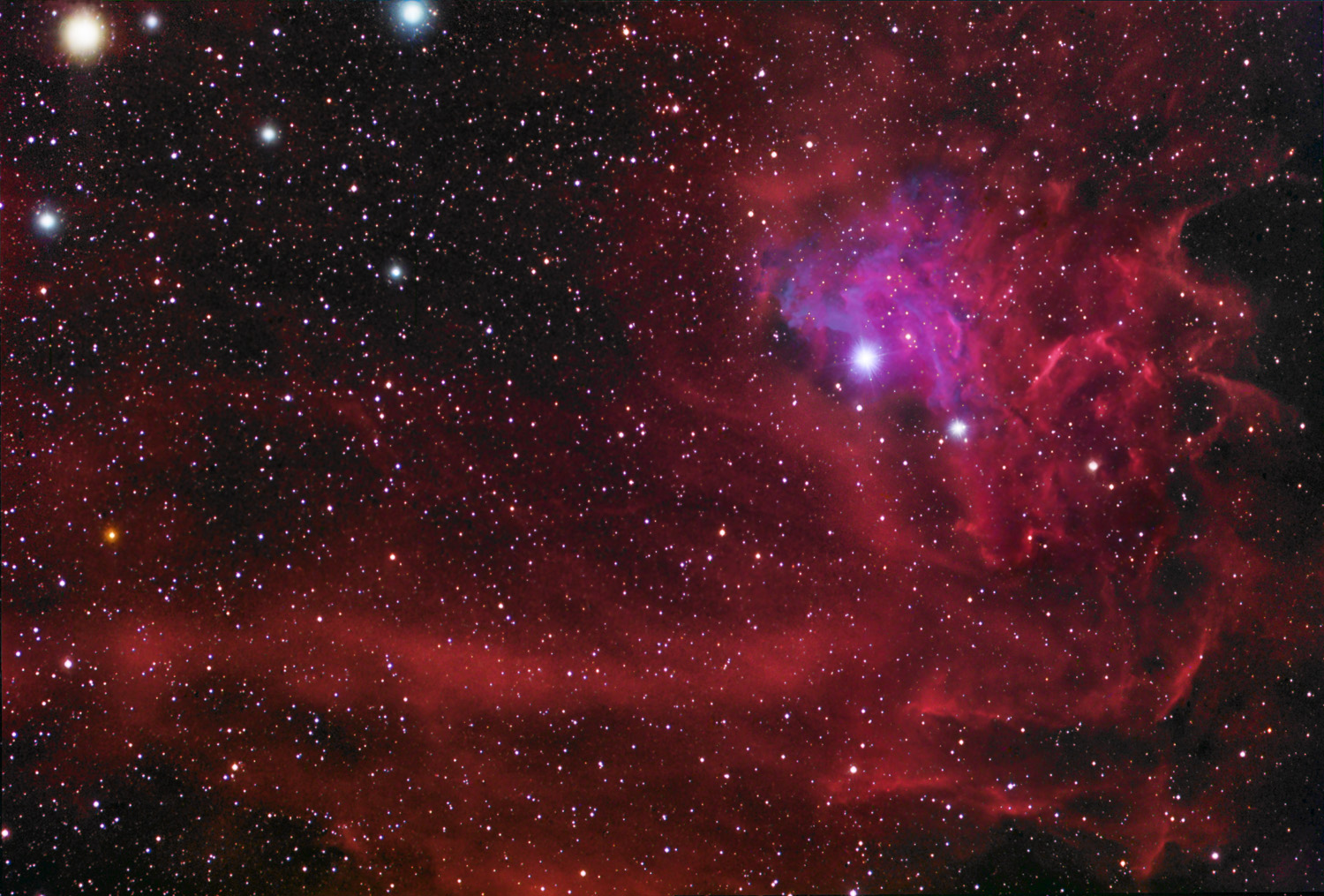
波打つ塵とガスの帯が、この「燃える星雲」の名前の由来となっています。星雲の赤と紫の色は、異なる領域に存在し、異なるプロセスによって生み出されています。画像の右側に見える明るい星AE Aurigaeは、非常に高温であるため青色に見え、周囲のガスから電子をはじき飛ばすほどのエネルギーを持つ光を放出しています。陽子が電子を再び捕獲すると、赤い光が頻繁に放出されます。紫色の領域の色は、AE Aurigaeから放出され、周囲の塵によって反射されたこの赤い光と青い光が混ざり合ったものです。この2つの領域は、それぞれ放出星雲と反射星雲と呼ばれています。上に示した燃える星雲は、正式にはIC 405として知られており、地球から約1500光年離れたところに位置し、直径は約5光年で、ぎょしゃ座の方向に小型望遠鏡で見ることができます。
原文(English)
Rippling dust and gas lanes give the Flaming Star Nebula its name. The red and purple colors of the nebula are present in different regions and are created by different processes. The bright star AE Aurigae, visible toward the image right, is so hot it is blue, emitting light so energetic it knocks electrons away from surrounding gas. When a proton recaptures an electron, red light is frequently emitted. The purple region's color is a mix of this red light and blue light emitted by AE Aurigae but reflected to us by surrounding dust. The two regions are referred to as emission nebula and reflection nebula, respectively. Pictured above, the Flaming Star Nebula, officially known as IC 405, lies about 1500 light years distant, spans about 5 light years, and is visible with a small telescope toward the constellation of Auriga.
\ この感動を宇宙仲間にシェア /
宇宙をXでシェア
© Robert Gendler / APOD