
🚀 宇宙の記憶・カレンダー検索
🚀 象徴的な写真:
APOD第1回
🚀 創造の柱
🚀 スピリット火星着陸
🚀 ハッブル超深宇宙
🚀 地球へようこそ|ブルー・マーブル
🚀 エンケラドス
🚀 ベテルギウス
🚀 火星着陸
🚀 青い夕焼け
🚀 冥王星のハート
🚀 皆既日食
🚀 アースライズ再構築
🚀 ブラックホール
🚀 ウェッブ初画像
🚀 アポロ11着陸
APOD30周年(2025年6月16日)
激動のイータ・カリーナ地域
The Turbulent Neighborhood of Eta Carina
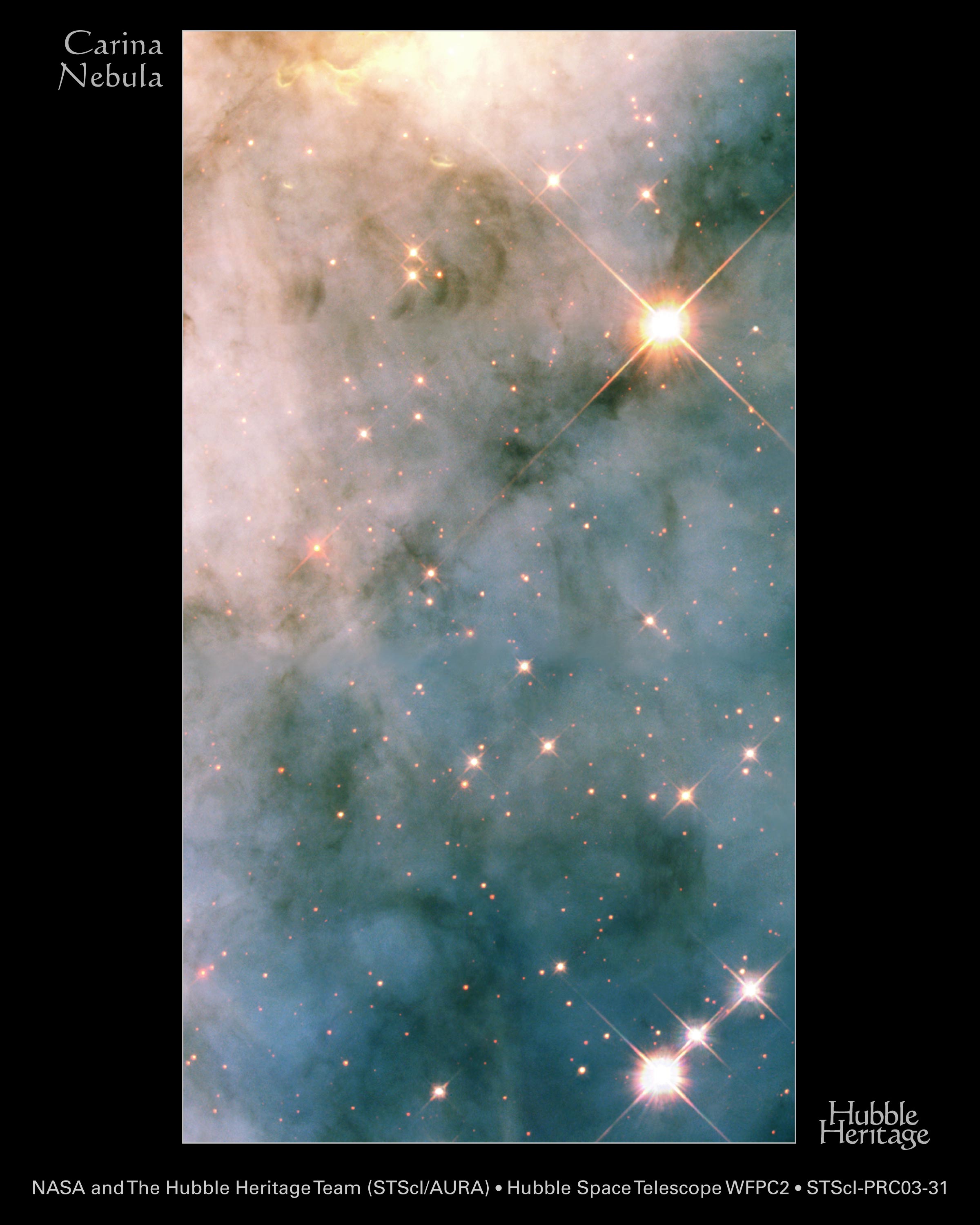
激しい星は周囲にどのような影響を与えるのでしょうか? その解明のために、天文学者たちはハッブル宇宙望遠鏡を、今後100万年以内に爆発する兆候を示している星、イータ・カリーナの周辺領域に向けました。上に示した近くの星雲には、高温ガスの流れ、低温ガスの溜まり、暗い球状体の塊、そして若い星を形成していると思われる高密度の塵の星間物質の柱があります。上の画像は、約3光年の範囲を探索したもので、これは約0.5光年の範囲に広がるイータ・カリーナの繭と、300光年以上に及ぶカリーナ大星雲の中間の大きさです。1843年4月、イータ・カリーナは地球の夜空でシリウスに次いで2番目に明るい星となりましたが、地球からの距離は約7,500光年で、シリウスの約800倍も遠いのです。
原文(English)
How do violent stars affect their surroundings? To help find out, astronomers pointed the Hubble Space Telescope to the regions surrounding Eta Carina, a star showing signs that it may explode sometime in the next million years. The nearby nebulosity, shown above, is home to streams of hot gas, pools of cool gas, knots of dark globules, and pillars of dense dusty interstellar matter likely forming young stars. The above image explores about three light-years, a region size intermediate to the Eta Carina cocoon, which spans only about one-half of a light year, and the Great Nebula in Carina, which spans over 300 light years. In April of 1843 Eta Car briefly became second only to Sirius as the brightest star in planet Earth's night sky, even though at a distance of about 7,500 light-years, it is about 800 times farther away.
\ この感動を宇宙仲間にシェア /
宇宙をXでシェア
© NASA / APOD