
🚀 宇宙の記憶・カレンダー検索
🚀 象徴的な写真:
APOD第1回
🚀 創造の柱
🚀 スピリット火星着陸
🚀 ハッブル超深宇宙
🚀 地球へようこそ|ブルー・マーブル
🚀 エンケラドス
🚀 ベテルギウス
🚀 火星着陸
🚀 青い夕焼け
🚀 冥王星のハート
🚀 皆既日食
🚀 アースライズ再構築
🚀 ブラックホール
🚀 ウェッブ初画像
🚀 アポロ11着陸
APOD30周年(2025年6月16日)
スターダストから見るワイルド2彗星の核
Comet Wild 2's Nucleus from Stardust
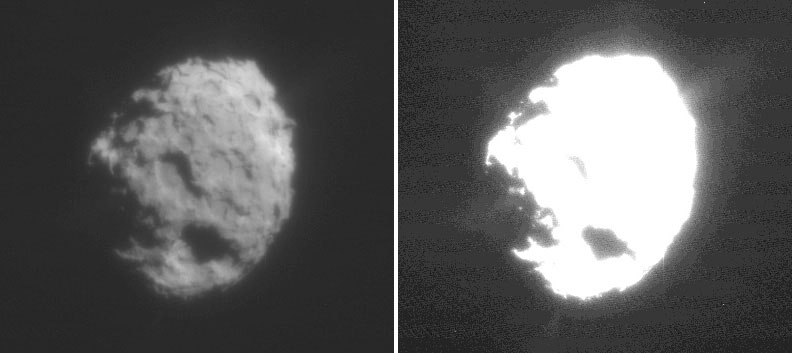
彗星の核はどのような姿をしているのでしょうか?昨日、ロボット探査機スターダストは、彗星の中心部のこれまでで最も詳細な画像を送り返し、この疑問に答えました。彗星の氷の中心部は、通常、太陽に接近する際に蒸発する不透明な塵やガスによって、地球上の望遠鏡からは見えません。しかし、過去に2回、ハレー彗星とボレリー彗星の場合、探査機は彗星のコマの残骸雲を突き抜けて核を撮影しました。上の画像は、スターダストが500キロメートル以内を通過した際に撮影したワイルド2彗星の核です。多数のクレーターと丘陵地帯がはっきりと見えます。スターダストのミッションはさらに野心的で、コマから粒子を採取し、2006年に地球に放出する予定です。画像と持ち帰られた粒子の分析により、ワイルド2彗星が形成された太陽系の初期の頃に関する新たな情報が得られるでしょう。
原文(English)
What does a comet nucleus look like? Yesterday the robot spacecraft Stardust answered this question by returning the most detailed images yet of the center of a comet. The icy centers of comets are usually hidden from Earth-bound telescopes by opaque dust and gas that boils off during approach to the Sun. Twice before, however, in the cases of Comet Halley and Comet Borrelly, spacecraft dove through the debris cloud of a comet's coma to image the nucleus. Pictured above is the nucleus of Comet Wild 2 taken by Stardust when passing within 500 kilometers. Clearly visible are numerous craters and hilly terrain. The Stardust mission is yet more ambitious -- it has captured particles from the coma and will jettison them to Earth in 2006. Analyses of the images and returned particles will likely give fresh information about our Solar System back near its beginning, when Comet Wild 2 formed.
\ この感動を宇宙仲間にシェア /
宇宙をXでシェア
© NASA / APOD