
🚀 宇宙の記憶・カレンダー検索
🚀 象徴的な写真:
APOD第1回
🚀 創造の柱
🚀 スピリット火星着陸
🚀 ハッブル超深宇宙
🚀 地球へようこそ|ブルー・マーブル
🚀 エンケラドス
🚀 ベテルギウス
🚀 火星着陸
🚀 青い夕焼け
🚀 冥王星のハート
🚀 皆既日食
🚀 アースライズ再構築
🚀 ブラックホール
🚀 ウェッブ初画像
🚀 アポロ11着陸
APOD30周年(2025年6月16日)
超新星サバイバー
Supernova Survivor
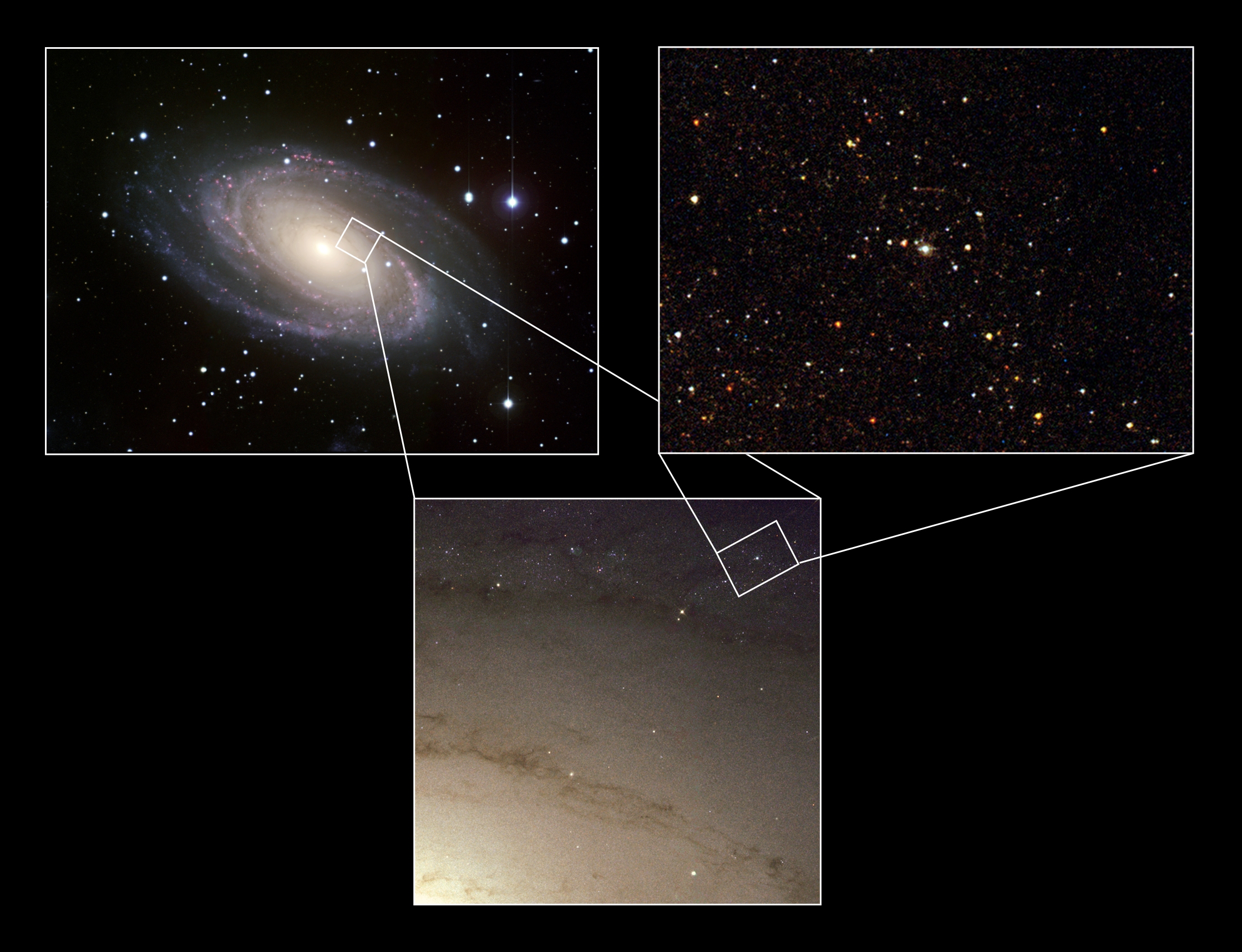
美しい渦巻銀河M81の全景から始まり、挿入図(左、下、右)をたどって、生き残った星にズームインします。右側の最後の視野の中心に見えるのは、最近、宇宙の大激変、つまり伴星の超新星爆発の生き残りとして特定された星です。太陽の10倍以上の質量を持つ星の核崩壊によって引き起こされたと思われるこの宇宙爆発からの光は、10年以上前に初めて地球に到達し、超新星SN 1993Jとしてカタログ化されました。超新星自体はもはや見えませんが、その領域の塵からの光のエコーは、連星系における超新星の最初の既知の生き残りである伴星の近くで今でも見ることができます。天文学者たちは、恒星爆発前の数百年の間に生き残った伴星に相当量の物質が移動したことが、この超新星に見られる特異性を説明できると考えています。大マゼラン雲の超新星SN 1987Aに次いで、近隣のM81にあるSN 1993Jは、現代において観測された中で最も明るい超新星である。
原文(English)
Beginning with a full view of beautiful spiral galaxy M81, follow the insets (left, bottom, then right) to zoom in on a real survivor. Seen at the center of the final field on the right is a star recently identified as the survivor of a cosmic cataclysm -- the supernova explosion of its companion star. Light from the cosmic blast, likely triggered by the core collapse of a star initially more than 10 times as massive as the Sun, first reached Earth over 10 years ago and was cataloged as supernova SN 1993J. Though the supernova itself is no longer visible, light-echoes from dust in the region can still be seen near the companion, the first known survivor of a supernova in a binary star system. Astronomers believe that a substantial transfer of material to the surviving companion star during the last few hundred years before the stellar explosion can explain peculiarities seen in this supernova. After supernova SN 1987A in the Large Magellanic Cloud, SN 1993J in nearby M81 is the brightest supernova seen in modern times.
\ この感動を宇宙仲間にシェア /
宇宙をXでシェア
© NASA / APOD