
🚀 宇宙の記憶・カレンダー検索
🚀 象徴的な写真:
APOD第1回
🚀 創造の柱
🚀 スピリット火星着陸
🚀 ハッブル超深宇宙
🚀 地球へようこそ|ブルー・マーブル
🚀 エンケラドス
🚀 ベテルギウス
🚀 火星着陸
🚀 青い夕焼け
🚀 冥王星のハート
🚀 皆既日食
🚀 アースライズ再構築
🚀 ブラックホール
🚀 ウェッブ初画像
🚀 アポロ11着陸
APOD30周年(2025年6月16日)
小惑星2004 FHが高速で通過
Asteroid 2004 FH Whizzes By
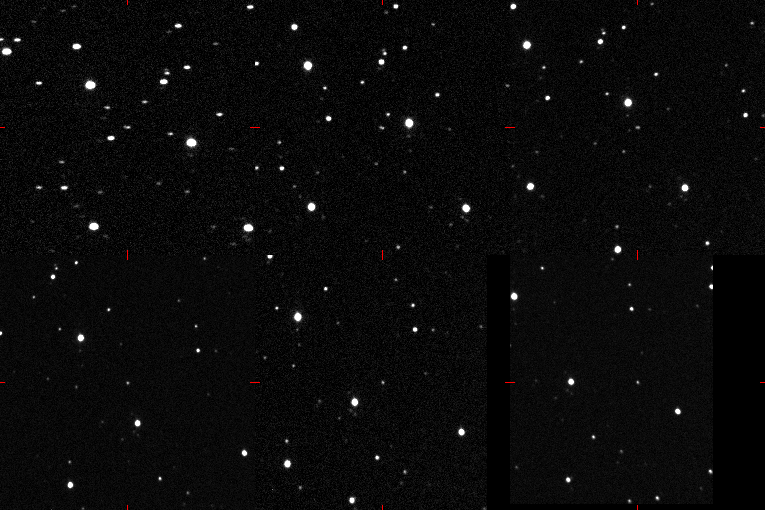
先週、小さな小惑星が地球に異常に接近しました。小惑星2004 FHは危険はありませんでしたが、双眼鏡で見えるほど明るくなりました。地球半径のわずか7倍の距離を通過したこの小惑星は、発見されてからわずか2日後でしたが、これまで予測されていた中で最も近いものでした。上の写真は、3月18日にスイスから撮影された、直径30メートルの2004 FHが最接近付近で空を横切る様子です。約30分間のタイムラプス動画の中央に写っている小惑星は、回転しながら明るさを変えています。このサイズの小惑星が地球にこれほど接近するのは約2年に1度です。2004 FHが地球に衝突したとしても、おそらく大気圏で燃え尽きたでしょう。しかし、地球上の大きな衝突痕は、遠い昔に実際に地球に衝突したより大きな小惑星や彗星の証拠です。天文学者たちは、地球をより安全な場所にするという目標のもと、潜在的に危険な小惑星の発見、追跡、研究を続けている。
原文(English)
Last week, a small asteroid approached unusually close to the Earth. Asteroid 2004 FH posed no danger, but became bright enough to see with binoculars. Passing only 7 Earth radii away, this asteroid pass was the closest yet that was previously predicted, although it was discovered only two days before. Pictured above, the 30-meter sized 2004 FH was imaged from Switzerland crossing the sky on March 18, near its closest approach. The asteroid, centered in the above time-lapse movie covering about 30 minutes, changes in brightness as it tumbles by. An asteroid this size passes this close to Earth about every two years. Were 2004 FH to have struck the Earth, it would have likely burned up in the atmosphere. Large impact features on the Earth are testaments, however, to larger asteroids and comets that actually impacted the Earth in the distant past. Astronomers continue to discover, track, and study potentially hazardous asteroids with a goal of making planet Earth a safer place.
\ この感動を宇宙仲間にシェア /
宇宙をXでシェア
© S. Sposetti & R. Behrend
(Geneva Obs.) / APOD