
🚀 宇宙の記憶・カレンダー検索
🚀 象徴的な写真:
APOD第1回
🚀 創造の柱
🚀 スピリット火星着陸
🚀 ハッブル超深宇宙
🚀 地球へようこそ|ブルー・マーブル
🚀 エンケラドス
🚀 ベテルギウス
🚀 火星着陸
🚀 青い夕焼け
🚀 冥王星のハート
🚀 皆既日食
🚀 アースライズ再構築
🚀 ブラックホール
🚀 ウェッブ初画像
🚀 アポロ11着陸
APOD30周年(2025年6月16日)
赤外線で捉えた巨大星形成領域DR21
Massive Star Forming Region DR21 in Infrared
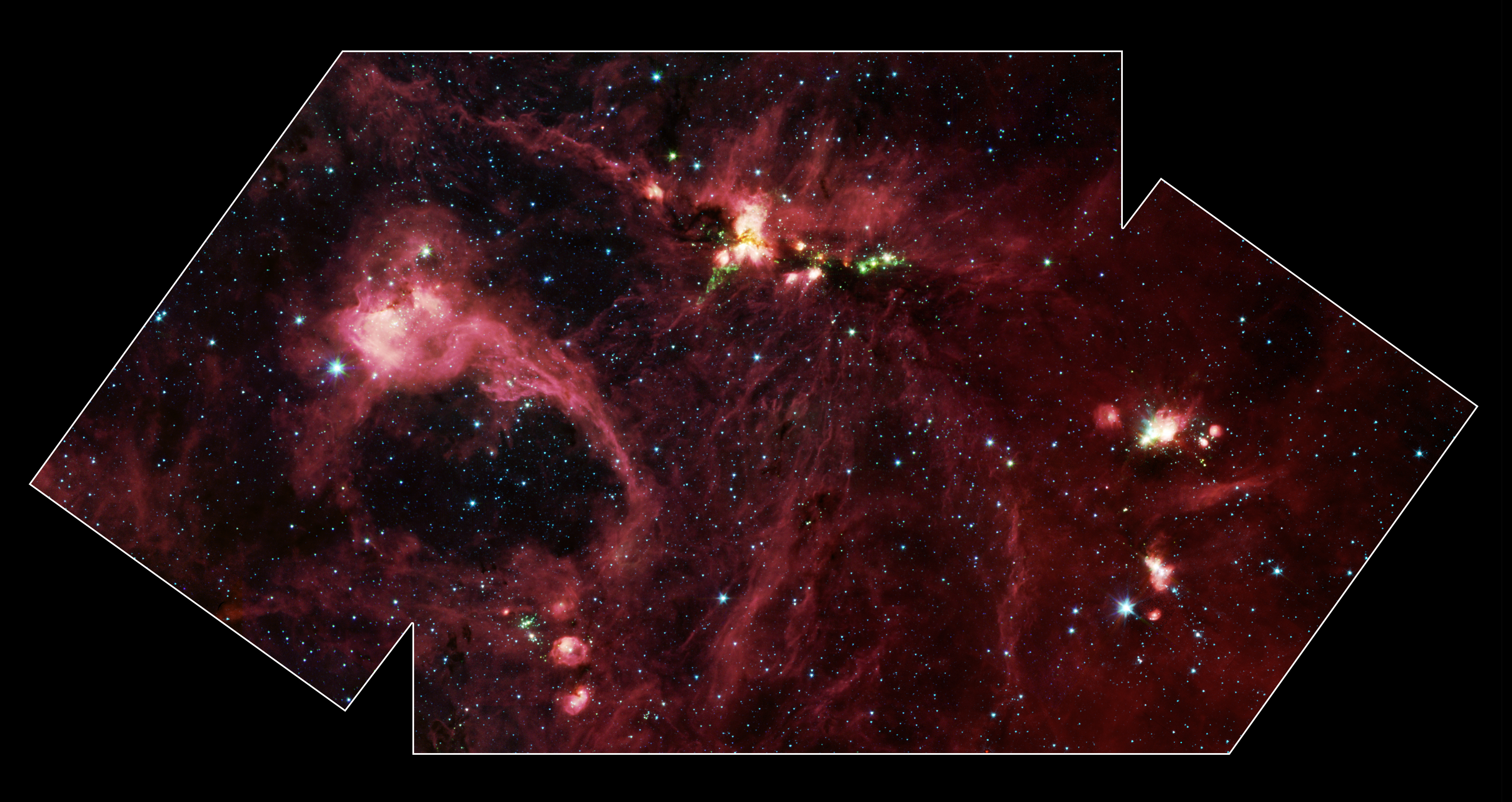
通常は人目に触れない巨大分子雲DR21の奥深くで、これまで記録された中で最も質量の大きい星々が誕生している星形成領域が発見されました。軌道上のスピッツァー宇宙望遠鏡の赤外線アレイカメラが昨年、中赤外線でこの雲の内部を観測しました。この雲は、密度の高い星間塵のため可視光に対して不透明です。上記の代表的なカラー赤外線スピッツァー画像では、巨大な泡、塵とガスの複雑なタペストリー、そして非常に質量の大きい星々がはっきりと確認できます。赤外線フィラメントは、PAHと呼ばれる有機化合物によって実際に光っています。複雑なパターンは、星間風、放射圧、磁場、重力の複雑な相互作用によって生じています。この画像に写っている領域は約75光年に及び、はくちょう座の方向に約6,000光年離れた場所に位置しています。
原文(English)
Deep in the normally hidden recesses of giant molecular cloud DR21, a stellar nursery has been found creating some of the most massive stars yet recorded. The orbiting Spitzer Space Telescope's Infrared Array Camera opened the window into the cloud last year in mid- infrared light. The cloud is opaque to visible light because of dense interstellar dust. Noticeable in the above representative color infrared Spitzer image are huge bubbles, a complex tapestry of dust and gas, and very massive stars. The infrared filaments actually glow because of organic compounds known as PAHs. The intricate patterns are caused by complex interactions between interstellar winds, radiation pressures, magnetic fields, and gravity. The pictured region spans about 75 light years and lies about 6,000 light years distant toward the constellation of Cygnus.
\ この感動を宇宙仲間にシェア /
宇宙をXでシェア
© NASA / APOD