
🚀 宇宙の記憶・カレンダー検索
🚀 象徴的な写真:
APOD第1回
🚀 創造の柱
🚀 スピリット火星着陸
🚀 ハッブル超深宇宙
🚀 地球へようこそ|ブルー・マーブル
🚀 エンケラドス
🚀 ベテルギウス
🚀 火星着陸
🚀 青い夕焼け
🚀 冥王星のハート
🚀 皆既日食
🚀 アースライズ再構築
🚀 ブラックホール
🚀 ウェッブ初画像
🚀 アポロ11着陸
APOD30周年(2025年6月16日)
月の塵とダクトテープ
Lunar Dust and Duct Tape
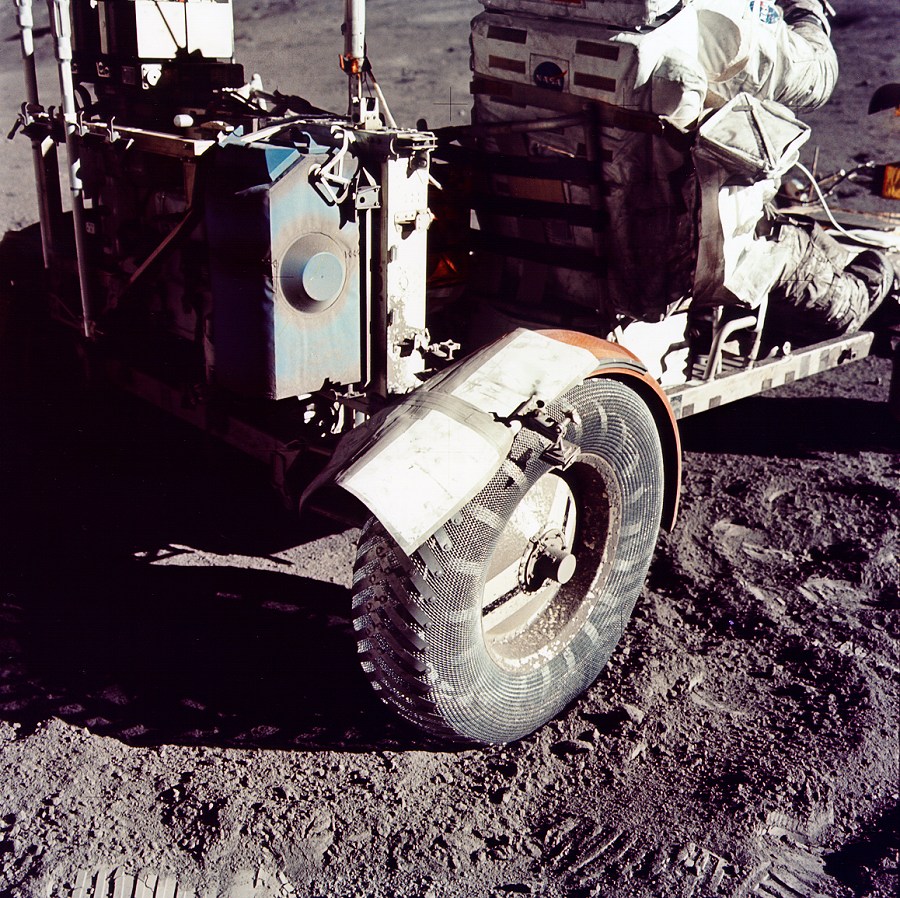
なぜ月は埃っぽいのでしょうか?地球では、岩石は風と水によって風化され、土と砂になります。月では、長年にわたる微小隕石の衝突によって岩石の表面が吹き飛ばされ、粉状の月の土壌、つまりレゴリスの層が形成されました。この月のレゴリスは、科学的にも産業的にも大きな恩恵をもたらす可能性があります。しかし、アポロ宇宙飛行士とその装備にとって、遍在する細かい砂塵は間違いなく問題でした。1972年12月、月面でアポロ17号の宇宙飛行士ハリソン・シュミットとユージン・サーナンは、自分たちや装備に舞い上がる砂塵から月面探査車のフェンダーを修理する必要がありました。この写真には、砂塵に覆われた探査車の車輪とフェンダー、そして予備の地図、クランプ、灰色の「ダクトテープ」の巧妙な使い方が写っています。
原文(English)
Why is the Moon dusty? On Earth, rocks are weathered by wind and water, creating soil and sand. On the Moon, the long history of micrometeorite bombardment has blasted away at the rocky surface creating a layer of powdery lunar soil or regolith. This lunar regolith could be a scientific and industrial bonanza. But for the Apollo astronauts and their equipment, the pervasive, fine, gritty dust was definitely a problem. On the lunar surface in December 1972, Apollo 17 astronauts Harrison Schmitt and Eugene Cernan needed to repair one of their lunar rover's fenders in an effort to keep the "rooster tails" of dust away from themselves and their gear. This picture reveals the wheel and fender of their dust covered rover along with the ingenious application of spare maps, clamps, and a grey strip of "duct tape".
\ この感動を宇宙仲間にシェア /
宇宙をXでシェア
© NASA / APOD