
🚀 宇宙の記憶・カレンダー検索
🚀 象徴的な写真:
APOD第1回
🚀 創造の柱
🚀 スピリット火星着陸
🚀 ハッブル超深宇宙
🚀 地球へようこそ|ブルー・マーブル
🚀 エンケラドス
🚀 ベテルギウス
🚀 火星着陸
🚀 青い夕焼け
🚀 冥王星のハート
🚀 皆既日食
🚀 アースライズ再構築
🚀 ブラックホール
🚀 ウェッブ初画像
🚀 アポロ11着陸
APOD30周年(2025年6月16日)
N11B:大マゼラン雲の星雲
N11B: Star Cloud of the LMC
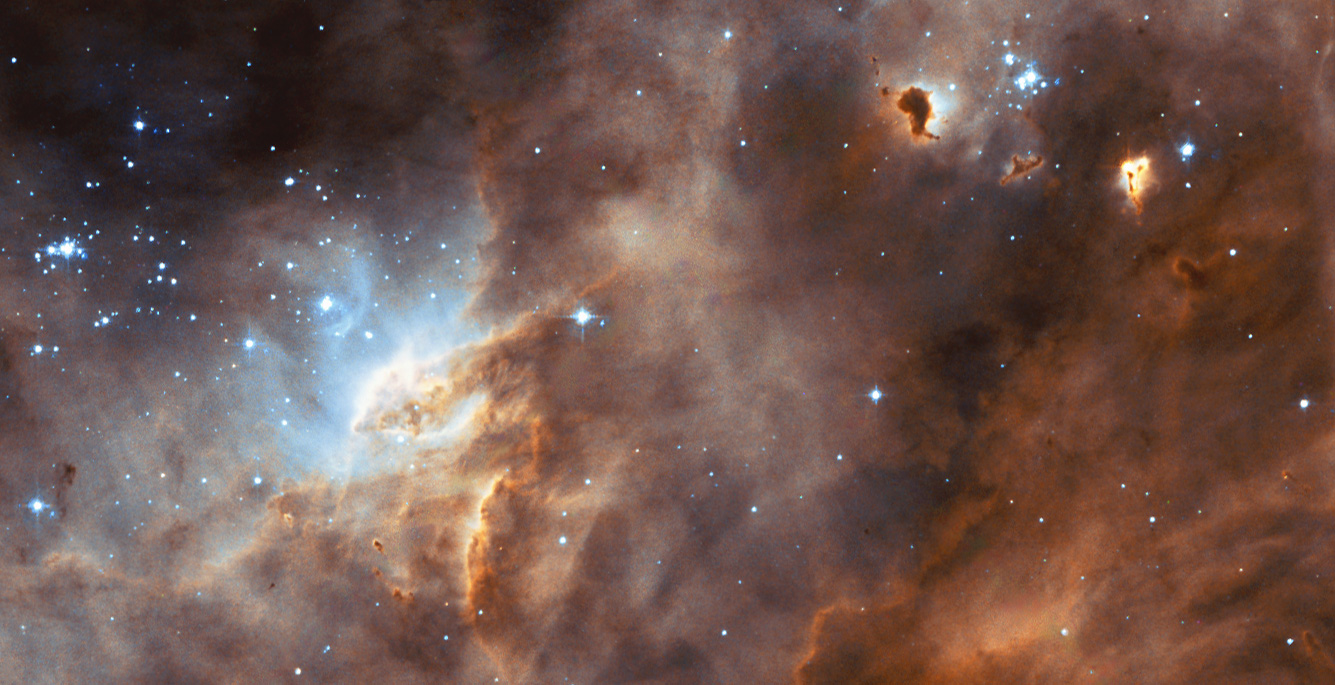
Massive stars, abrasive winds, mountains of dust, and energetic light sculpt one of the largest and most picturesque regions of star formation in the Local Group of Galaxies. Known as N11, the region is visible on the upper right of many images of its home galaxy, the Milky Way neighbor known as the Large Magellanic Clouds (LMC). The above image actually highlights N11B, part of the nebula that spans about 100 light years and is particularly active. The entire emission nebula N11 is second in LMC size only to 30 Doradus. Studying the stars in N11B has shown that it actually houses three successive generations of star formation. Compact globules of dark dust housing emerging young stars are also visible on the upper right.
原文(English)
Massive stars, abrasive winds, mountains of dust, and energetic light sculpt one of the largest and most picturesque regions of star formation in the Local Group of Galaxies. Known as N11, the region is visible on the upper right of many images of its home galaxy, the Milky Way neighbor known as the Large Magellanic Clouds (LMC). The above image actually highlights N11B, part of the nebula that spans about 100 light years and is particularly active. The entire emission nebula N11 is second in LMC size only to 30 Doradus. Studying the stars in N11B has shown that it actually houses three successive generations of star formation. Compact globules of dark dust housing emerging young stars are also visible on the upper right.
\ この感動を宇宙仲間にシェア /
宇宙をXでシェア
© NASA / APOD