
🚀 宇宙の記憶・カレンダー検索
🚀 象徴的な写真:
APOD第1回
🚀 創造の柱
🚀 スピリット火星着陸
🚀 ハッブル超深宇宙
🚀 地球へようこそ|ブルー・マーブル
🚀 エンケラドス
🚀 ベテルギウス
🚀 火星着陸
🚀 青い夕焼け
🚀 冥王星のハート
🚀 皆既日食
🚀 アースライズ再構築
🚀 ブラックホール
🚀 ウェッブ初画像
🚀 アポロ11着陸
APOD30周年(2025年6月16日)
オーロラ
Northern Lights
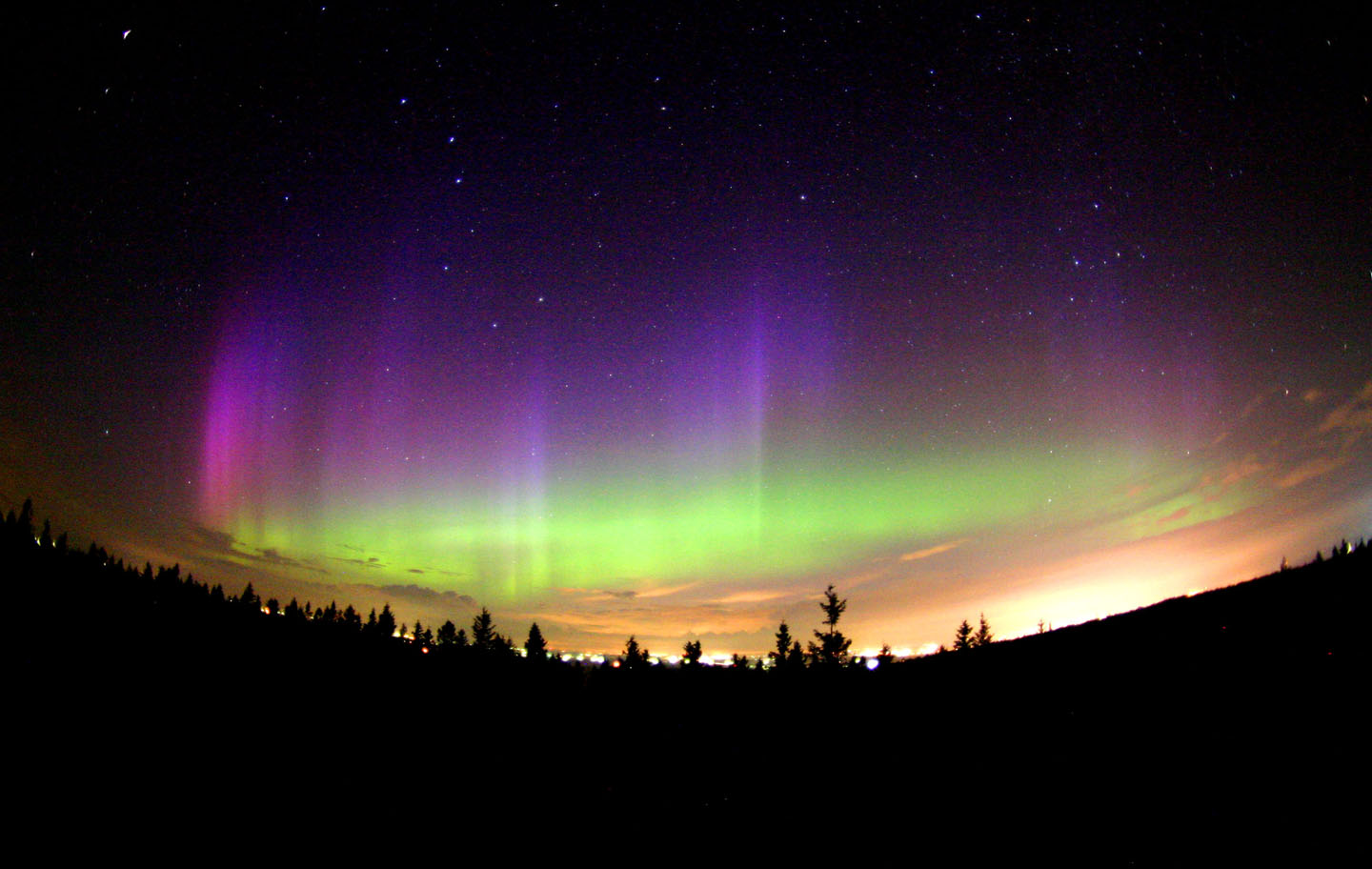
7月中旬の美しい夏の夕方、宇宙天気を満喫していた天文学者のフィリップ・ムセットは、カナダのケベック州にあるモン・コスモス天文台から北を眺め、魚眼レンズでこの色鮮やかな景色を撮影しました。前景では、北の地平線に沿って並ぶ光が、低い雲にオレンジ色を帯びさせています。しかし、雲のはるか上、高度100キロメートル以上には、宇宙の端にある高エネルギー粒子によって生み出されるオーロラ、つまり北極光の魅惑的な緑と紫の色合いが広がっています。背景には、北の空でおなじみの星々が見えます。特に、有名な天体の台所道具である北斗七星(左)と、W字型の星座であるカシオペヤ座(右)は簡単に見つけることができます。そして、北斗七星の指針となる星をたどっていくと、おそらく最も有名な北極光である北極星が見えてきます。
原文(English)
While enjoying the spaceweather on a gorgeous summer evening in mid-July, astronomer Philippe Moussette captured this colorful fish-eye lens view looking north from the Observatoire Mont Cosmos, Quebec, Canada, planet Earth. In the foreground, lights along the northern horizon give an orange cast to the low clouds. But far above the clouds, at altitudes of 100 kilometers or more, are alluring green and purple hues of the aurora borealis or northern lights, a glow powered by energetic particles at the edge of space. In the background are familiar stars of the northern sky. In particular, that famous celestial kitchen utensil, the Big Dipper (left), and the W-shaped constellation Cassiopeia (right) are easy to spot. Then, just follow the pointer stars of the Big Dipper to Polaris, perhaps the most famous northern light of all.
\ この感動を宇宙仲間にシェア /
宇宙をXでシェア
© Philippe
Moussette
(Obs. Mont
Cosmos) / APOD