
🚀 宇宙の記憶・カレンダー検索
🚀 象徴的な写真:
APOD第1回
🚀 創造の柱
🚀 スピリット火星着陸
🚀 ハッブル超深宇宙
🚀 地球へようこそ|ブルー・マーブル
🚀 エンケラドス
🚀 ベテルギウス
🚀 火星着陸
🚀 青い夕焼け
🚀 冥王星のハート
🚀 皆既日食
🚀 アースライズ再構築
🚀 ブラックホール
🚀 ウェッブ初画像
🚀 アポロ11着陸
APOD30周年(2025年6月16日)
ジェネシスミッションのハードインパクト
Genesis Mission's Hard Impact
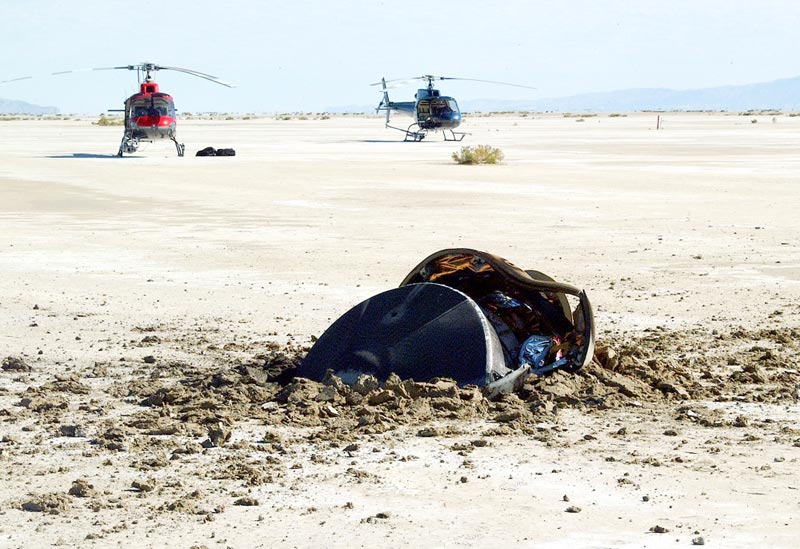
先週、宇宙から飛来した円盤がレーダーで追跡され、ヘリコプターに追われた後、ユタ州の砂漠に墜落した。しかし、宇宙人は関与していなかった。上の写真の円盤は、太陽を研究するためにNASA自身が3年前に打ち上げた人工ロボット宇宙船ジェネシスの一部であるサンプル回収カプセルだった。時速300キロメートルを超える予想外の激しい着陸は、パラシュートが予定通りに開かなかったために起こった。ジェネシスミッションは、通常は地球の磁場によって偏向される太陽風粒子を収集するために太陽の周回軌道を回っていた。大きな疑問が残る――回収されたサンプルは、太陽の実際の組成に関する情報を回収するのに十分な状態なのだろうか?ジェネシスチームの科学者とエンジニアは、それを解明するために懸命に取り組んでいる。
原文(English)
A flying saucer from outer space crash-landed in the Utah desert last week after being tracked by radar and chased by helicopters. No space aliens were involved, however. The saucer, pictured above, was the Genesis sample return capsule, part of a human-made robot Genesis spaceship launched three years ago by NASA itself to study the Sun. The unexpectedly hard landing at over 300 kilometers per hour occurred because the parachutes did not open as planned. The Genesis mission had been orbiting the Sun collecting solar wind particles that are usually deflected away by Earth's magnetic field. A big question remains -- are the returned samples in good enough condition to recover information about the real composition of the Sun? Genesis team scientists and engineers are working hard to find out.
\ この感動を宇宙仲間にシェア /
宇宙をXでシェア
© NASA / APOD