
🚀 宇宙の記憶・カレンダー検索
🚀 象徴的な写真:
APOD第1回
🚀 創造の柱
🚀 スピリット火星着陸
🚀 ハッブル超深宇宙
🚀 地球へようこそ|ブルー・マーブル
🚀 エンケラドス
🚀 ベテルギウス
🚀 火星着陸
🚀 青い夕焼け
🚀 冥王星のハート
🚀 皆既日食
🚀 アースライズ再構築
🚀 ブラックホール
🚀 ウェッブ初画像
🚀 アポロ11着陸
APOD30周年(2025年6月16日)
Swiftがローンチ
Swift Launches
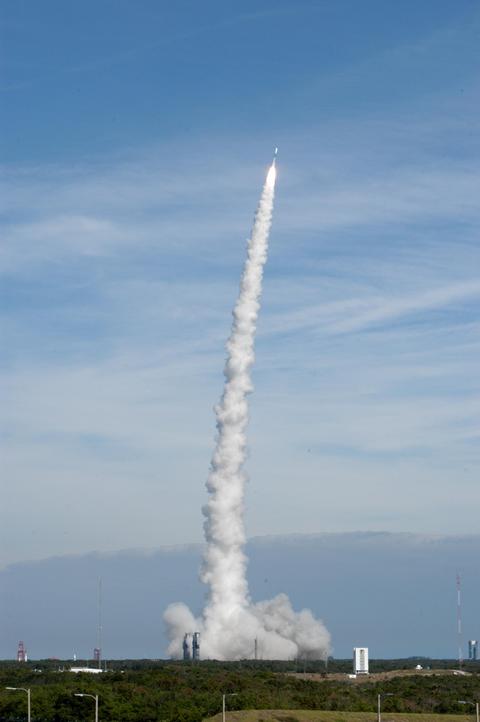
ガンマ線バーストはどこで発生するのでしょうか?その解明のため、NASAは土曜日にスウィフト衛星を打ち上げました(上の写真参照)。スウィフトがこれまでのどの衛星よりも優れている点は、これらの謎めいた爆発を天球上の位置と距離の両方で迅速に特定できることです。ガンマ線バースト(GRB)の位置が特定されると、スウィフト自身が回転して正面から向き合い、その距離を直接測定します。スウィフトの位置情報は、世界中の電磁スペクトルを網羅して運用されている地上望遠鏡に即座に送信され、これらの望遠鏡は天球上の特定の場所を観測するのを待っています。その後収集されたGRBと残光の情報は、天文学者が最初の爆発の性質だけでなく、拡大する衝撃波の性質も特定するのに役立ちます。スウィフトによって特定されたGRBの中には、これまで検出された中で最も遠い突発的な現象である可能性があり、初期宇宙における最初の星形成の波の性質と速度に関する独自の手がかりを握っているかもしれません。
原文(English)
Where do gamma ray bursts occur? To help find out, NASA launched the Swift satellite on Saturday, as pictured above. What Swift is designed to do better than any previous satellite is to quickly locate these enigmatic explosions in both sky position and distance. Once a gamma ray burst (GRB) is located, Swift itself will rotate to face it head-on and determine its distance directly. Swift locations will be immediately beamed down to Earth-based telescopes operating around the world and across the electromagnetic spectrum that are just waiting for a place on the sky to point. Subsequently collected GRB and afterglow information will help astronomers not only determine the nature of the initial explosions, but also the nature of the expanding shockwaves. Some Swift-located GRBs could turn out to be the most distant transient events ever detected, holding unique clues to the nature and rate of the very first wave of star formation in the early universe.
\ この感動を宇宙仲間にシェア /
宇宙をXでシェア
© NASA / APOD