
🚀 宇宙の記憶・カレンダー検索
🚀 象徴的な写真:
APOD第1回
🚀 創造の柱
🚀 スピリット火星着陸
🚀 ハッブル超深宇宙
🚀 地球へようこそ|ブルー・マーブル
🚀 エンケラドス
🚀 ベテルギウス
🚀 火星着陸
🚀 青い夕焼け
🚀 冥王星のハート
🚀 皆既日食
🚀 アースライズ再構築
🚀 ブラックホール
🚀 ウェッブ初画像
🚀 アポロ11着陸
APOD30周年(2025年6月16日)
Cyg X-1:暗闇の中でブラックホールは形成されるのか?
Cyg X-1: Can Black Holes Form in the Dark?
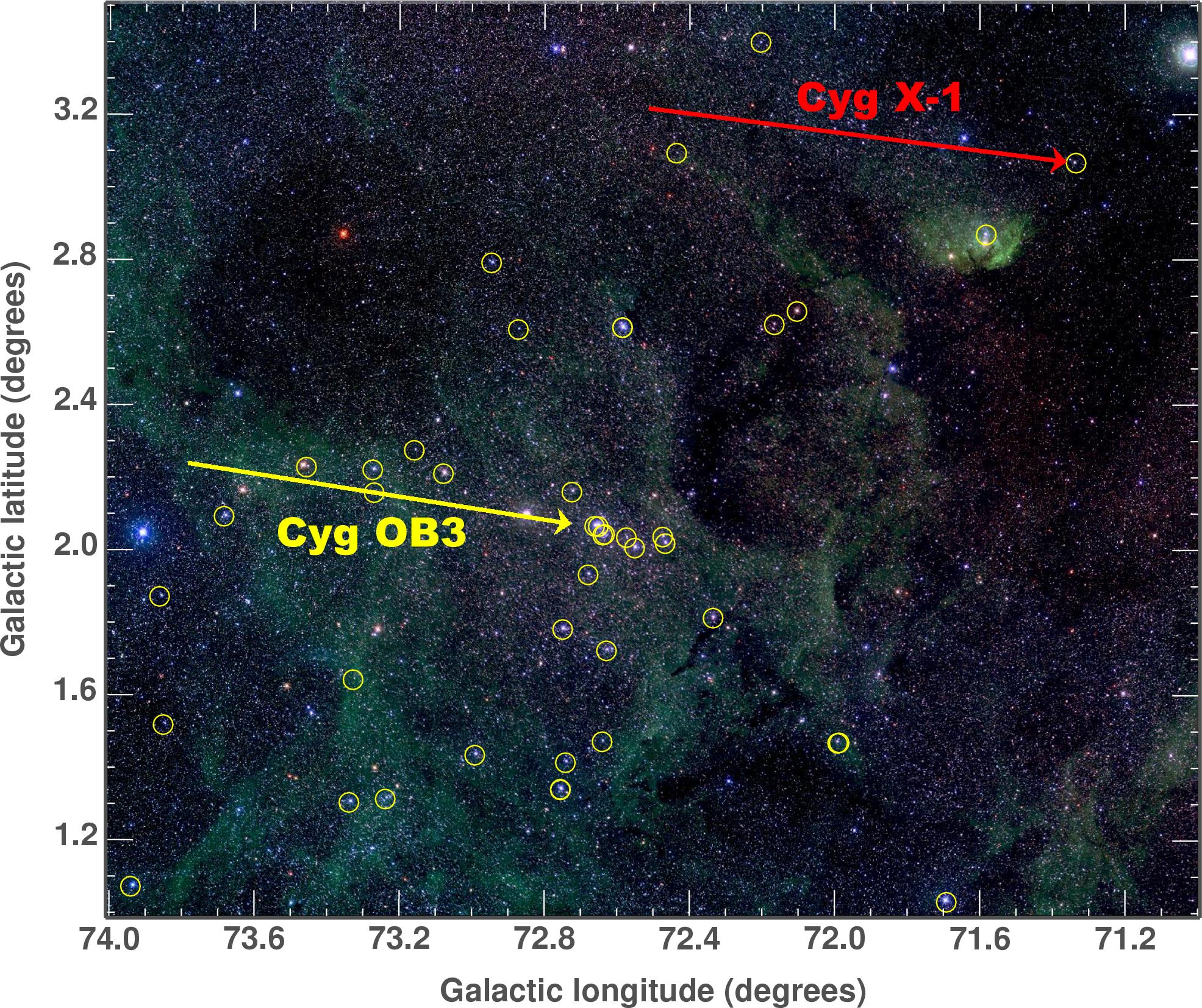
巨大な星の崩壊する中心核からブラックホールが形成される際には、壮大な超新星爆発が起こると考えられています。このような極めてエネルギーの高い崩壊は、謎に包まれた宇宙ガンマ線バーストの有力な説明でもあります。しかし、研究者たちは現在、天の川銀河で最も有名なブラックホールである白鳥座X-1は、超新星爆発を伴わずに巨大な星が崩壊したときに誕生したと示唆しています。彼らの力学的証拠は、白鳥座の美しい領域を捉えたこのカラー画像にまとめられています。この画像には、白鳥座X-1と、白鳥座OB3として知られる巨大な星の集団(黄色の円)が写っています。矢印は、白鳥座X-1の測定された方向と速度と、白鳥座OB3の巨大な星の平均方向と速度を比較しています。これらの類似した動きは、白鳥座X-1の祖先星自体が星団の一員であり、ブラックホールになったときにその軌道が全く変化しなかったことを示しています。対照的に、もしCyg X-1が激しい超新星爆発で誕生したとしたら、おそらく強烈な衝撃を受け、軌道が変わっただろう。超新星爆発でなかったとしたら、Cyg X-1ブラックホールの形成は、天の川銀河に暗黒ガンマ線バーストを引き起こした可能性はあるのだろうか?
原文(English)
The formation of a black hole from the collapsing core of a massive star is thought to be heralded by a spectacular supernova explosion. Such an extremely energetic collapse is also a leading explanation for the mysterious cosmic gamma-ray bursts. But researchers now suggest that the Milky Way's most famous black hole, Cygnus X-1, was born when a massive star collapsed -- without any supernova explosion at all. Their dynamical evidence is summarized in this color image of a gorgeous region in Cygnus, showing Cyg X-1 and a cluster of massive stars (yellow circles) known as Cygnus OB3. Arrows compare the measured direction and speed of Cyg X-1 and the average direction and speed of the massive stars of Cyg OB3. The similar motions indicate that Cyg X-1's progenitor star was itself a cluster member and that its path was not altered at all when it became a black hole. In contrast, if Cyg X-1 were born in a violent supernova it would have likely received a fierce kick, changing its course. If not a supernova, could the formation of the Cyg X-1 black hole have produced a dark gamma-ray burst in the Milky Way?
\ この感動を宇宙仲間にシェア /
宇宙をXでシェア
© NASA / APOD