
🚀 宇宙の記憶・カレンダー検索
🚀 象徴的な写真:
APOD第1回
🚀 創造の柱
🚀 スピリット火星着陸
🚀 ハッブル超深宇宙
🚀 地球へようこそ|ブルー・マーブル
🚀 エンケラドス
🚀 ベテルギウス
🚀 火星着陸
🚀 青い夕焼け
🚀 冥王星のハート
🚀 皆既日食
🚀 アースライズ再構築
🚀 ブラックホール
🚀 ウェッブ初画像
🚀 アポロ11着陸
APOD30周年(2025年6月16日)
NGC 1316:銀河衝突後
NGC 1316: After Galaxies Collide
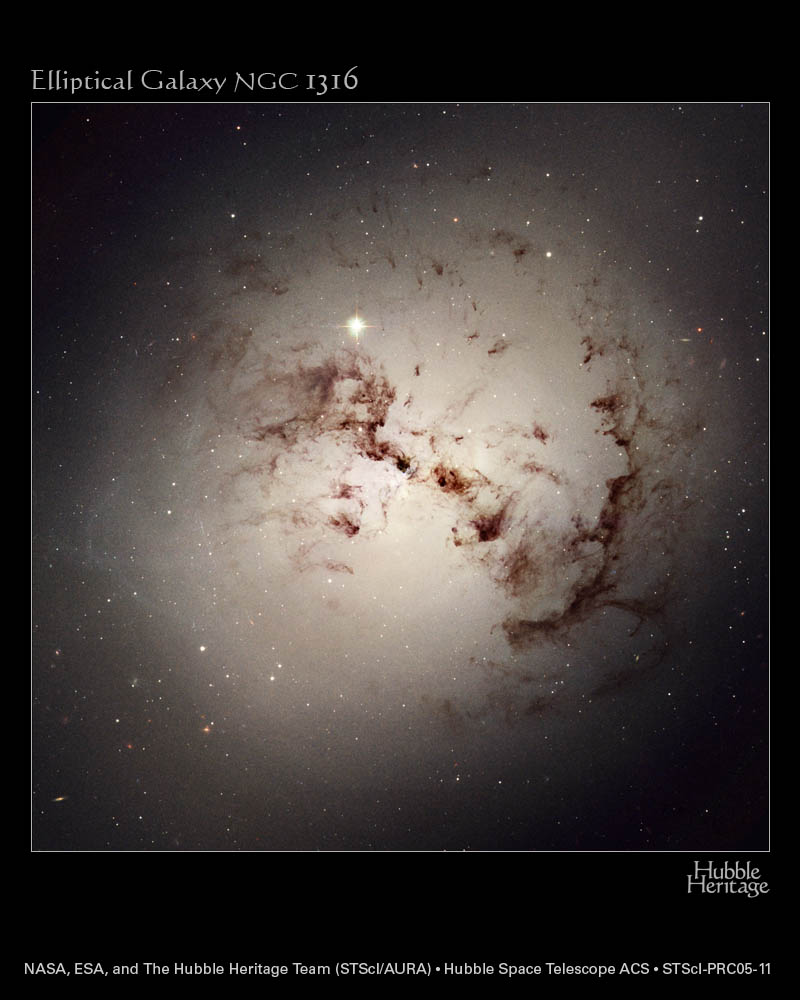
この奇妙な銀河はどのように形成されたのでしょうか?天文学者たちは、NGC 1316のような星、ガス、塵の異常な塊の原因を解明しようと、探偵のように調査を進めます。予備調査によると、NGC 1316は巨大な楕円銀河であり、渦巻銀河によく見られる暗い塵の帯が含まれています。ハッブル宇宙望遠鏡で撮影された上記の画像には、この巨大な塊の歴史を再構築するのに役立つ詳細が示されています。詳しく調べると、NGC 1316の中心に向かうにつれて、低質量の球状星団が少なくなっていることがわかります。このような現象は、過去数十億年の間に他の銀河と衝突または合体した銀河で予想されます。このような衝突の後、多くの星団は密度の高い銀河中心部で破壊されます。暗い結び目と塵の帯は、飲み込まれた銀河の1つ以上が渦巻銀河であったことを示しています。 NGC 1316は、約6万光年の範囲に広がり、約7500万光年離れた炉座の方向に位置しています。
原文(English)
How did this strange-looking galaxy form? Astronomers turn detectives when trying to figure out the cause of unusual jumbles of stars, gas, and dust like NGC 1316. A preliminary inspection indicates that NGC 1316 is an enormous elliptical galaxy that includes dark dust lanes usually found in a spiral. The above image taken by the Hubble Space Telescope shows details, however, that help in reconstructing the history of this gigantic jumble. Close inspection finds fewer low mass globular clusters of stars toward NGC 1316's center. Such an effect is expected in galaxies that have undergone collisions or merging with other galaxies in the past few billion years. After such collisions, many star clusters would be destroyed in the dense galactic center. The dark knots and lanes of dust indicate that one or more of the devoured galaxies were spiral galaxies. NGC 1316 spans about 60,000 light years and lies about 75 million light years away toward the constellation of the Furnace.
\ この感動を宇宙仲間にシェア /
宇宙をXでシェア
© NASA / APOD