
🚀 宇宙の記憶・カレンダー検索
🚀 象徴的な写真:
APOD第1回
🚀 創造の柱
🚀 スピリット火星着陸
🚀 ハッブル超深宇宙
🚀 地球へようこそ|ブルー・マーブル
🚀 エンケラドス
🚀 ベテルギウス
🚀 火星着陸
🚀 青い夕焼け
🚀 冥王星のハート
🚀 皆既日食
🚀 アースライズ再構築
🚀 ブラックホール
🚀 ウェッブ初画像
🚀 アポロ11着陸
APOD30周年(2025年6月16日)
パラナル上空の天の川
The Milky Way Over Paranal
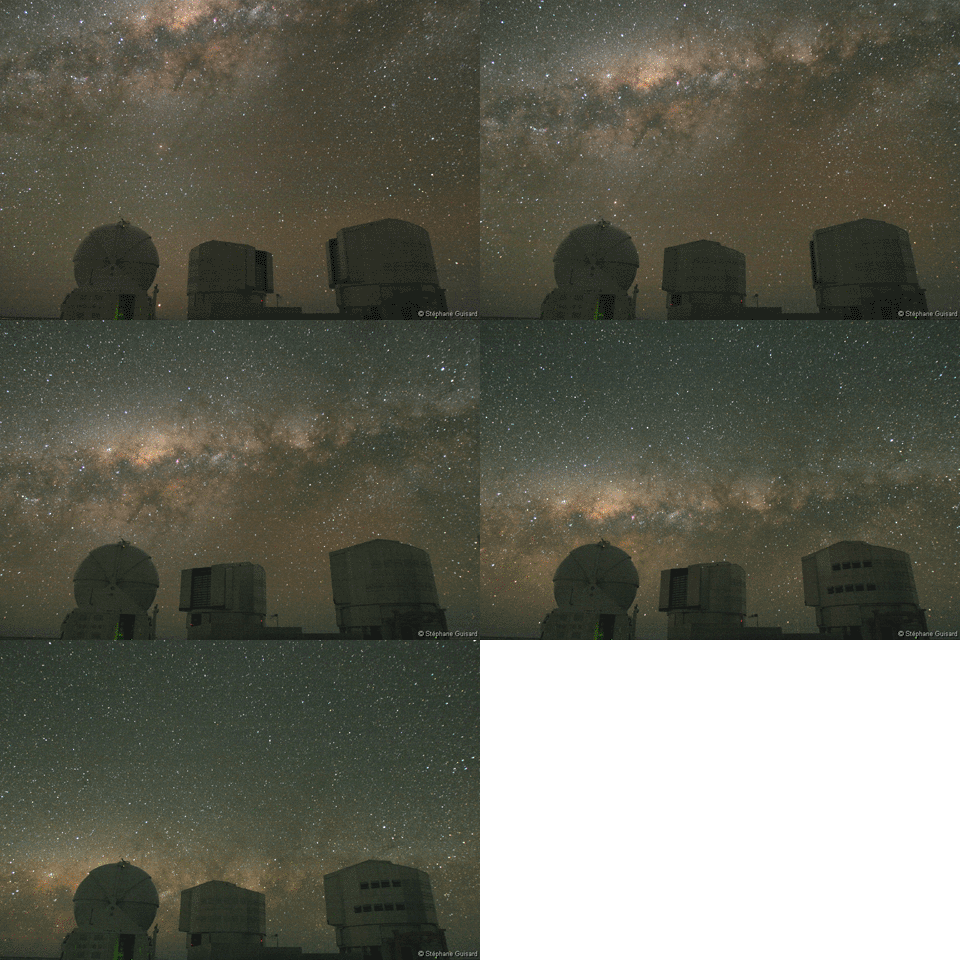
空が落ちてくるわけではありません。正確には、地球が上昇しているのです。地球の自転によって、パラナル天文台で宇宙を観測している人々を含め、地球上のすべての観測者に絶えず変化する景色がもたらされます。天文台の4つの巨大な8.2メートル望遠鏡ユニットは、チリ北部の乾燥したアタカマ砂漠にある標高2,600メートルのセロ・パラナル山の頂上に設置されています。個々のユニット望遠鏡は、単独で使用することも、組み合わせて使用することもできます。アントゥ、クエエン、メリパル、イェプンという名前は、マプチェ語から取られています。それぞれ太陽、月、宵の明星、南十字星という意味です。これらをまとめて、ヨーロッパ南天天文台の超大型望遠鏡として知られています。上記の動画のより高解像度のバージョンは、こちらでご覧いただけます。
原文(English)
It's not the sky that's falling. More accurately, the Earth is rising. The Earth's rotation gives a continually changing view to all Earth observers, including those measuring the universe at the Paranal Observatory. The observatory's four, massive 8.2 meter telescope units are situated on top of the 2,600 meter high mountain, Cerro Paranal, in the dry Atacama Desert in northern Chile. The individual unit telescopes can be used separately or in combination. Their names, Antu, Kueyen, Melipal, and Yepun, are taken from the Mapuche language. Fittingly they translate to Sun, Moon, Evening Star, and Southern Cross. Together they are fittingly known as the European Southern Observatory's Very Large Telescope. A higher time resolution version of the above movie is available here.
\ この感動を宇宙仲間にシェア /
宇宙をXでシェア
© St�phane Guisard
(Los Cielos de Chile) / APOD