
🚀 宇宙の記憶・カレンダー検索
🚀 象徴的な写真:
APOD第1回
🚀 創造の柱
🚀 スピリット火星着陸
🚀 ハッブル超深宇宙
🚀 地球へようこそ|ブルー・マーブル
🚀 エンケラドス
🚀 ベテルギウス
🚀 火星着陸
🚀 青い夕焼け
🚀 冥王星のハート
🚀 皆既日食
🚀 アースライズ再構築
🚀 ブラックホール
🚀 ウェッブ初画像
🚀 アポロ11着陸
APOD30周年(2025年6月16日)
アインシュタインクロス重力レンズ
The Einstein Cross Gravitational Lens
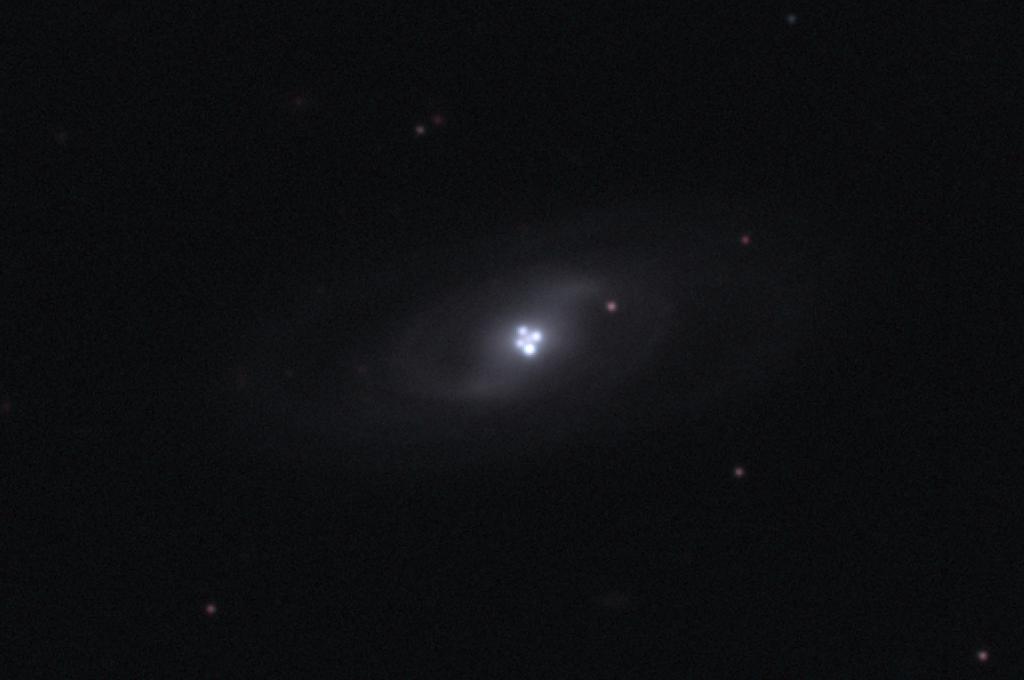
ほとんどの銀河は単一の核を持つが、この銀河は4つあるのだろうか?この奇妙な答えから、天文学者たちは、周囲の銀河の核はこの画像には写っていないと結論づけた。中央のクローバーリーフは、むしろ背景のクエーサーから放出された光である。見える前景の銀河の重力場が、この遠方のクエーサーからの光を4つの異なる画像に分解する。このような蜃気楼がはっきりと見えるためには、クエーサーが巨大な銀河の中心の後ろに適切に位置していなければならない。この一般的な効果は重力レンズ効果として知られており、この特定のケースはアインシュタインクロスとして知られている。さらに奇妙なことに、アインシュタインクロスの画像は相対的な明るさが異なり、前景の銀河の特定の星による追加の重力マイクロレンズ効果によって時折強調される。
原文(English)
Most galaxies have a single nucleus -- does this galaxy have four? The strange answer leads astronomers to conclude that the nucleus of the surrounding galaxy is not even visible in this image. The central cloverleaf is rather light emitted from a background quasar. The gravitational field of the visible foreground galaxy breaks light from this distant quasar into four distinct images. The quasar must be properly aligned behind the center of a massive galaxy for a mirage like this to be evident. The general effect is known as gravitational lensing, and this specific case is known as the Einstein Cross. Stranger still, the images of the Einstein Cross vary in relative brightness, enhanced occasionally by the additional gravitational microlensing effect of specific stars in the foreground galaxy.
\ この感動を宇宙仲間にシェア /
宇宙をXでシェア
© J. Rhoads / APOD