
🚀 宇宙の記憶・カレンダー検索
🚀 象徴的な写真:
APOD第1回
🚀 創造の柱
🚀 スピリット火星着陸
🚀 ハッブル超深宇宙
🚀 地球へようこそ|ブルー・マーブル
🚀 エンケラドス
🚀 ベテルギウス
🚀 火星着陸
🚀 青い夕焼け
🚀 冥王星のハート
🚀 皆既日食
🚀 アースライズ再構築
🚀 ブラックホール
🚀 ウェッブ初画像
🚀 アポロ11着陸
APOD30周年(2025年6月16日)
宇宙から見た青い三日月
A Blue Crescent Moon from Space
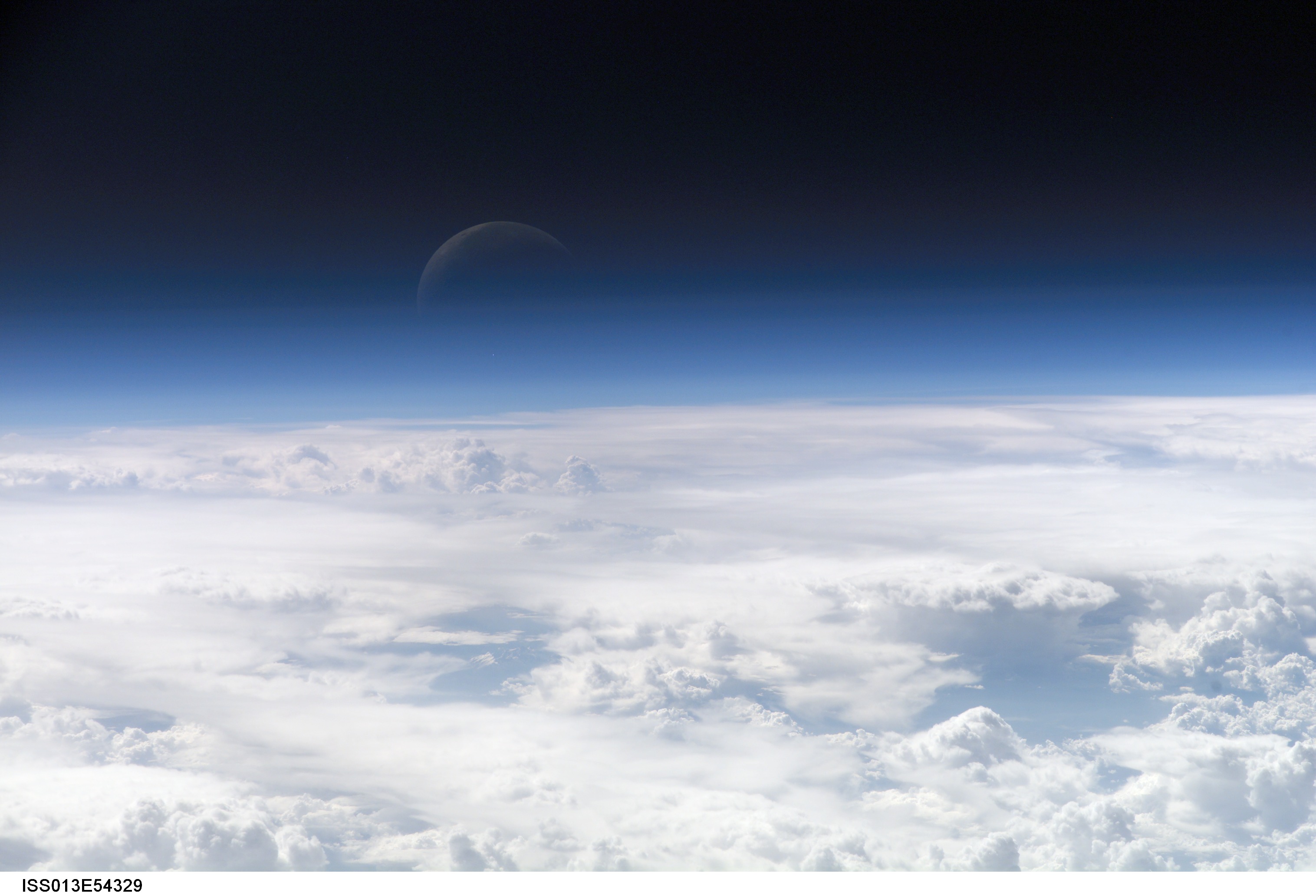
月はどうなっているのでしょうか?2006年7月、地球の周りを漂っていた国際宇宙ステーション(ISS)の宇宙飛行士たちは、地平線の遥か彼方に浮かぶ三日月を撮影しました。上の画像は、月の一部が青く見え、また一部が欠けているように見えるため興味深いものです。これらの現象はどちらも地球の大気によって引き起こされます。大気分子は青い光をより効率的に散乱させるため、地上の観測者にとっては晴れた日の空が青く見え、宇宙飛行士にとっては地平線が青く見えます。これらの大気分子は太陽光を反射するだけでなく、月光も反射するため、月の下部が薄れていくように見えます。写真の上の方を見ると、ますます薄くなる大気は黒く消えていくように見えます。
原文(English)
What's happening to the Moon? Drifting around the Earth in 2006 July, astronauts from the International Space Station (ISS) captured a crescent Moon floating far beyond the horizon. The captured above image is interesting because part of the Moon appears blue, and because part of the moon appears missing. Both effects are created by the Earth's atmosphere. Air molecules more efficiently scatter increasingly blue light, making the clear day sky blue for ground observers, and the horizon blue for astronauts. Besides reflecting sunlight, these atmospheric molecules also deflect moonlight, making the lower part of the moon appear to fade away. As one looks higher in the photograph, the increasingly thin atmosphere appears to fade to black.
\ この感動を宇宙仲間にシェア /
宇宙をXでシェア
© NASA / APOD