
🚀 宇宙の記憶・カレンダー検索
🚀 象徴的な写真:
APOD第1回
🚀 創造の柱
🚀 スピリット火星着陸
🚀 ハッブル超深宇宙
🚀 地球へようこそ|ブルー・マーブル
🚀 エンケラドス
🚀 ベテルギウス
🚀 火星着陸
🚀 青い夕焼け
🚀 冥王星のハート
🚀 皆既日食
🚀 アースライズ再構築
🚀 ブラックホール
🚀 ウェッブ初画像
🚀 アポロ11着陸
APOD30周年(2025年6月16日)
小惑星イトカワの滑らかな断面
Smooth Sections of Asteroid Itokawa
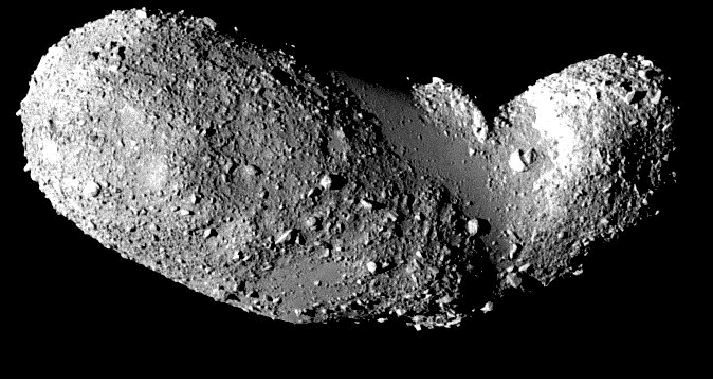
Why are parts of this asteroid's surface so smooth? No one is yet sure, but it may have to do with the dynamics of an asteroid that is a loose pile of rubble rather than a solid rock. The unusual asteroid has been visited recently by the Japanese spacecraft Hayabusa that has been documenting its unusual structure and mysterious lack of craters. Recent analyses of the border regions between smooth and rugged sections of Itokawa indicate that jostling of the asteroid might be creating segregation between large and small rocks near the surface, like the Brazil nut effect. In late 2005, Hayabusa actually touched down on one of the smooth patches, dubbed the MUSES Sea, and collected soil samples that are to be returned to Earth for analysis. Hayabusa will start its three-year long return trip to Earth this month. Computer simulations show that 500-meter asteroid Itokawa may impact the Earth within the next few million years.
原文(English)
Why are parts of this asteroid's surface so smooth? No one is yet sure, but it may have to do with the dynamics of an asteroid that is a loose pile of rubble rather than a solid rock. The unusual asteroid has been visited recently by the Japanese spacecraft Hayabusa that has been documenting its unusual structure and mysterious lack of craters. Recent analyses of the border regions between smooth and rugged sections of Itokawa indicate that jostling of the asteroid might be creating segregation between large and small rocks near the surface, like the Brazil nut effect. In late 2005, Hayabusa actually touched down on one of the smooth patches, dubbed the MUSES Sea, and collected soil samples that are to be returned to Earth for analysis. Hayabusa will start its three-year long return trip to Earth this month. Computer simulations show that 500-meter asteroid Itokawa may impact the Earth within the next few million years.
\ この感動を宇宙仲間にシェア /
宇宙をXでシェア
© ISAS,
JAXA / APOD