
🚀 宇宙の記憶・カレンダー検索
🚀 象徴的な写真:
APOD第1回
🚀 創造の柱
🚀 スピリット火星着陸
🚀 ハッブル超深宇宙
🚀 地球へようこそ|ブルー・マーブル
🚀 エンケラドス
🚀 ベテルギウス
🚀 火星着陸
🚀 青い夕焼け
🚀 冥王星のハート
🚀 皆既日食
🚀 アースライズ再構築
🚀 ブラックホール
🚀 ウェッブ初画像
🚀 アポロ11着陸
APOD30周年(2025年6月16日)
日食後の地球を振り返る
Looking Back at an Eclipsed Earth
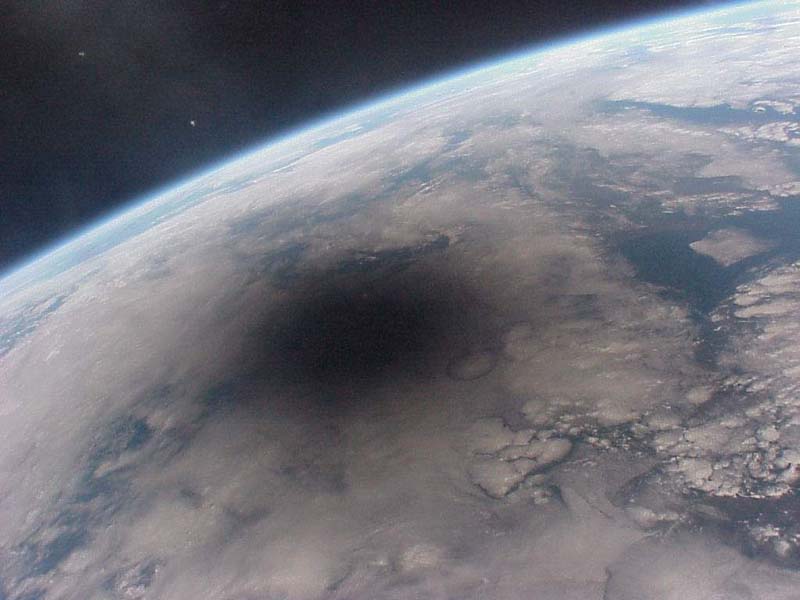
日食時の地球の様子です。月の影が地球の一部を暗くしているのがわかります。この影は時速約2000キロメートルで地球上を移動しました。皆既日食は暗い円の中心付近にいる観測者のみが見ることができ、それ以外の場所では部分日食となり、太陽の一部だけが月によって遮られて見えます。この1999年8月11日の壮大な日食の写真は、ミール宇宙ステーションから撮影された最後の写真の1つです。左上に写っている2つの明るい点は、おそらく木星と土星ですが、これはまだ証明されていません。ミールは2001年に制御された再突入によって軌道から離脱しました。
原文(English)
Here is what the Earth looks like during a solar eclipse. The shadow of the Moon can be seen darkening part of Earth. This shadow moved across the Earth at nearly 2000 kilometers per hour. Only observers near the center of the dark circle see a total solar eclipse - others see a partial eclipse where only part of the Sun appears blocked by the Moon. This spectacular picture of the 1999 August 11 solar eclipse was one of the last ever taken from the Mir space station. The two bright spots that appear on the upper left are possibly Jupiter and Saturn, although this has yet to be proven. Mir was deorbited in a controlled re-entry in 2001.
\ この感動を宇宙仲間にシェア /
宇宙をXでシェア
© CNES / APOD