
🚀 宇宙の記憶・カレンダー検索
🚀 象徴的な写真:
APOD第1回
🚀 創造の柱
🚀 スピリット火星着陸
🚀 ハッブル超深宇宙
🚀 地球へようこそ|ブルー・マーブル
🚀 エンケラドス
🚀 ベテルギウス
🚀 火星着陸
🚀 青い夕焼け
🚀 冥王星のハート
🚀 皆既日食
🚀 アースライズ再構築
🚀 ブラックホール
🚀 ウェッブ初画像
🚀 アポロ11着陸
APOD30周年(2025年6月16日)
フェニックスと聖なる牛
Phoenix and the Holy Cow
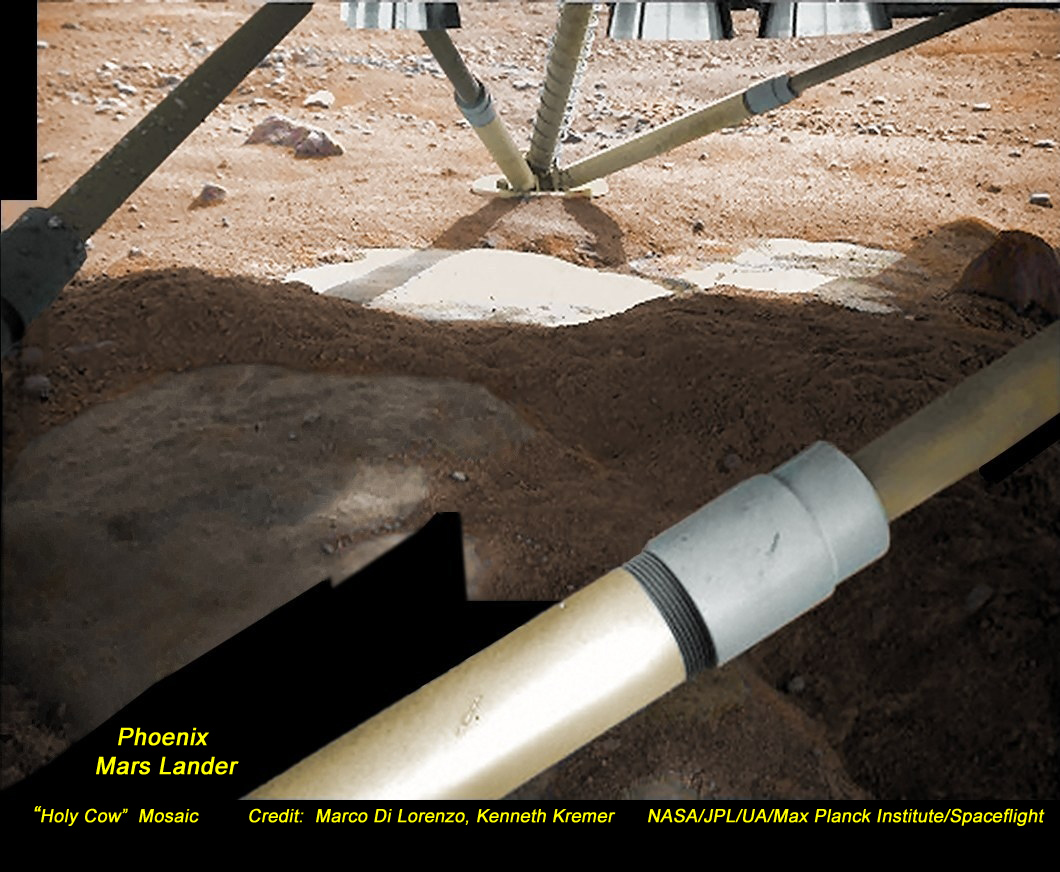
火星の北半球の夏は終わりを迎えつつある。予想通り、日照時間の減少、天候の悪化、砂嵐により、フェニックス火星着陸機の太陽電池アレイは電力供給ができなくなっている。フェニックスからの最後の信号は11月2日に受信され、計画された運用寿命をはるかに超える5か月以上にわたる火星の北極圏でのミッションは成功裏に終了した。火星の表面に微生物生命が存在できたことがあるかどうかを解明するため、フェニックスは土壌の広範な分析を行い、膨大な画像データを送った。もちろん、着陸機の最もエキサイティングな成果の1つは、火星表面付近の水氷の検出である。10月に撮影されたこの画像は、着陸機のロボットアームカメラで撮影されたもので、フェニックスの下の領域に平らで露出した氷のパッチが写っている。この領域は、フェニックス火星着陸機が5月25日に着陸してから数日後に初めて撮影されたとき、研究者たちに「なんてこった!」と叫ばせた。
原文(English)
The northern Martian summer is waning. As predicted, a decline in daylight hours, deteriorating weather, and dust storms are preventing solar arrays on the Phoenix Mars Lander from providing power. Phoenix's last signal was received on November 2, its successful mission ending after more than five months in the arctic region of the Red Planet, a run that exceeded its planned operational lifetime. Attempting to discover if Mars' surface has ever been able to support microbial life, Phoenix performed an extensive analysis of the soil and returned a wealth of image data. Of course, one of the lander's most exciting results was the detection of water-ice near the Martian surface. Recorded in October, this picture from the lander's Robotic Arm Camera shows the region under the Phoenix with flat, exposed icy patches. That area caused researchers to exclaim "Holy Cow!" when it was first imaged a few days after the May 25 touchdown of the Phoenix Mars Lander.
\ この感動を宇宙仲間にシェア /
宇宙をXでシェア
© NASA / APOD