
🚀 宇宙の記憶・カレンダー検索
🚀 象徴的な写真:
APOD第1回
🚀 創造の柱
🚀 スピリット火星着陸
🚀 ハッブル超深宇宙
🚀 地球へようこそ|ブルー・マーブル
🚀 エンケラドス
🚀 ベテルギウス
🚀 火星着陸
🚀 青い夕焼け
🚀 冥王星のハート
🚀 皆既日食
🚀 アースライズ再構築
🚀 ブラックホール
🚀 ウェッブ初画像
🚀 アポロ11着陸
APOD30周年(2025年6月16日)
アルプス合流点
Alpine Conjunction
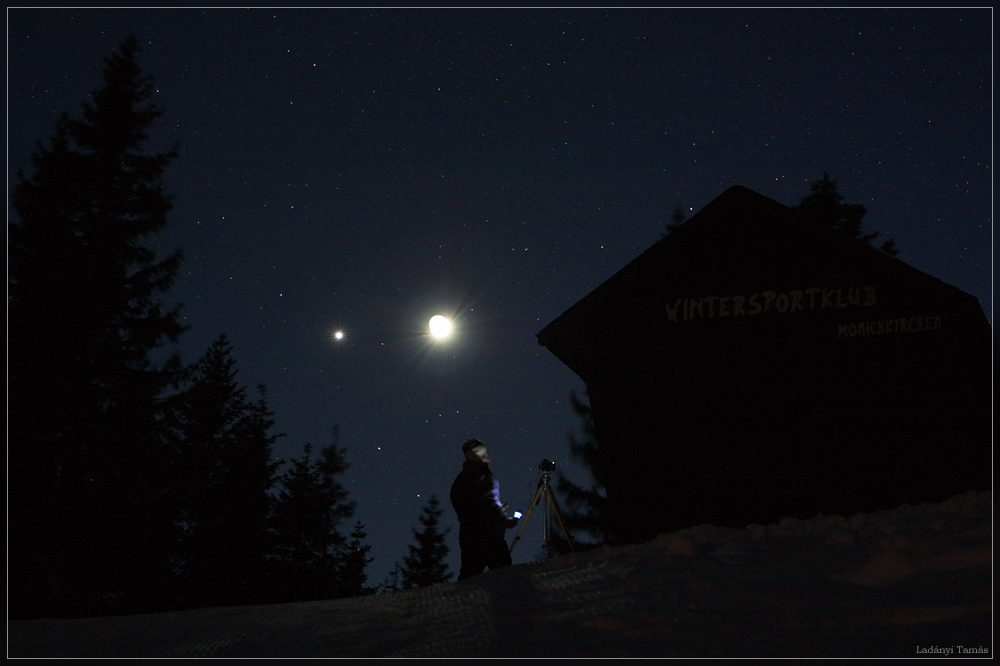
ご覧になりましたか?2008年に最後に見られた月と明るい惑星の接近は、12月31日の日没後、西の空に若い三日月と輝く金星が見られました。オーストリアのメーニヒキルヒェンから、暗く澄んだ山の空気の中で撮影されたこの写真には、地球の夜空を支配する2つの天体の灯台が写っています。この2つは見逃すことはまずありませんでしたが、薄明かりの早い時間に西の地平線に沿って低い空を見上げていた天文愛好家は、年末に太陽に近づいていった木星と水星のペアも垣間見たかもしれません。この5秒間の露光1枚の写真では、太陽に照らされた月の三日月がかなり露出オーバーになっていますが、肉眼では見えない別の惑星を捉えています。写真の中で写真家の頭のすぐ上にある小さな光の点が、遠く離れた惑星海王星です。注:APOD編集者が今夜ニューヨークで講演します。
原文(English)
Did you see it? The last conjunction of Moon and bright planets in 2008 featured a young crescent Moon and brilliant Venus in the west after sunset on December 31st. Seen here in dark, clear, mountain air from Mönichkirchen, Austria, are the two celestial beacons that dominate planet Earth's night sky. That pair was hard to miss, but skygazers watching lower along the western horizon in early twilight might also have glimpsed a pairing of Jupiter and Mercury as they both wandered closer to the Sun in the sky at year's end. Still, while this single, 5 second long exposure seriously overexposes the Moon's sunlit crescent, it does capture another planet not visible to the unaided eye. The tiny pinprick of light just above the photographer's head in the picture is the distant planet Neptune. Note : APOD editor to speak in New York tonight.
\ この感動を宇宙仲間にシェア /
宇宙をXでシェア
© Tamas Ladanyi / APOD