
🚀 宇宙の記憶・カレンダー検索
🚀 象徴的な写真:
APOD第1回
🚀 創造の柱
🚀 スピリット火星着陸
🚀 ハッブル超深宇宙
🚀 地球へようこそ|ブルー・マーブル
🚀 エンケラドス
🚀 ベテルギウス
🚀 火星着陸
🚀 青い夕焼け
🚀 冥王星のハート
🚀 皆既日食
🚀 アースライズ再構築
🚀 ブラックホール
🚀 ウェッブ初画像
🚀 アポロ11着陸
APOD30周年(2025年6月16日)
シメイス147:超新星残骸
Simeis 147: Supernova Remnant
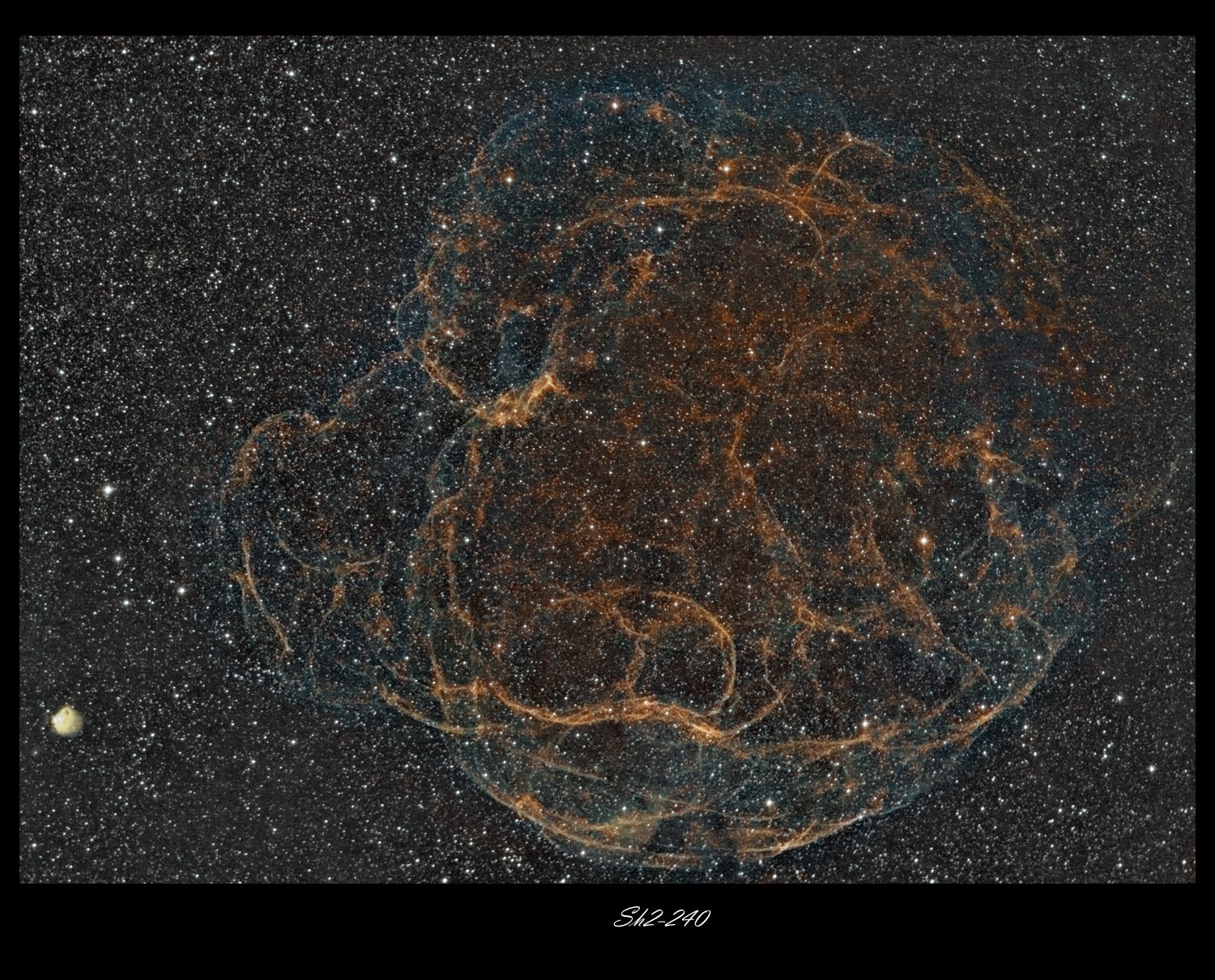
かすかな超新星残骸シメイス147のこの詳細な画像では、複雑なフィラメントを追うと迷子になりやすい。Sh2-240としてもカタログ化され、おうし座の方向にあるこの残骸は、空で約3度(満月6個分)を占めている。これは、恒星残骸雲の推定距離3,000光年で、幅150光年に相当します。ハッブルカラーパレットの注目すべき狭帯域合成画像には、衝撃を受けて輝くガスの領域をトレースする水素、硫黄、酸素原子からの放射が含まれています。この超新星残骸の推定年齢は約40,000年で、巨大な恒星爆発からの光が最初に地球に到達したのは40,000年前です。しかし、この膨張する残骸だけが余波ではありません。この宇宙の大惨事は、回転する中性子星またはパルサーも残しました。これは、元の星の核の残骸です。
原文(English)
It's easy to get lost following the intricate filaments in this detailed image of faint supernova remnant Simeis 147. Also cataloged as Sh2-240 and seen towards the constellation Taurus, it covers nearly 3 degrees (6 full moons) on the sky. That corresponds to a width of 150 light-years at the stellar debris cloud's estimated distance of 3,000 light-years. The remarkable narrow-band composite image in the Hubble color palette includes emission from hydrogen, sulfur, and oxygen atoms tracing regions of shocked, glowing gas. This supernova remnant has an estimated age of about 40,000 years - meaning light from the massive stellar explosion first reached Earth 40,000 years ago. But this expanding remnant is not the only aftermath. The cosmic catastrophe also left behind a spinning neutron star or pulsar, all that remains of the original star's core.
\ この感動を宇宙仲間にシェア /
宇宙をXでシェア
© Astro Anarchy / APOD