
🚀 宇宙の記憶・カレンダー検索
🚀 象徴的な写真:
APOD第1回
🚀 創造の柱
🚀 スピリット火星着陸
🚀 ハッブル超深宇宙
🚀 地球へようこそ|ブルー・マーブル
🚀 エンケラドス
🚀 ベテルギウス
🚀 火星着陸
🚀 青い夕焼け
🚀 冥王星のハート
🚀 皆既日食
🚀 アースライズ再構築
🚀 ブラックホール
🚀 ウェッブ初画像
🚀 アポロ11着陸
APOD30周年(2025年6月16日)
サングレイザー
Sungrazer
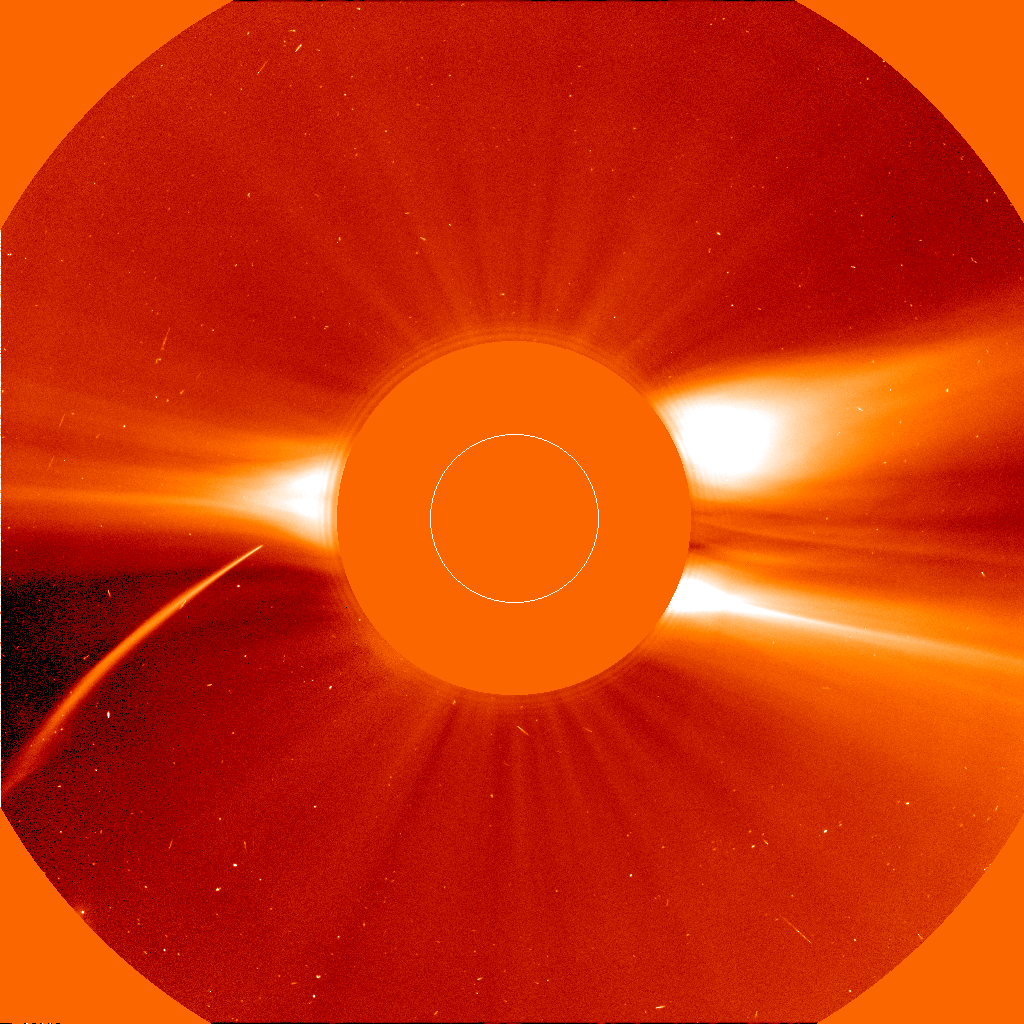
太陽はこの彗星を破壊しました。燃え盛る運命に向かって弧を描いていたこの太陽接近彗星は、1996年12月23日にSOHO宇宙船の広角分光コロナグラフ(LASCO)によって記録されました。LASCOは、右下に部分的に見える遮蔽ディスクを使用して、圧倒的な太陽円盤を遮断し、比較的暗いコロナの内側500万マイルを画像化します。彗星は、そのコマが明るい赤道太陽風領域(垂直方向に配置)に入るときに見られます。画像上の斑点や傷は、背景の星と荷電粒子によって引き起こされるカメラの筋です。太陽を継続的に観測するために宇宙に配置されたSOHOは、現在までに多数の太陽接近彗星を含む1,500を超える彗星を発見するために使用されています。軌道に基づいて、これらの彗星は、12世紀に太陽のすぐ近くを通過した単一の大きな親彗星が連続して分裂してできた彗星のファミリーに属していると考えられています。 1965年の大彗星、池谷関彗星もまた、太陽表面から約65万キロメートルまで接近したサングレイザー彗星の一種でした。太陽に非常に接近するため、サングレイザー彗星は破壊的な潮汐力と強烈な太陽熱にさらされます。SOHO 6として知られるこの彗星は、太陽に衝突して消滅しました。
原文(English)
The Sun destroyed this comet. Arcing toward a fiery fate, this Sungrazer comet was recorded by the SOHO spacecraft's Large Angle Spectrometric COronagraph(LASCO) on 1996 Dec. 23. LASCO uses an occulting disk, partially visible at the lower right, to block out the otherwise overwhelming solar disk allowing it to image the inner 5 million miles of the relatively faint corona. The comet is seen as its coma enters the bright equatorial solar wind region (oriented vertically). Spots and blemishes on the image are background stars and camera streaks caused by charged particles. Positioned in space to continuously observe the Sun, SOHO has now been used to discover over 1,500 comets, including numerous sungrazers. Based on their orbits, they are believed to belong to a family of comets created by successive break ups from a single large parent comet which passed very near the Sun in the twelfth century. The Great Comet of 1965, Ikeya-Seki, was also a member of the Sungrazer family, coming within about 650,000 kilometers of the Sun's surface. Passing so close to the Sun, Sungrazers are subjected to destructive tidal forces along with intense solar heat. This comet, known as SOHO 6, did not survive.
\ この感動を宇宙仲間にシェア /
宇宙をXでシェア
© NASA / APOD