
🚀 宇宙の記憶・カレンダー検索
🚀 象徴的な写真:
APOD第1回
🚀 創造の柱
🚀 スピリット火星着陸
🚀 ハッブル超深宇宙
🚀 地球へようこそ|ブルー・マーブル
🚀 エンケラドス
🚀 ベテルギウス
🚀 火星着陸
🚀 青い夕焼け
🚀 冥王星のハート
🚀 皆既日食
🚀 アースライズ再構築
🚀 ブラックホール
🚀 ウェッブ初画像
🚀 アポロ11着陸
APOD30周年(2025年6月16日)
マイクロクエーサー「はくちょう座X-1」付近にジェット噴射によるシェルが存在する可能性
Possible Jet Blown Shells Near Microquasar Cygnus X-1
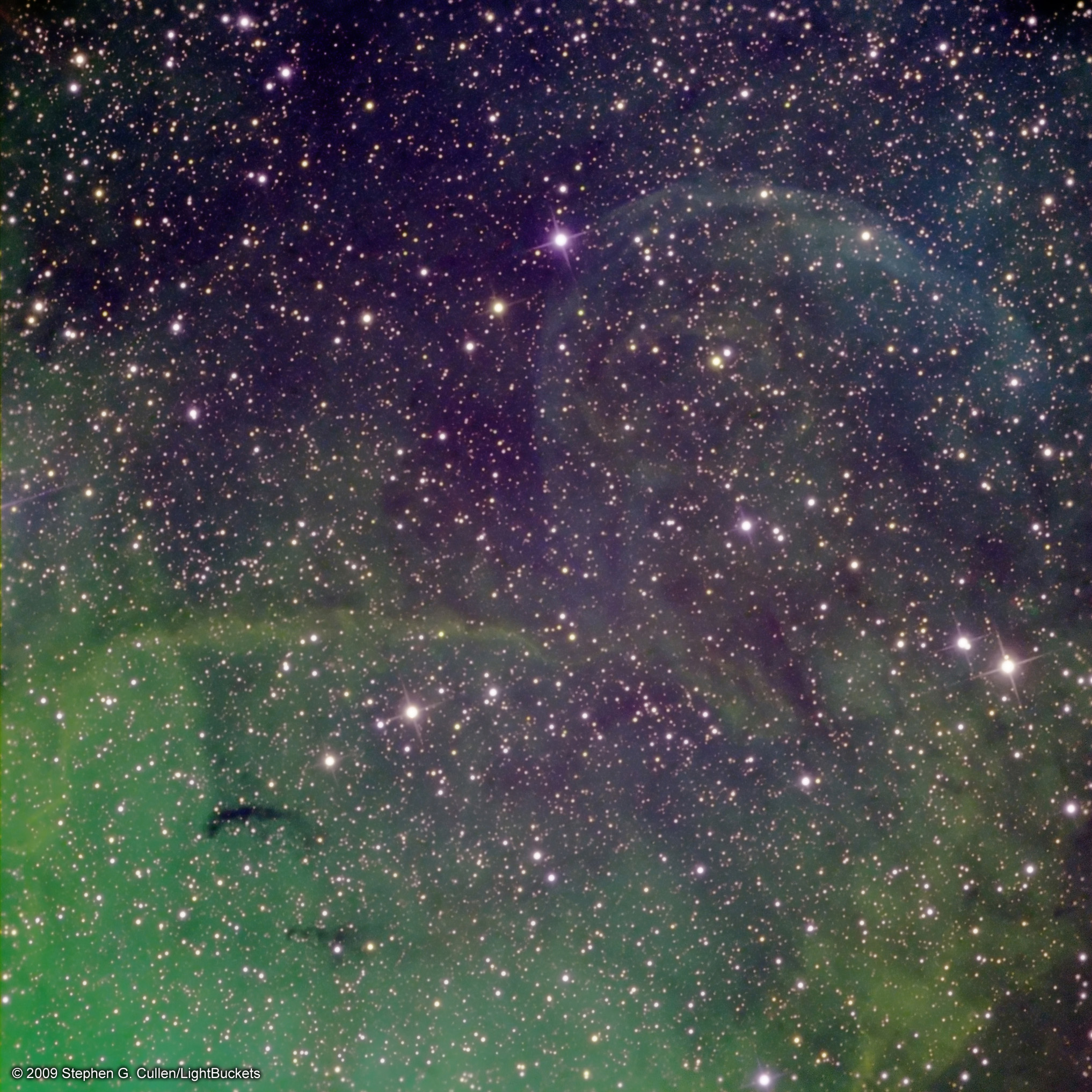
高エネルギーブラックホールに向かって落下する物質はどうなるのでしょうか?白鳥座X-1の場合、実際にブラックホールにたどり着く物質はごくわずかかもしれません。落下するガスは、まず自分自身と衝突するだけでなく、ブラックホールを取り囲む渦巻く物質の降着円盤とも衝突する可能性があります。その結果、電磁スペクトル全体で輝き、強力なジェットを生成するマイクロクエーサーが形成され、落下する物質の大部分がブラックホールの事象の地平線に近づく前に、光速に近い速度で宇宙空間に放出される可能性があります。ブラックホールのジェットが膨張するシェルを形成する可能性があることは、最近、白鳥座X-1を取り囲むシェルの発見によって確認されました。上の右上図は、マイクロクエーサーでありブラックホール候補でもある白鳥座X-1のジェットによって形成された可能性のあるシェルの1つです。画像にカーソルを合わせると、注釈付きバージョンが表示されます。ブラックホールのジェットを生成する物理的プロセスは、現在も研究が続けられているテーマです。
原文(English)
What happens to matter that falls toward an energetic black hole? In the case of Cygnus X-1, perhaps little of that matter actually makes it in. Infalling gas may first collide not only with itself but with an accretion disk of swirling material surrounding the black hole. The result may be a microquasar that glows across the electromagnetic spectrum and produces powerful jets that expel much of the infalling matter back into the cosmos at near light speed before it can even approach the black hole's event horizon. Confirmation that black hole jets may create expanding shells has come recently from the discovery of shells surrounding Cygnus X-1. Pictured above on the upper right is one such shell quite possibly created by the jet of microquasar and black hole candidate Cygnus X-1. Rolling your cursor over the image will bring up an annotated version. The physical processes that create the black hole jets is a topic that continues to be researched.
\ この感動を宇宙仲間にシェア /
宇宙をXでシェア
© Steve Cullen
(lightbuckets.com) / APOD