
🚀 宇宙の記憶・カレンダー検索
🚀 象徴的な写真:
APOD第1回
🚀 創造の柱
🚀 スピリット火星着陸
🚀 ハッブル超深宇宙
🚀 地球へようこそ|ブルー・マーブル
🚀 エンケラドス
🚀 ベテルギウス
🚀 火星着陸
🚀 青い夕焼け
🚀 冥王星のハート
🚀 皆既日食
🚀 アースライズ再構築
🚀 ブラックホール
🚀 ウェッブ初画像
🚀 アポロ11着陸
APOD30周年(2025年6月16日)
フェルミ衛星のガンマ線パルサー
Fermi's Gamma-ray Pulsars
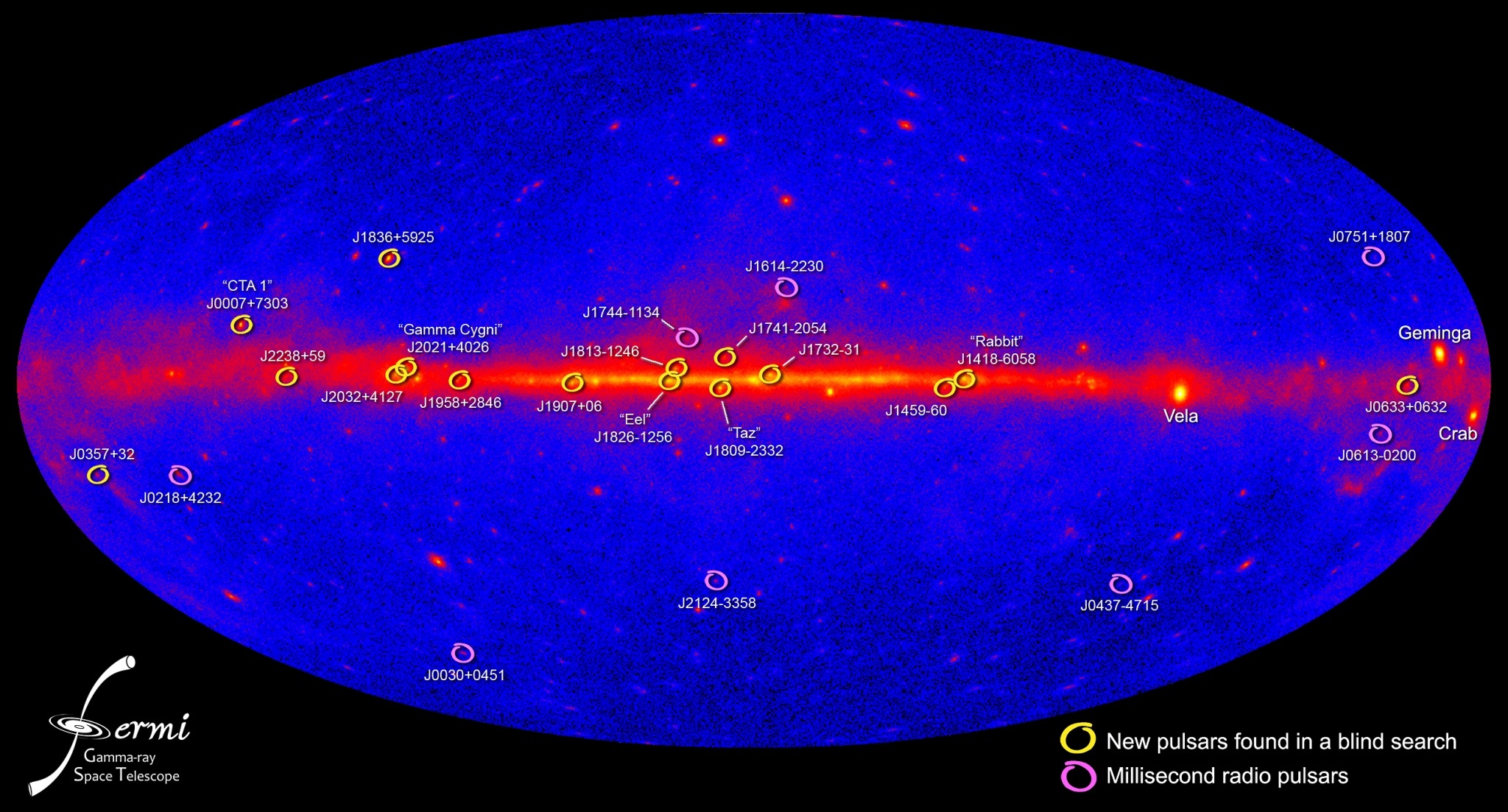
パルサーは超新星爆発で誕生し、大質量星の死の爆発によって残された崩壊した恒星核である回転する中性子星です。従来は規則的な電波パルスを観測することで識別および研究されてきましたが、フェルミガンマ線宇宙望遠鏡によって極めて高いガンマ線エネルギーで24個のパルサーが検出されました。検出されたパルサーには、パルス状のガンマ線放射のみで識別された16個のパルサーが含まれます。このガンマ線全天マップは、天の川銀河の平面に合わせられており、パルサーの位置を示しています。16個の新しいフェルミパルサーは黄色で囲まれています(以前から知られている8個の電波パルサーはマゼンタで示されています)。右側の奇妙な恒星の残骸であるベラ、カニ、ジェミンガのパルサーは、ガンマ線空で最も明るいものです。パルサーのタズ、ウナギ、ウサギは、現在それらがエネルギー源となっていることがわかっている星雲にちなんで名付けられました。左側のガンマ・シグニとCTA 1パルサーも、同名の膨張する超新星残骸の中に存在している。
原文(English)
Born in supernovae, pulsars are spinning neutron stars, collapsed stellar cores left from the death explosions of massive stars. Traditionally identified and studied by observing their regular radio pulsations, two dozen pulsars have now been detected at extreme gamma-ray energies by the Fermi Gamma-ray Space Telescope. The detections include 16 pulsars identified by their pulsed gamma-ray emission alone. This gamma-ray all-sky map, aligned with the plane of our Milky Way Galaxy, shows the pulsar positions, with the 16 new Fermi pulsars circled in yellow (8 previously known radio pulsars are in magenta). Bizarre stellar corpses, the Vela, Crab, and Geminga pulsars on the right are the brightest ones in the gamma-ray sky. Pulsars Taz, Eel, and Rabbit are named for the nebulae they are now known to power. The Gamma Cygni and CTA 1 pulsars at the left also reside within expanding supernova remnants of the same name.
\ この感動を宇宙仲間にシェア /
宇宙をXでシェア
© NASA / APOD