
🚀 宇宙の記憶・カレンダー検索
🚀 象徴的な写真:
APOD第1回
🚀 創造の柱
🚀 スピリット火星着陸
🚀 ハッブル超深宇宙
🚀 地球へようこそ|ブルー・マーブル
🚀 エンケラドス
🚀 ベテルギウス
🚀 火星着陸
🚀 青い夕焼け
🚀 冥王星のハート
🚀 皆既日食
🚀 アースライズ再構築
🚀 ブラックホール
🚀 ウェッブ初画像
🚀 アポロ11着陸
APOD30周年(2025年6月16日)
グダニスク湾に昇る三重の日の出
A Triple Sunrise Over Gdansk Bay
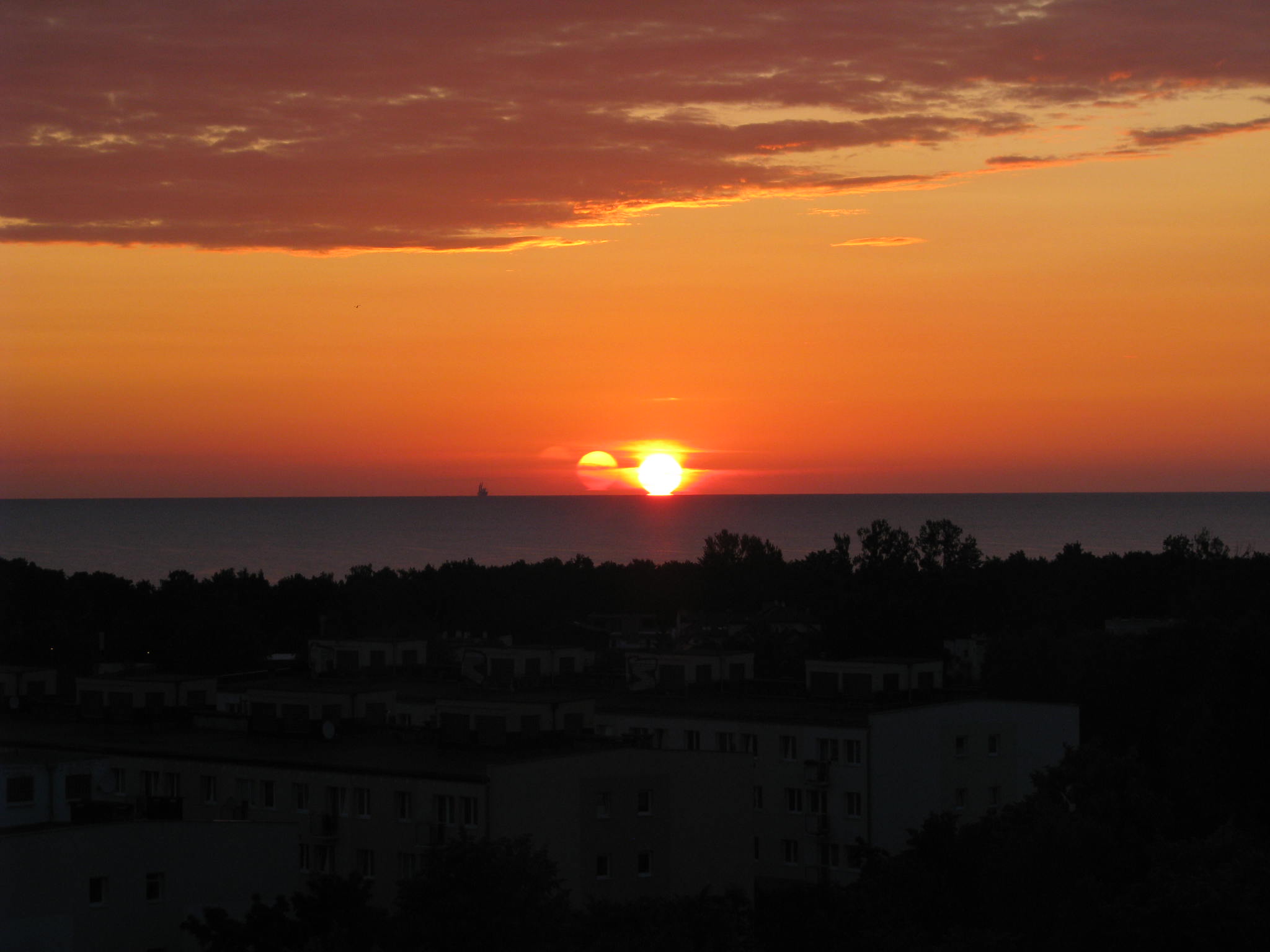
同じ太陽が三度昇るなんて、一体どういうことでしょうか?先月、2009年7月10日(金)午前4時30分頃、ポーランドのグダニスク湾で、壮大な三重の日の出が撮影されました。太陽は明らかに一度しか昇りません。何らかの光学効果によって、少なくとも2つの太陽の蜃気楼が生み出されているのですが、一体どのような効果なのでしょうか?同様の事例が報告されているケースの大半では、フレーム内で最も明るい物体の蜃気楼は、撮影に使用したカメラ内部の反射に起因することが分かっています。しかし、この画像は興味深いものです。なぜなら、誠実な写真家が、この現象は肉眼でも確認できたと主張し、また、同じ現象のバリエーションを示す他のフレームも複数撮影しているからです。そこで、読者の皆様には、この画像が標準的なデジタルカメラ内部の一般的な反射の特に壮観な例を捉えたものなのか、これまで記録された中で最も壮観な大気レンズ効果の例の一つなのか、あるいは全く別の原因によるものなのかについて、議論していただきたいと思います。議論がまとまれば、後日、その結論をここに掲載します。
原文(English)
How can the same Sun rise three times? Last month on Friday, 2009 July 10, a spectacular triple sunrise was photographed at about 4:30 am over Gdansk Bay in Gdansk, Poland. Clearly, our Sun rises only once. Some optical effect is creating at least two mirages of the Sun -- but which effect? In the vast majority of similarly reported cases, mirages of the brightest object in the frame can be traced to reflections internal to the camera taking the images. Still, the above image is intriguing because a sincere photographer claims the effect was visible to the unaided eye, and because the photographer took several other frames that show variants of the same effect. Therefore, polite readers are invited to debate whether the above image captures a particularly spectacular example of common reflections inside a standard digital camera, shows one of the most spectacular examples of atmospheric lensing yet recorded, or was caused by something completely different. If the discussion converges, the consensus will be posted here at a later date.
\ この感動を宇宙仲間にシェア /
宇宙をXでシェア
© Barry & Noemi Diacon
(McMaster U.) / APOD