
🚀 宇宙の記憶・カレンダー検索
🚀 象徴的な写真:
APOD第1回
🚀 創造の柱
🚀 スピリット火星着陸
🚀 ハッブル超深宇宙
🚀 地球へようこそ|ブルー・マーブル
🚀 エンケラドス
🚀 ベテルギウス
🚀 火星着陸
🚀 青い夕焼け
🚀 冥王星のハート
🚀 皆既日食
🚀 アースライズ再構築
🚀 ブラックホール
🚀 ウェッブ初画像
🚀 アポロ11着陸
APOD30周年(2025年6月16日)
NGC 7771銀河群
NGC 7771 Galaxy Group
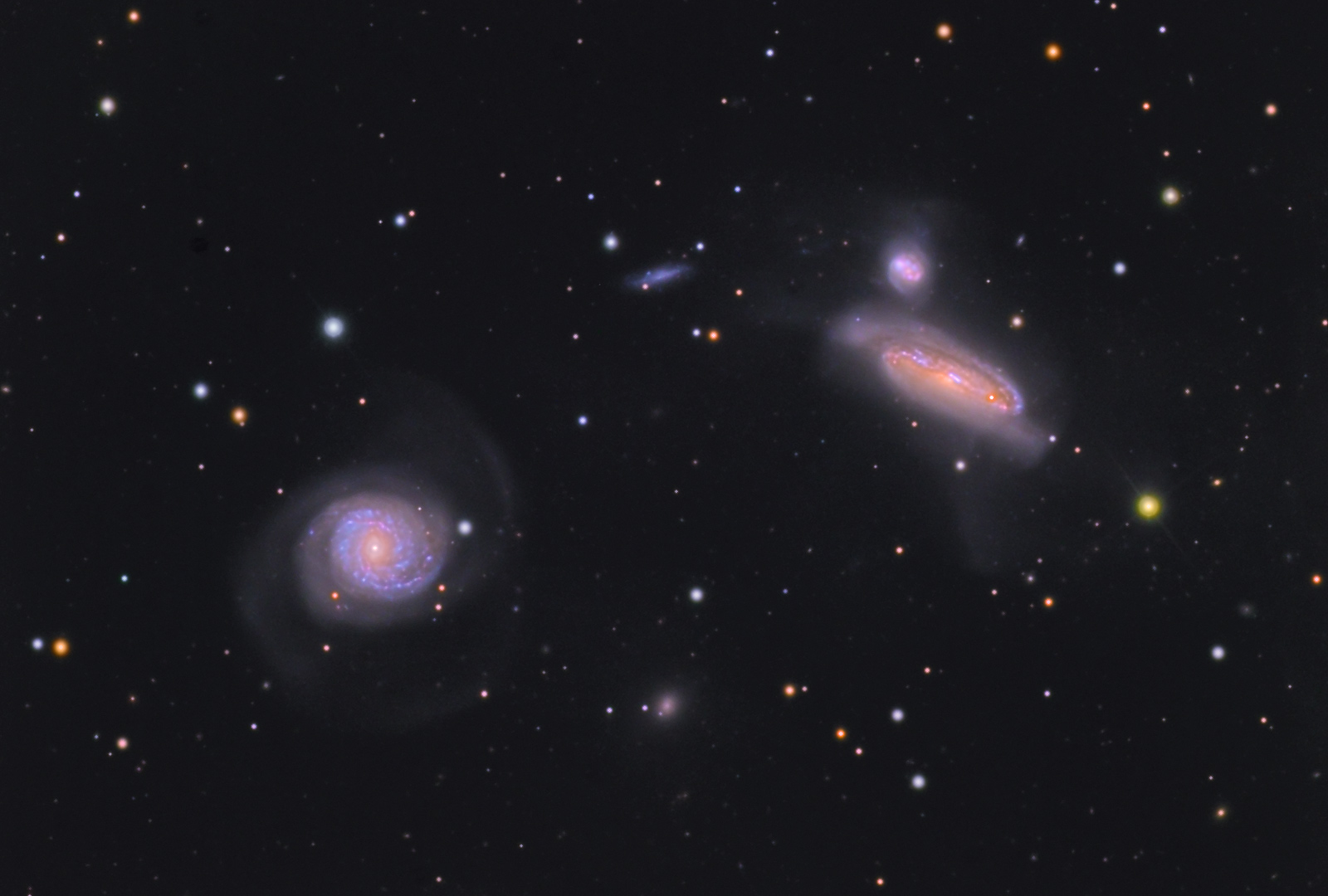
画像にカーソルを移動させて、この興味深い銀河群を構成する3つの銀河を特定してください。NGC 7771銀河群として知られるこれらの銀河は、ペガスス座の方向、約2億光年離れた場所に位置しています。最大の銀河である棒渦巻銀河NGC 7771は、直径約7万5000光年ですが、いずれはさらに大きな銀河の一部となるでしょう。銀河群が繰り返し接近するにつれて、最終的には1つの巨大な銀河に合体します。数億年かけて進行するこの過程は、私たちの天の川銀河を含む銀河の進化における正常な過程であると考えられています。編集者注:ラベル付き画像はAstrometry.netによって作成されました。
原文(English)
Slide your cursor over the image to identify three members of this intriguing gathering of galaxies. Known as the NGC 7771 Group, they lie almost 200 million light-years away toward the high flying constellation Pegasus. The largest galaxy, barred spiral NGC 7771, is itself about 75,000 light-years across, but will someday find itself part of a larger galaxy still. As the galaxies of the group make repeated close passages, they will finally merge into one very large galaxy. Played out over hundreds of millions of years, the process is understood to be a normal part of the evolution of galaxies, including our own Milky Way. Editor's Note: The labeled version of the image was generated by Astrometry.net.
\ この感動を宇宙仲間にシェア /
宇宙をXでシェア
© Kent Biggs / APOD