
🚀 宇宙の記憶・カレンダー検索
🚀 象徴的な写真:
APOD第1回
🚀 創造の柱
🚀 スピリット火星着陸
🚀 ハッブル超深宇宙
🚀 地球へようこそ|ブルー・マーブル
🚀 エンケラドス
🚀 ベテルギウス
🚀 火星着陸
🚀 青い夕焼け
🚀 冥王星のハート
🚀 皆既日食
🚀 アースライズ再構築
🚀 ブラックホール
🚀 ウェッブ初画像
🚀 アポロ11着陸
APOD30周年(2025年6月16日)
月面で水が発見される
Water Discovered on the Moon
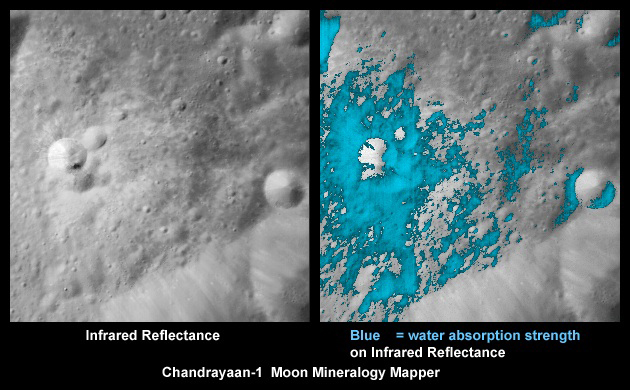
月の表面に水が発見されました。湖は発見されていませんが、インドの新しい月周回探査機チャンドラヤーン1号に搭載されたNASAの月鉱物マッピング装置が、月の表面の一部が、これまで水にしか見られなかった特定の色の光を吸収していることを無線で伝えています。現在、科学者たちはこの情報を月の他の事実と照らし合わせて、月の水の量や、その水がどのような形態をとっているのかを解明しようとしています。残念ながら、最も湿潤なシナリオでも、月は地球の最も乾燥した砂漠よりも乾燥しています。議論されている興味深い手がかりは、水の信号が月の1日の間に上昇したり下降したりするかどうかです。もしそうであれば、この信号は太陽から流れ出る水素が月の土壌中の酸素と反応することで説明できるかもしれません。これにより、おそらく数分子の厚さしかない極めて薄い水の単層が形成される可能性があります。生成された水の一部は、その後、強い日光によって蒸発する可能性があります。上の画像は、月の裏側にあるクレーター付近の領域を示しており、水を含む鉱物が比較的多く含まれていることが、擬似カラーの青色で示されています。来週、新しいLCROSS衛星は、月の南極付近にある永久影のクレーターに衝突する衝突体を放出し、そこに隠れた水や氷が噴出するかどうかを調べます。
原文(English)
Water has been discovered on the surface of the Moon. No lakes have been found, but rather NASA's Moon Mineralogy Mapper aboard India's new Chandrayaan-1 lunar orbiter radios back that parts of the Moon's surface absorb a very specific color of light identified previously only with water. Currently, scientists are trying to fit this with other facts about the Moon to figure out how much water is there, and even what form this water takes. Unfortunately, even the dampest scenarios leave our moon dryer than the driest of Earth's deserts. A fascinating clue being debated is whether the water signal rises and falls during a single lunar day. If true, the signal might be explainable by hydrogen flowing out from the Sun and interacting with oxygen in the lunar soil. This could leave an extremely thin monolayer of water, perhaps only a few molecules thick. Some of the resulting water might subsequently evaporate away in bright sunlight. Pictured above, the area near a crater on the far side of the Moon shows a relatively high abundance of water-carrying minerals in false-color blue. Next week, the new LCROSS satellite will release an impactor that will strike a permanently shadowed crater near the lunar south pole to see if any hidden water or ice sprays free there.
\ この感動を宇宙仲間にシェア /
宇宙をXでシェア
© NASA / APOD